
A Week in the Bush Vol. 598
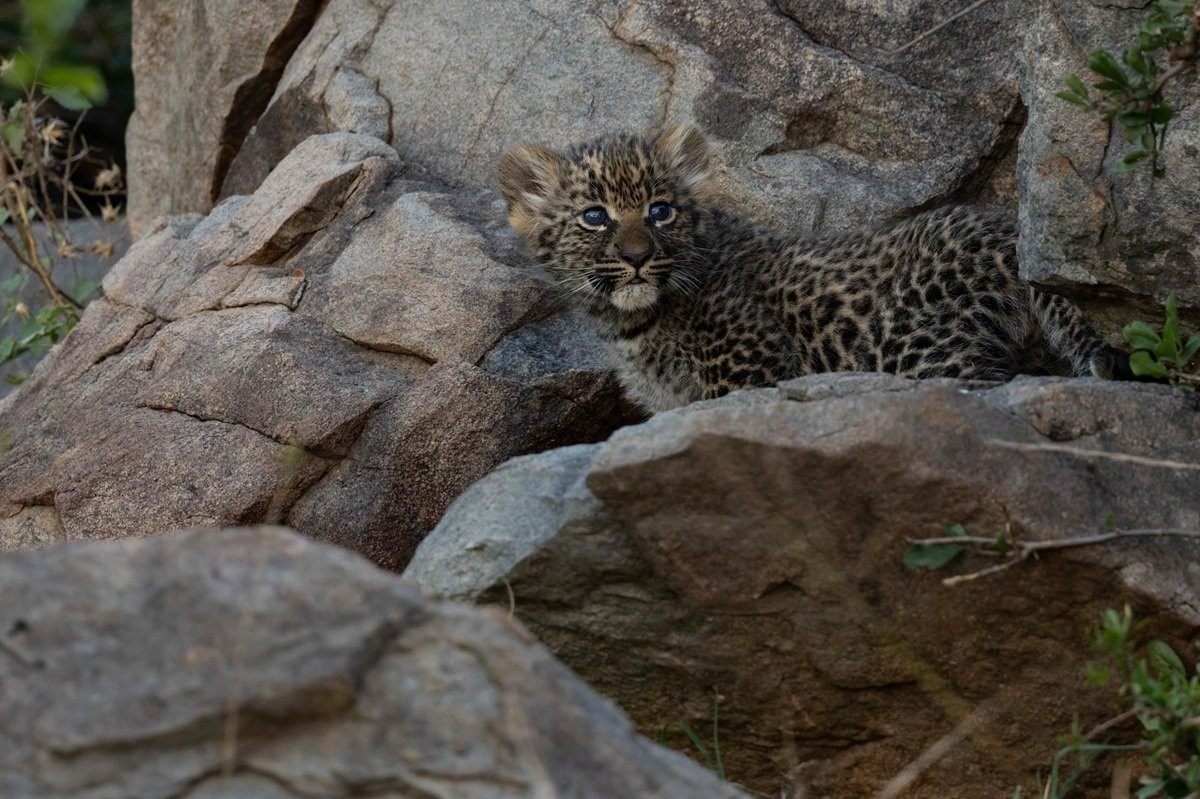
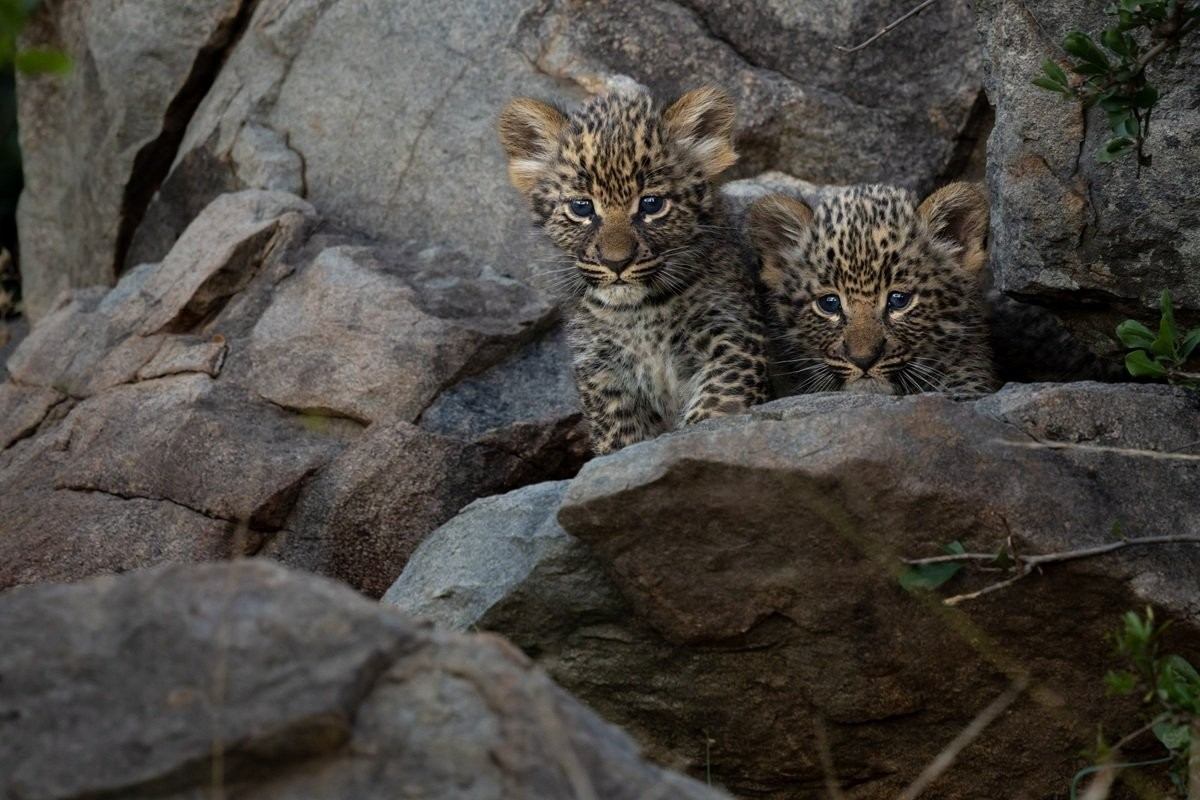
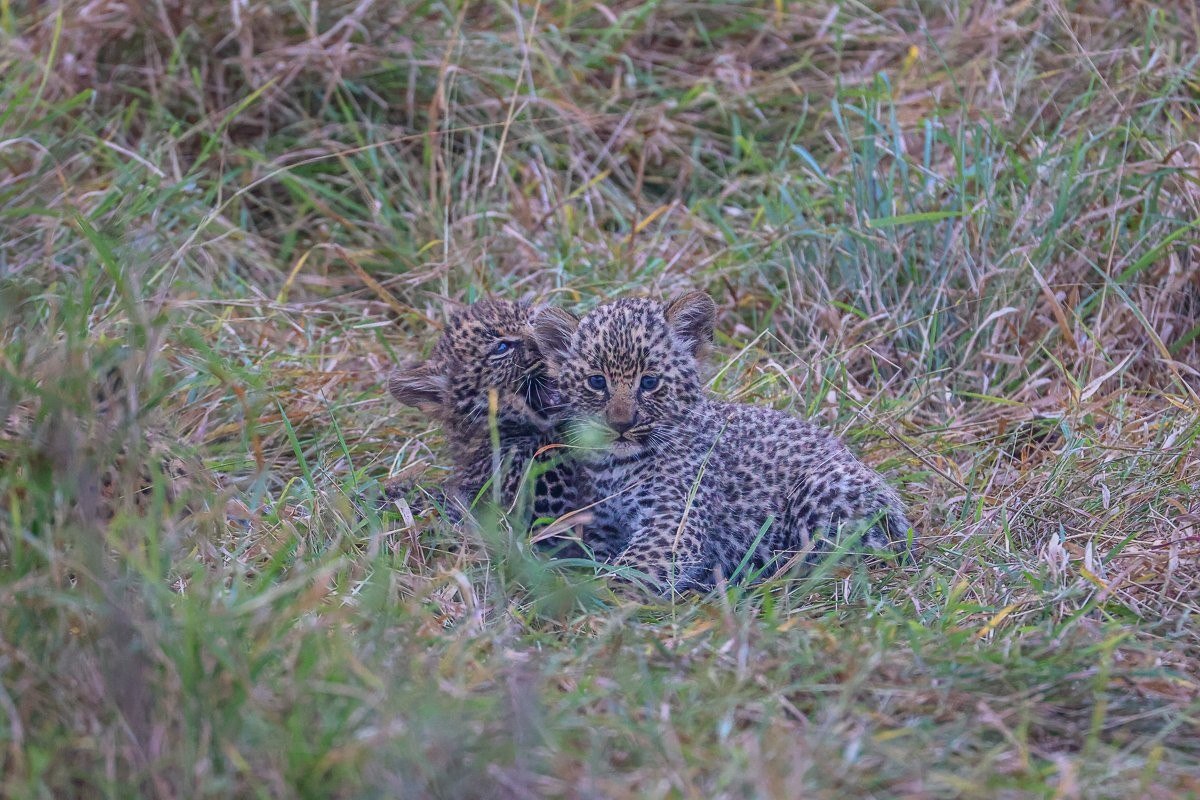
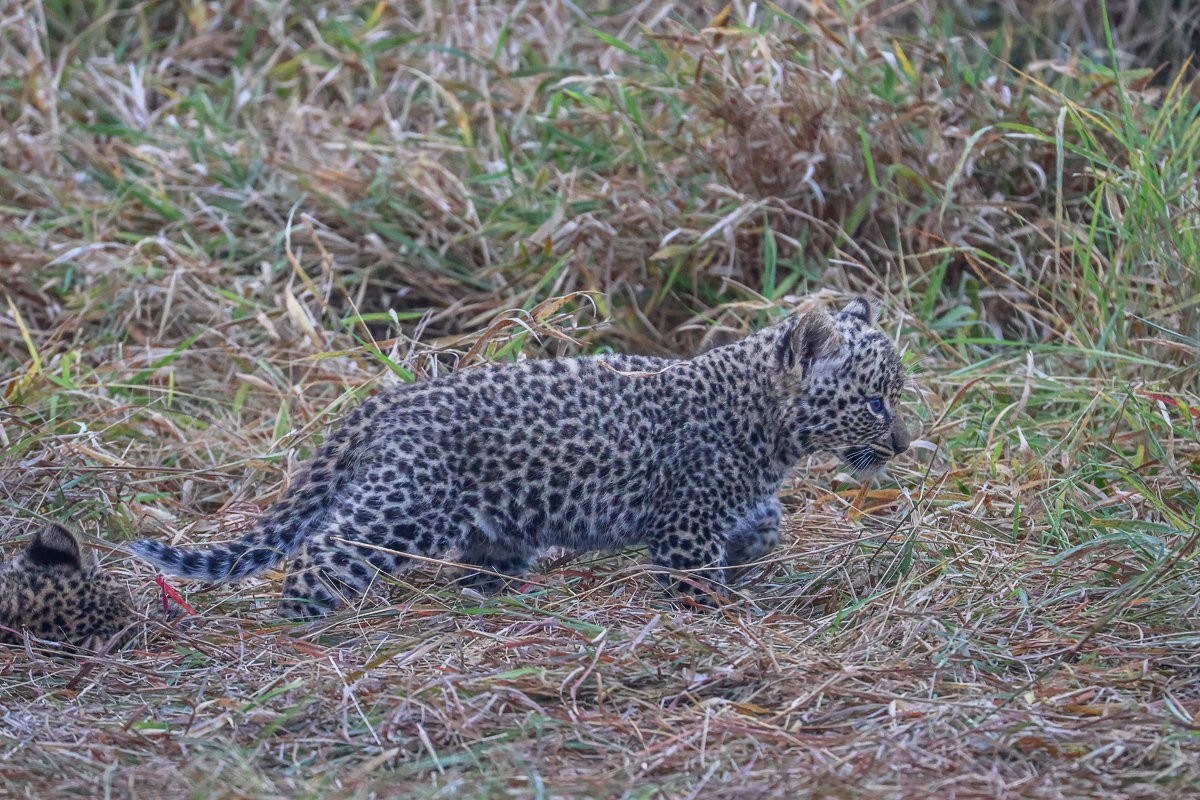
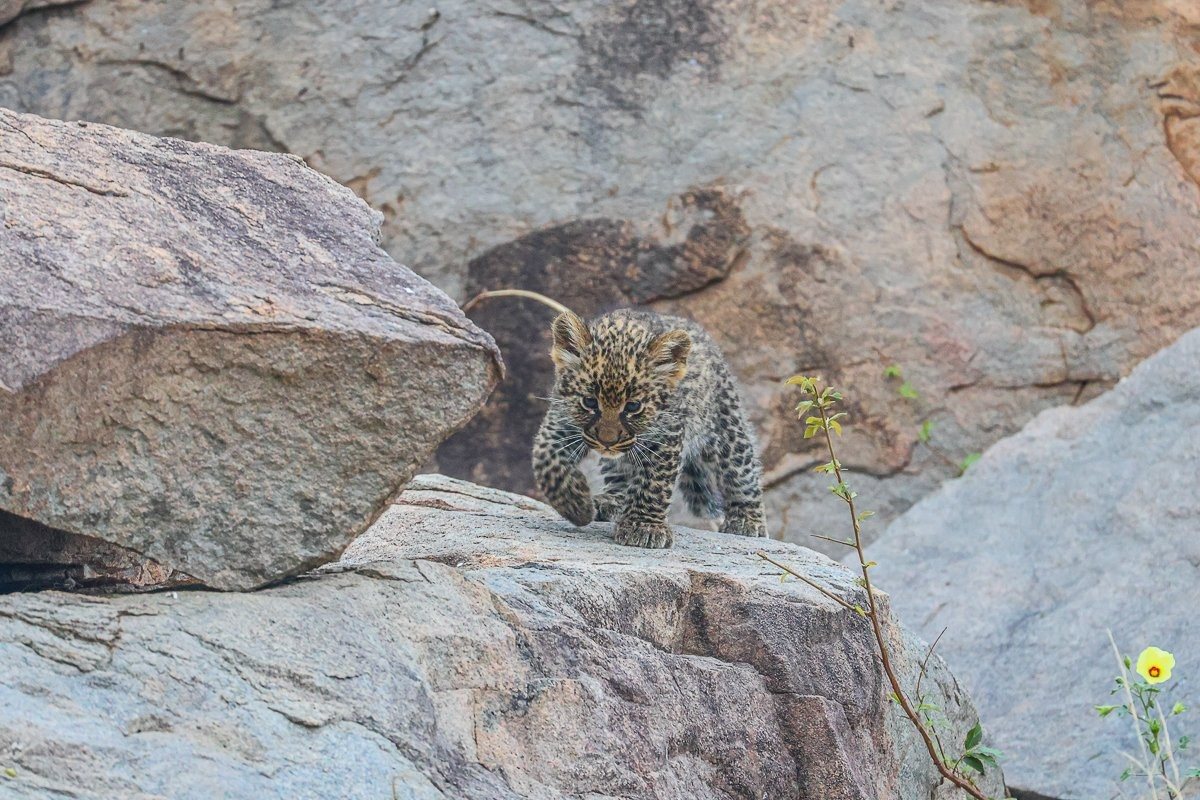
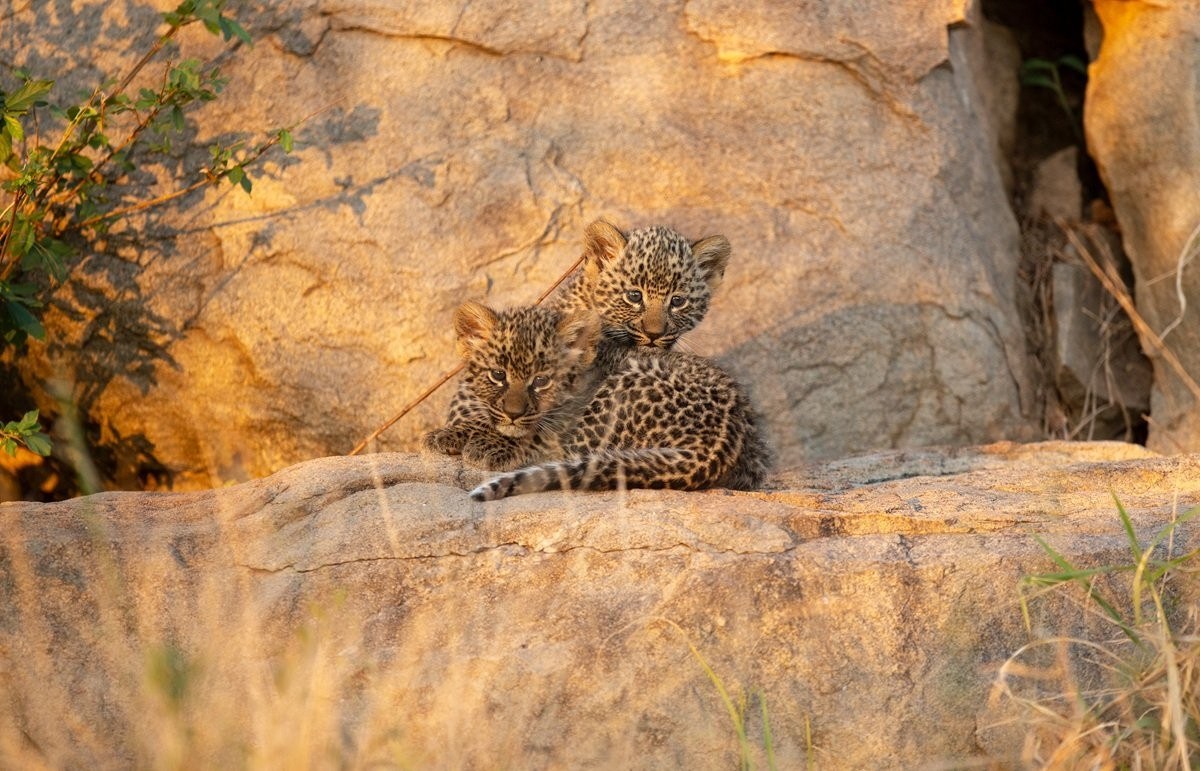
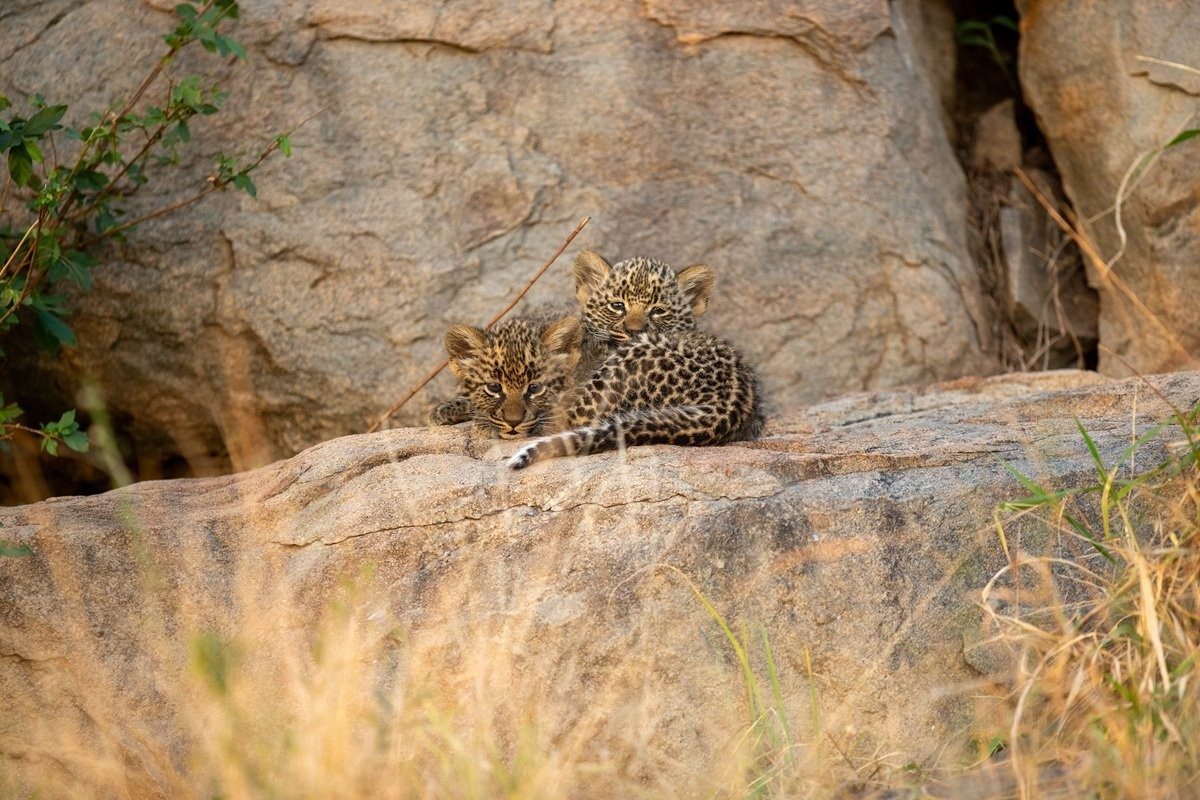
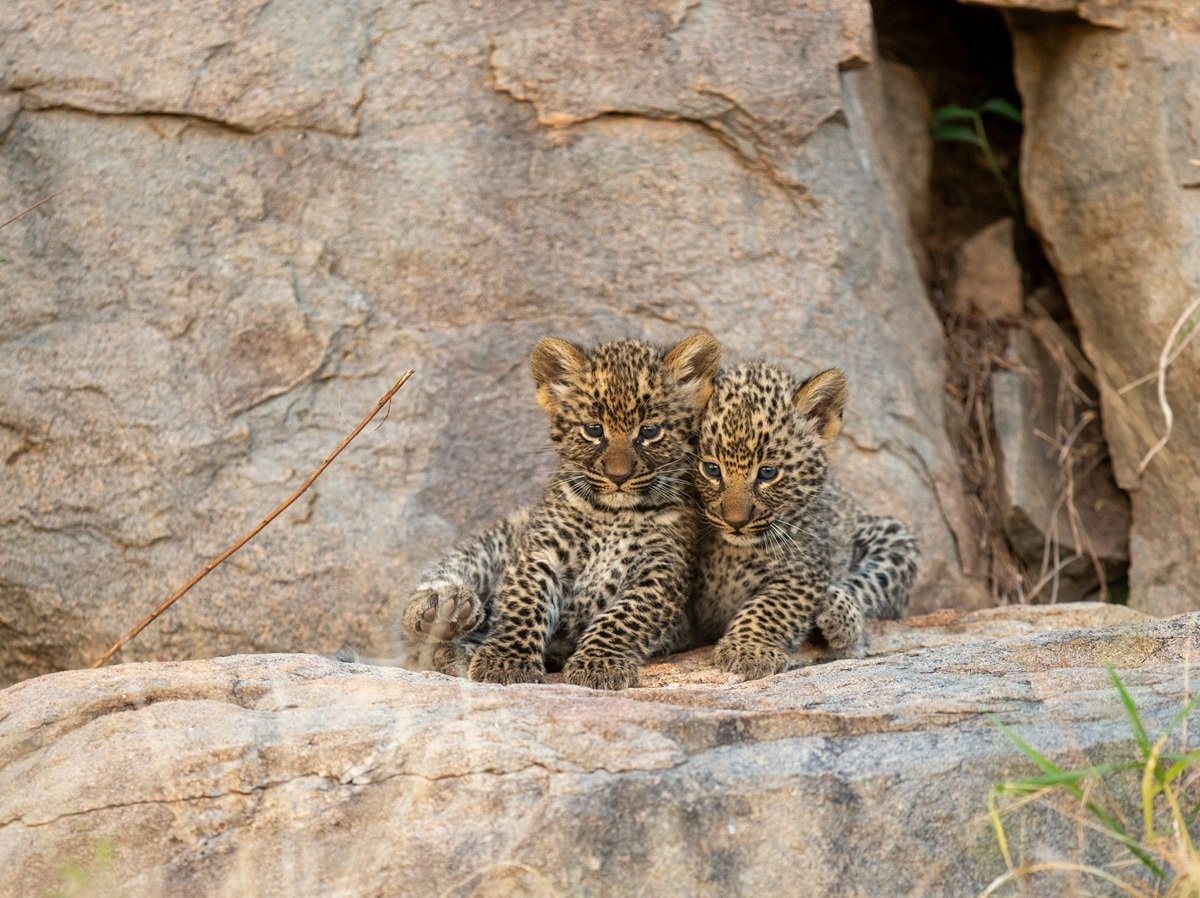
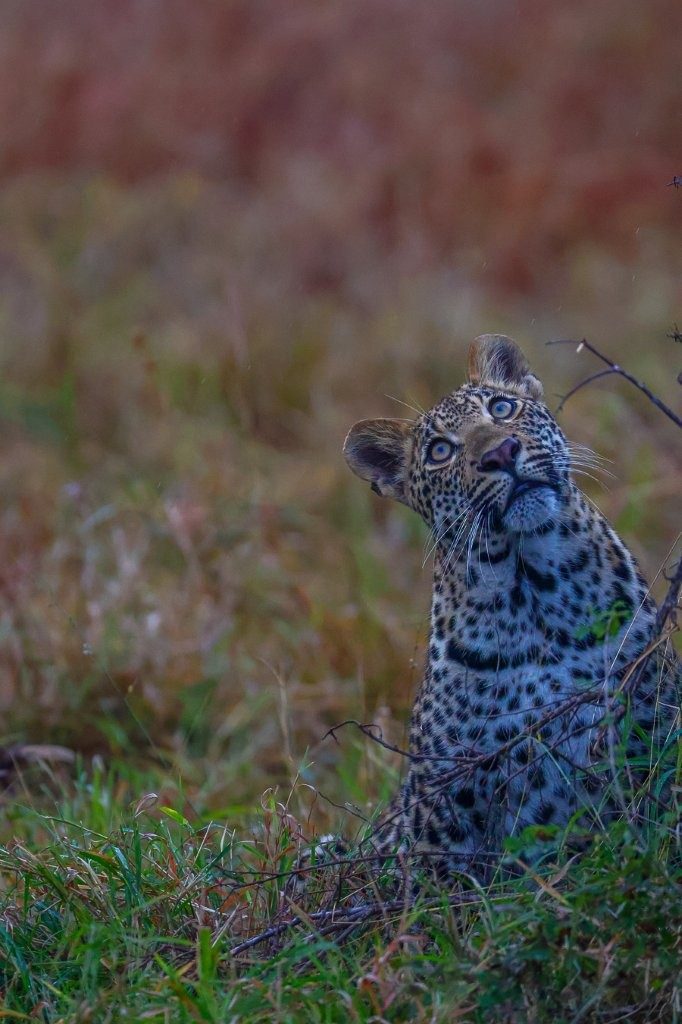
on Jun 24, 2026After Golonyi moved her cubs from their previous den site, we found her settled in a new rocky outcrop. The cubs were full of energy and playfulness, seemingly reassured by their mother's return and the security her presence provides. At this age, they are still growing into their bodies, learning important skills such as climbing, jumping, and running. Although their balance is often questionable, every stumble and misstep helps them discover what they are capable of. Later, Golonyi climbed higher onto the rocky outcrop to rest, maintaining a vigilant watch over the surrounding area and ensuring that no predators or scavengers could catch her or the cubs off guard.
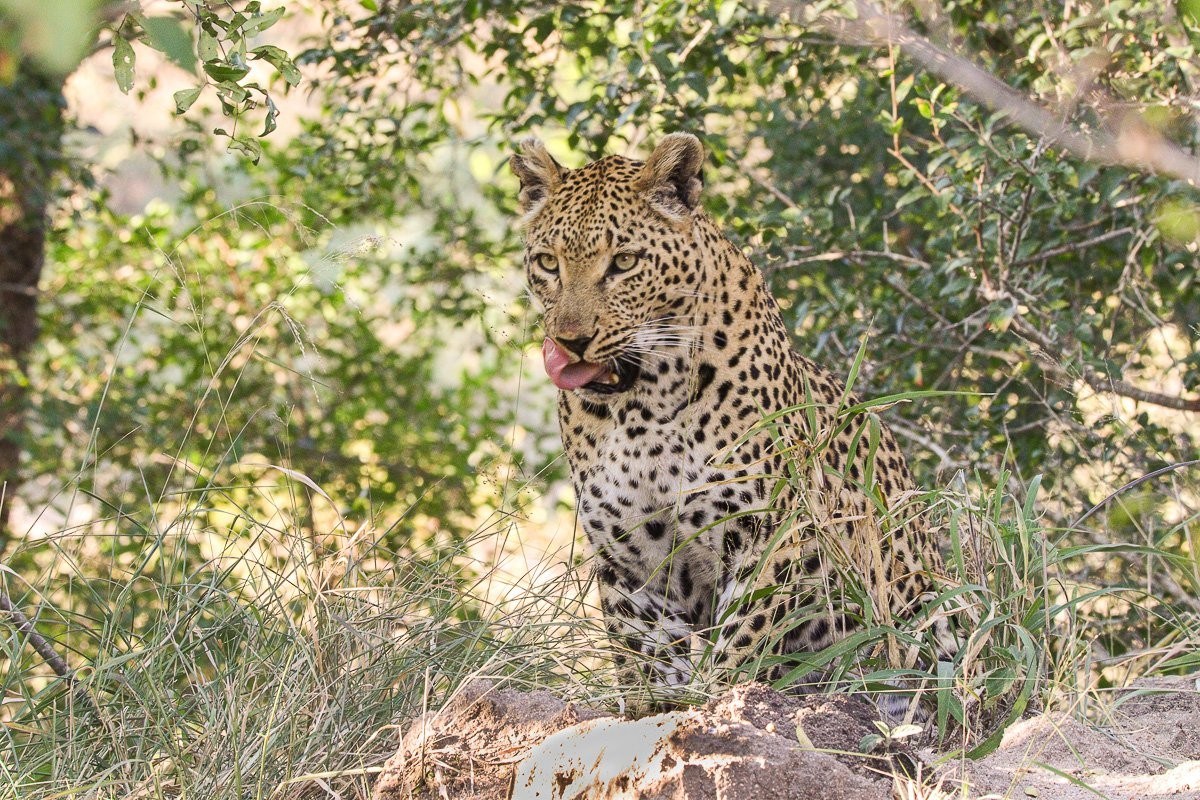
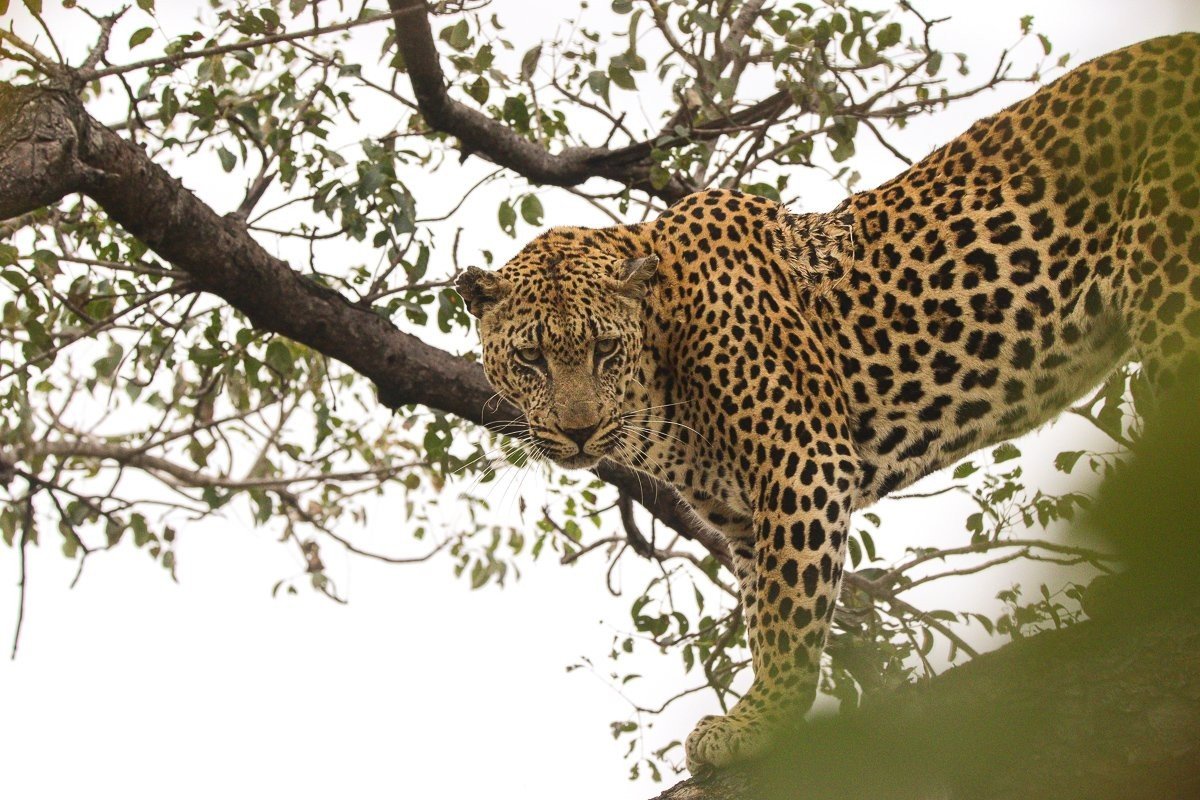
A scene of blood and stomach contents with tracks and got our ranger and tracker teams off the vehicles to follow up on the fresh trail. The drag marks indicated that a female leopard killed a small animal, but unfortunately hyenas stole her kill. We continued to follow her tracks that led us to a large termite mound surrounded by Tamboti trees, where the Ntsumi leopardess sat grooming herself.
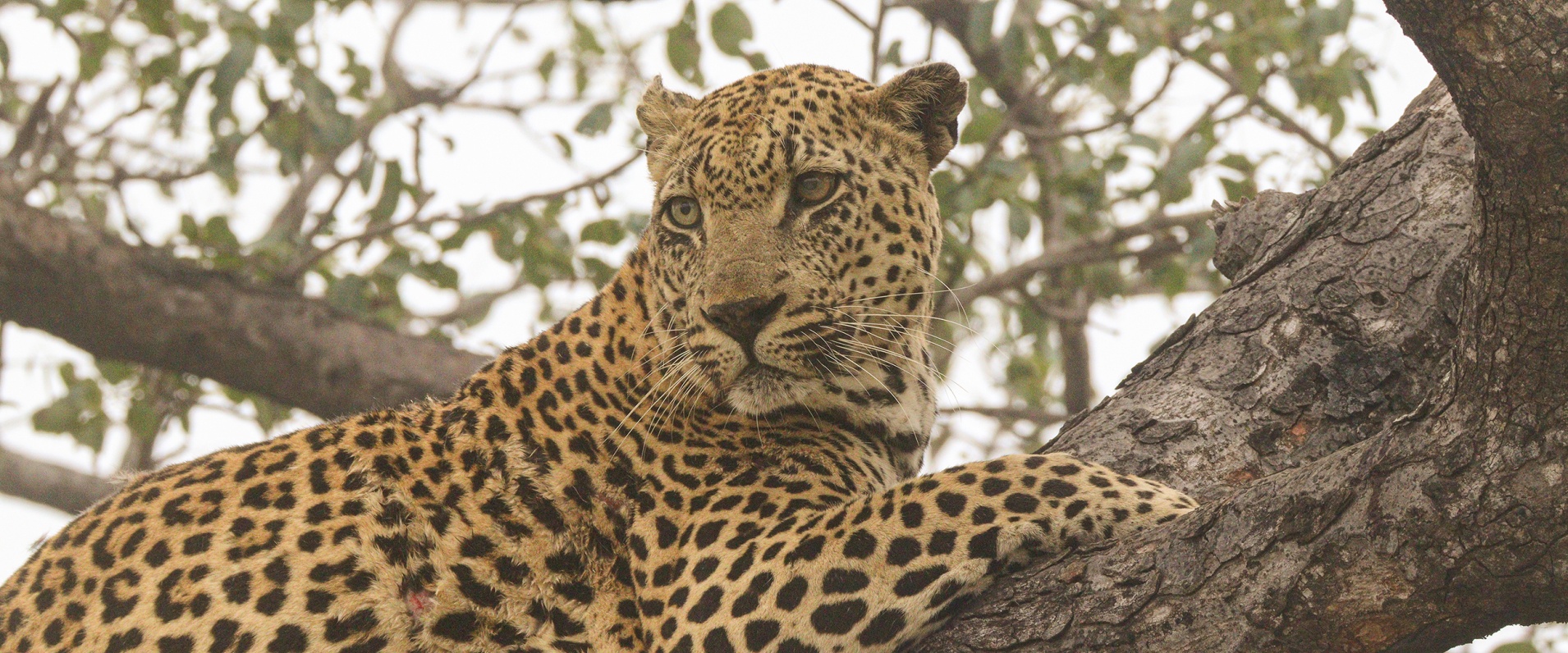
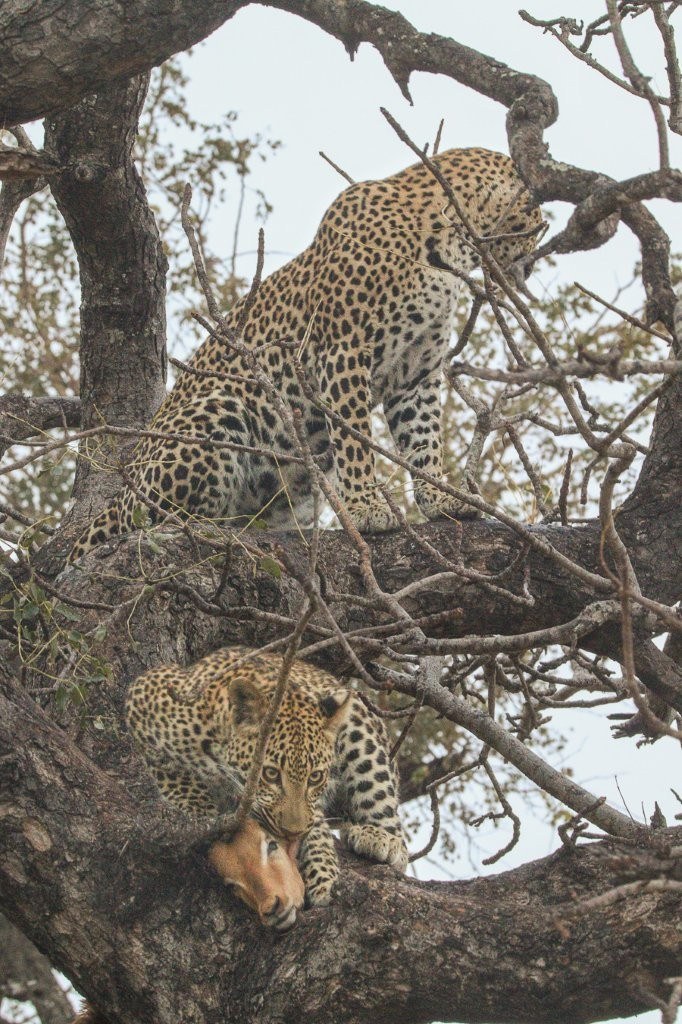
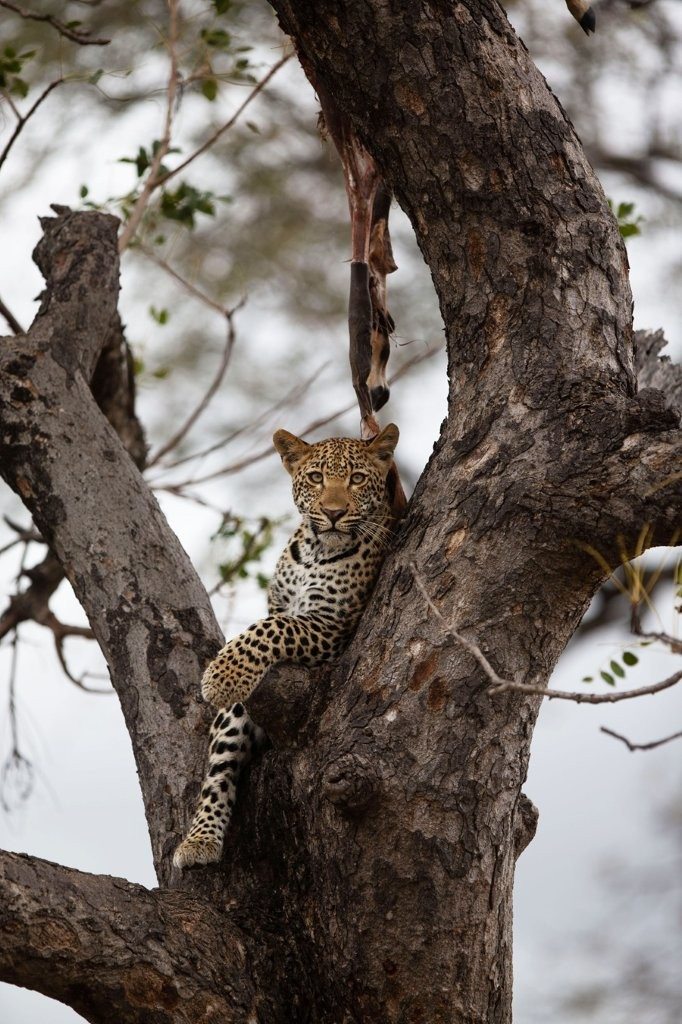
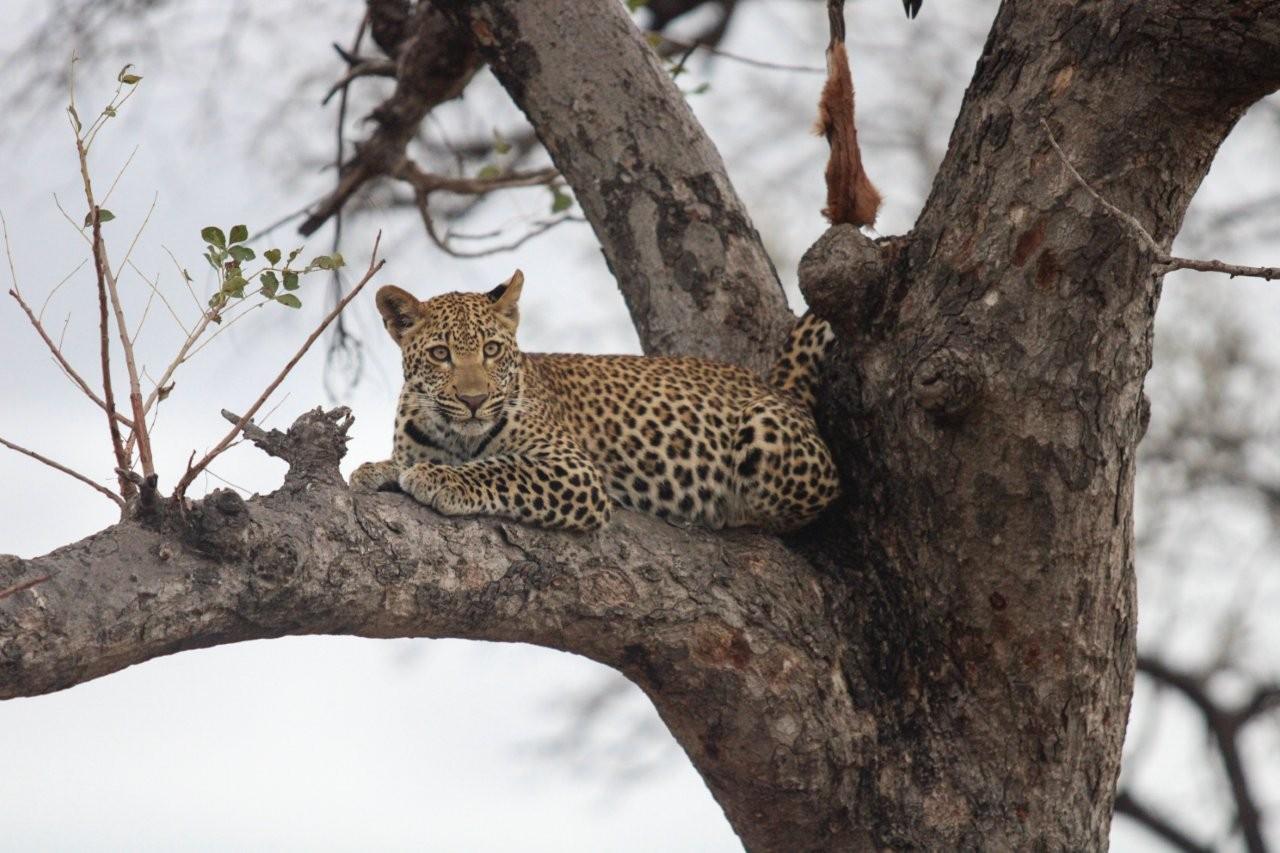
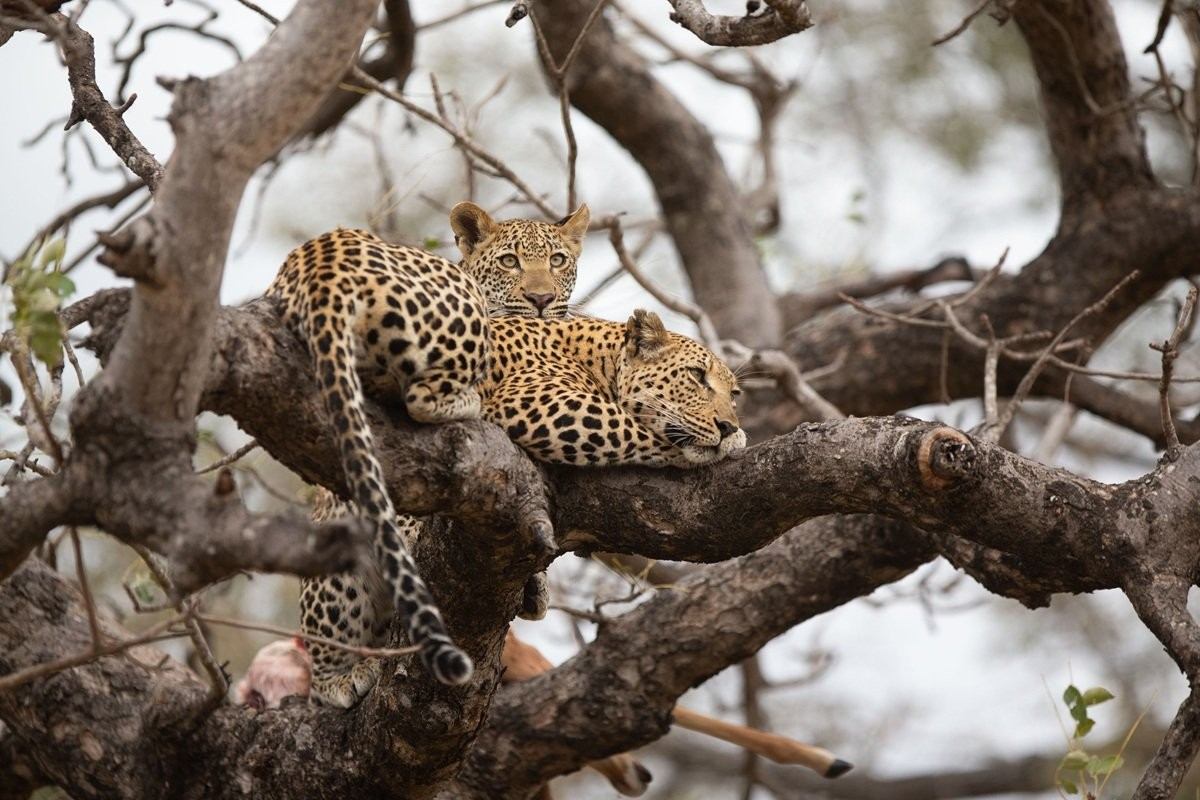
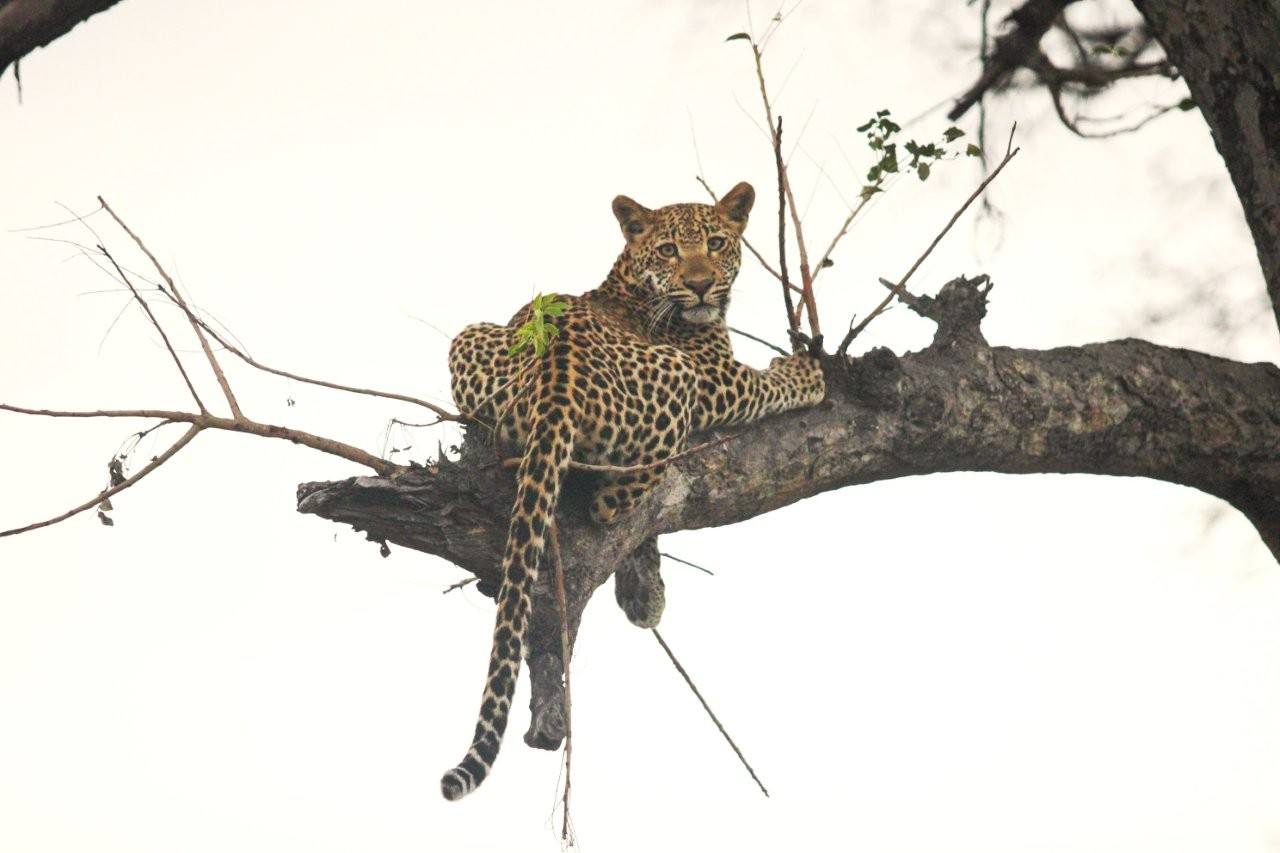
We came across an impala kill hoisted high in a Marula tree, but there was no sign of the leopard responsible. Later, during our rainy afternoon safari, we found the Ntsumi female feeding on the impala alongside her cub. While the cub fed, Ntsumi remained alert, scanning the surrounding bush for any signs of potential danger before settling down to groom herself after the meal.
By hoisting her kill into a tree before retrieving her cub, Ntsumi reduces the risk of losing the carcass to terrestrial predators such as hyenas or lions. Once the cub joins her in the tree, it also provides an important learning opportunity. From a young age, leopard cubs begin developing climbing and feeding skills in the safety of the branches - abilities that will become essential for survival as they grow older.
Should the mother need to leave briefly to fetch another cub or visit a nearby water source, she can do so knowing that both the cub and the kill remain relatively safe from potential threats on the ground.
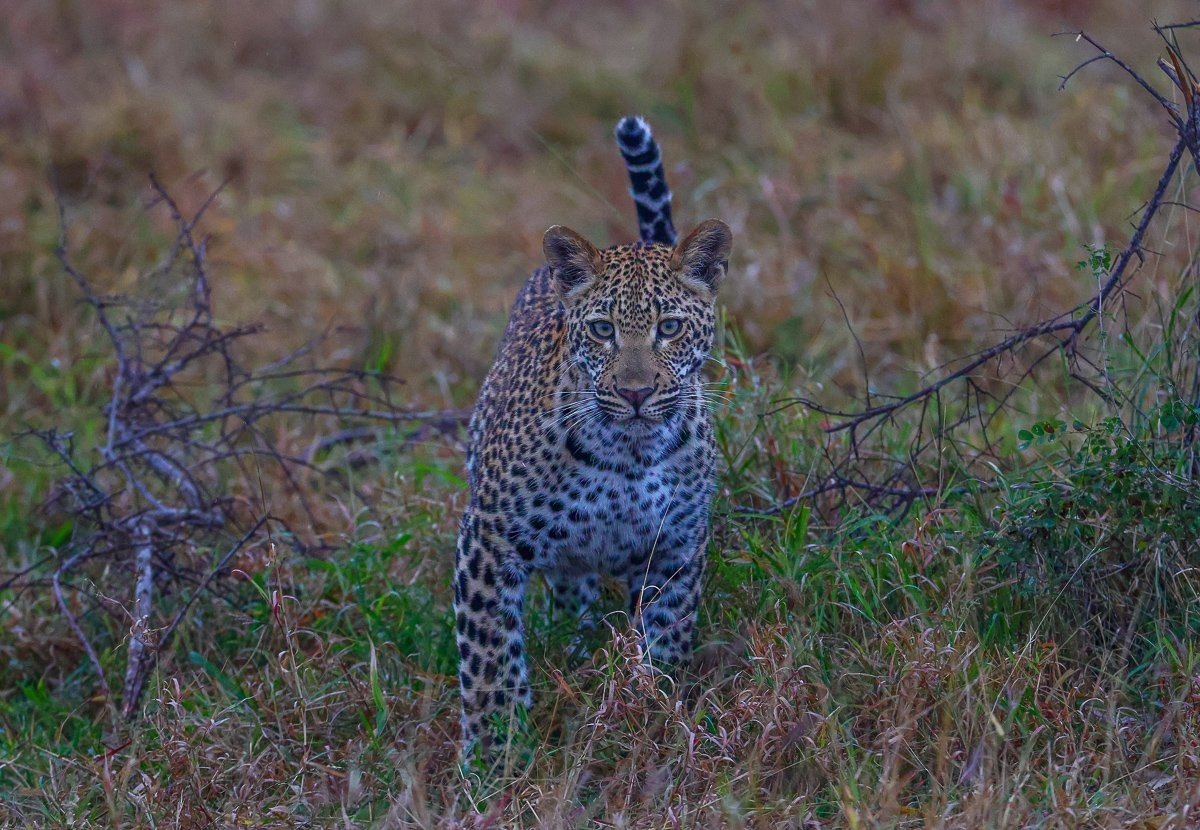
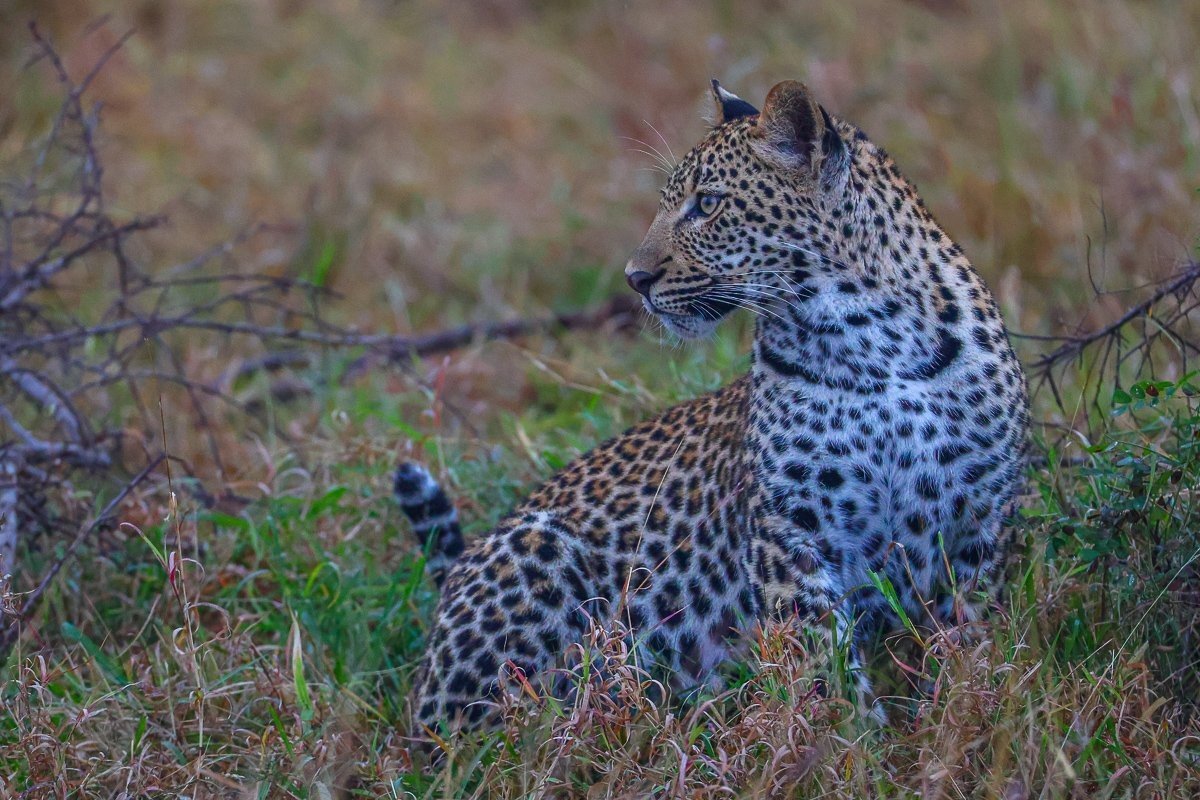
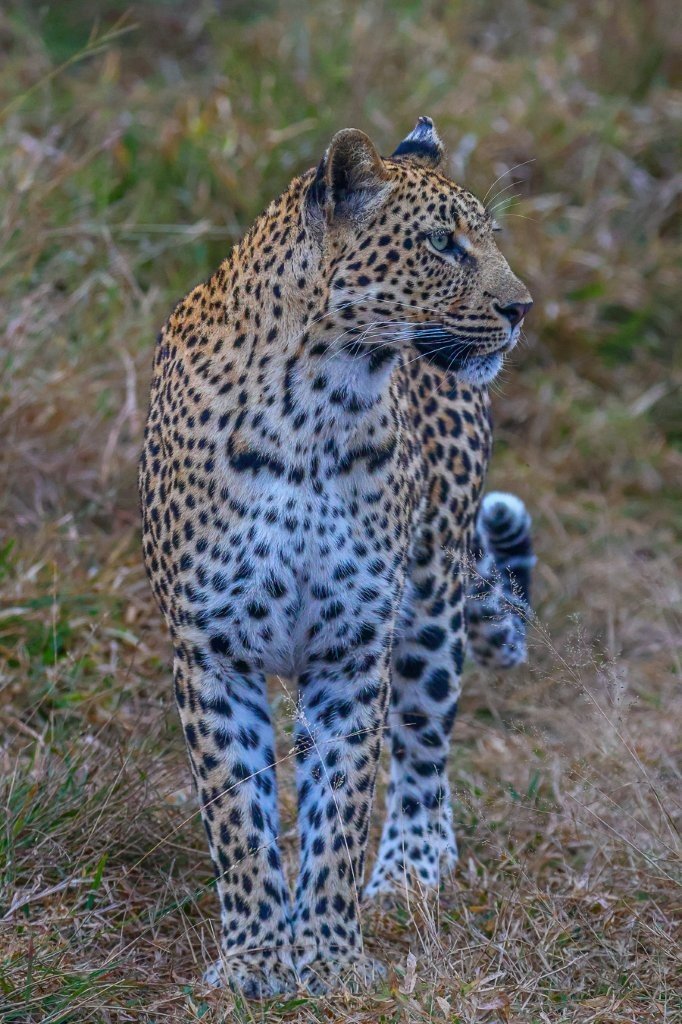
Early one morning, the Golonyi female was making her way back towards her den site, moving cautiously and constantly checking her surroundings. A large herd of buffalo was in the area, and male lions had also been active nearby, making her particularly vigilant.
Female leopards are extremely careful around their den sites, as they avoid leading predators or scavengers to their cubs. With lion activity remaining high in this part of the reserve, Golonyi has done an excellent job of keeping her young safe, although it remains a constant and never-ending challenge.
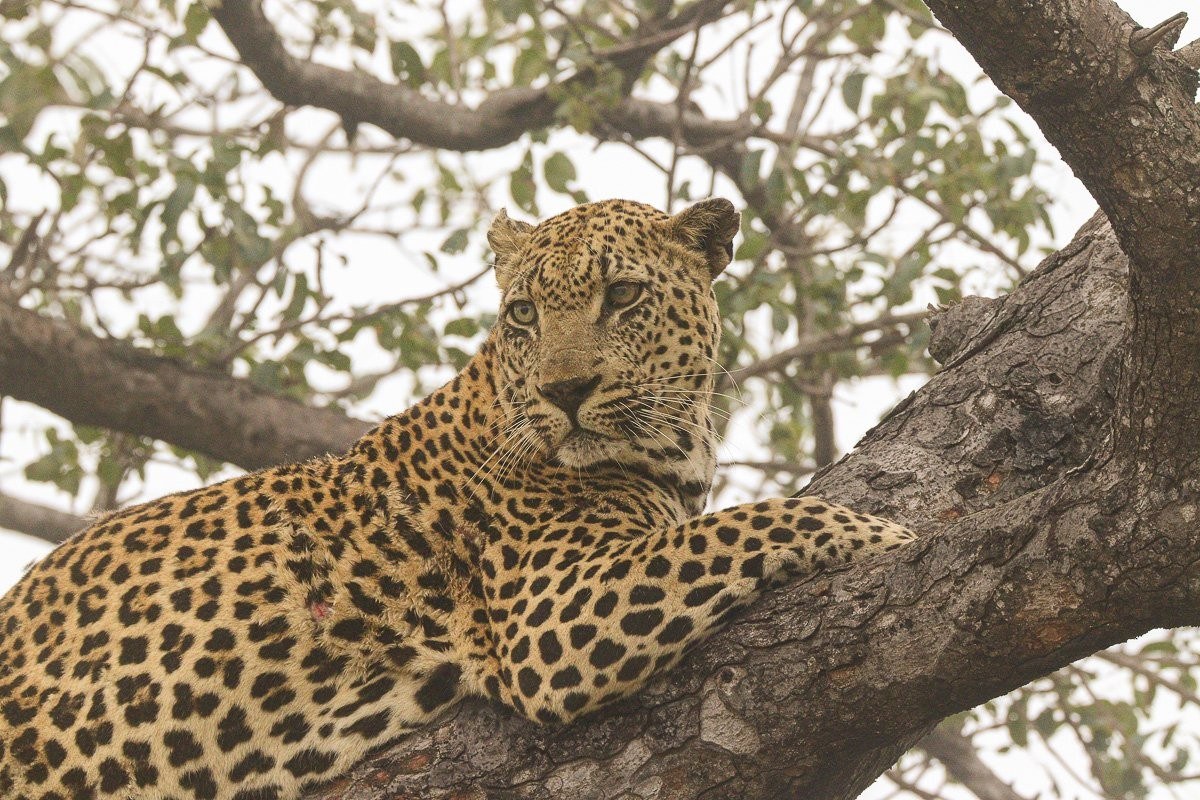
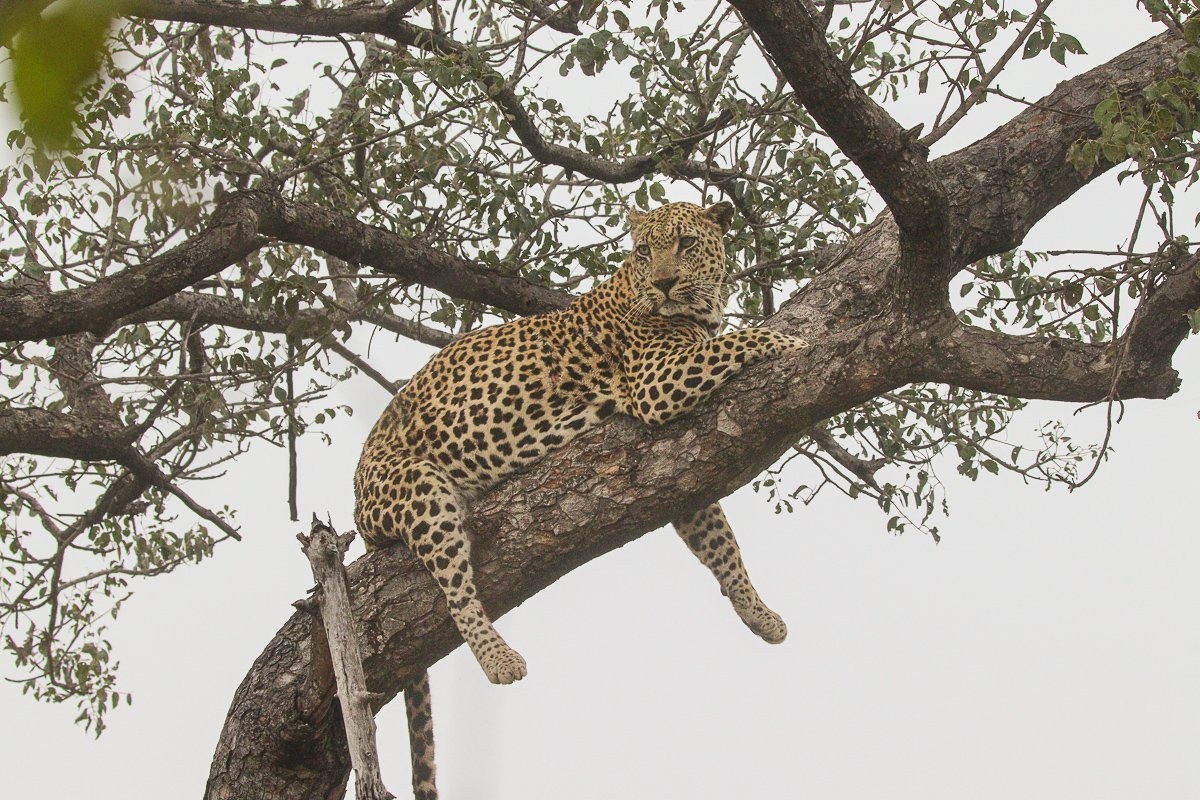
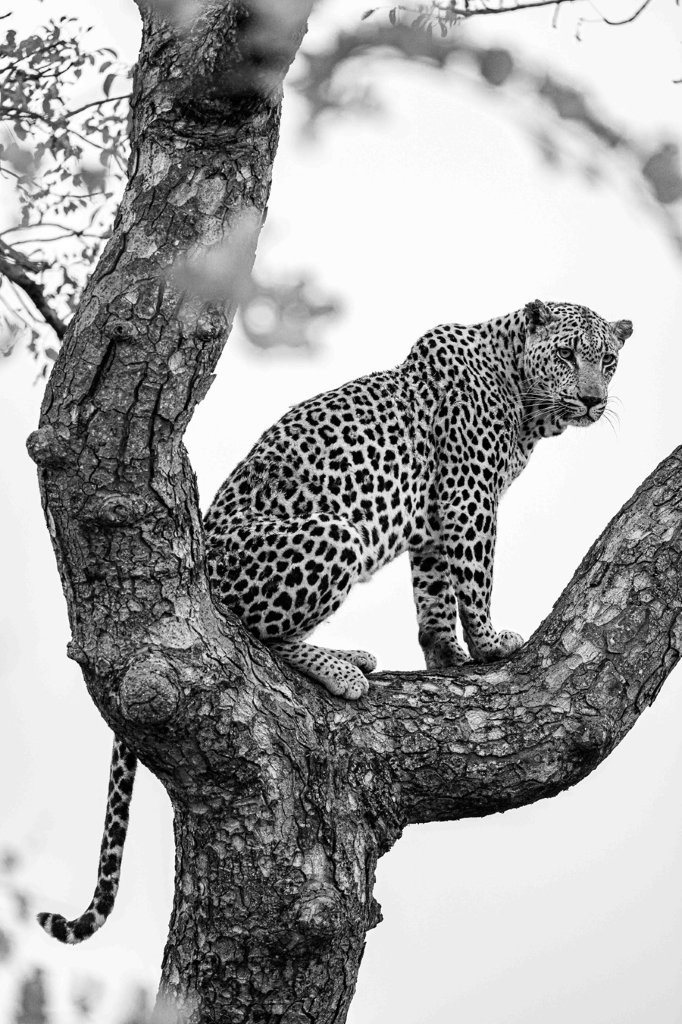
We quickly picked up the tracks of the Southern Pride moving through the southern section of the reserve. The team discovered an unusual scene: the three Southern Pride lionesses and one N’waswishaka male lion were resting beneath a large Marula tree, while the Mawelawela male leopard remained hidden high in the branches above them.
After a short wait, Mawelawela eventually descended from the tree and attempted to slip past the lions to reach the safety of the nearby thickets. Unfortunately, he was not quick enough. The lions gave chase and caught up with him, but with every ounce of strength he had left, the leopard fought them off before sprinting to the nearest tree, where he climbed to safety.
After not seeing any fresh tracks of Mawelawela since this incident, the team followed up on Monday morning. During the search, it became apparent that he has sadly succumbed to his injuries.
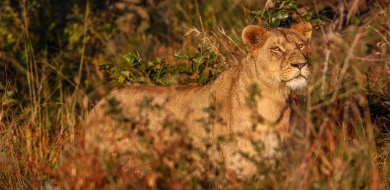
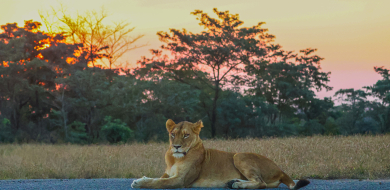
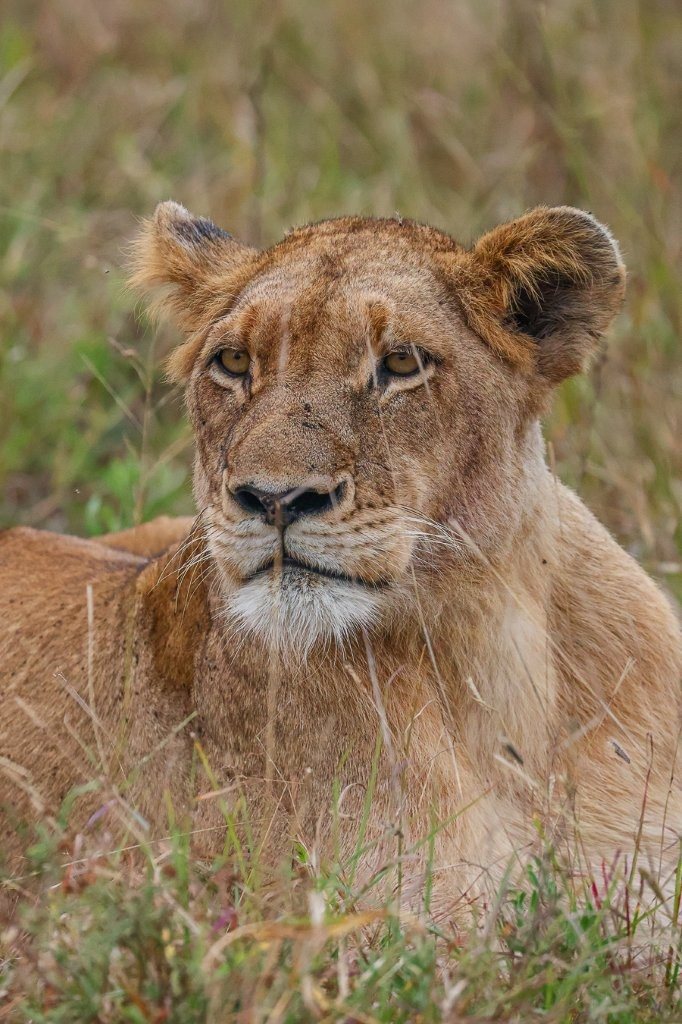
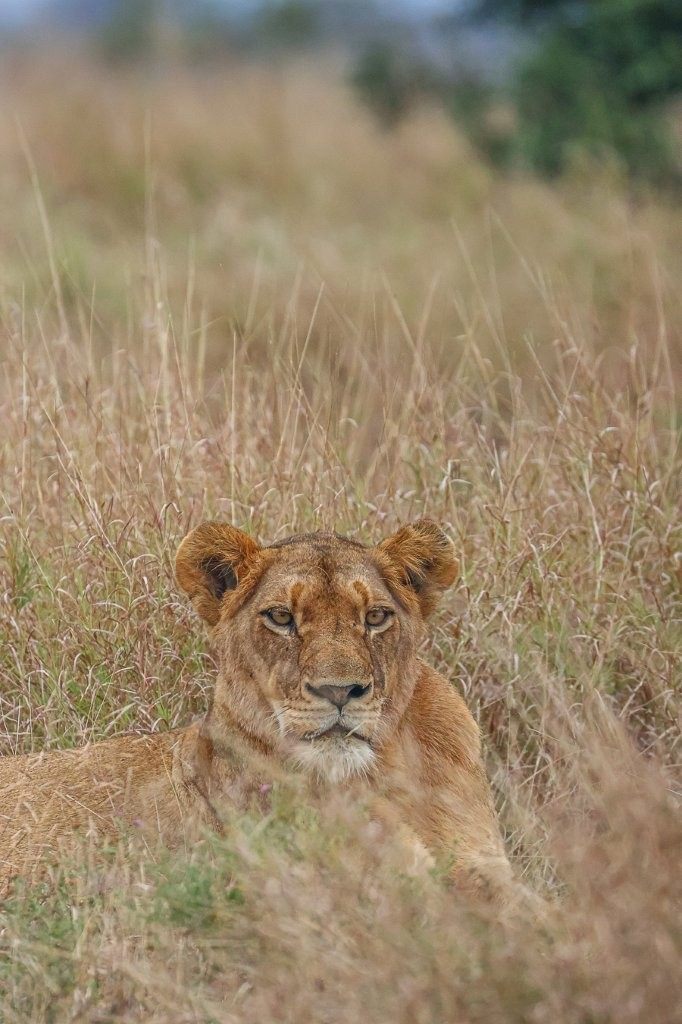
After following tracks heading deeper south into the reserve, we located the lionesses of the Southern Pride resting in an open area and soaking up the first warmth of the morning. One of the lionesses is heavily pregnant, which likely explains the pride's recent movements through this part of their territory as they search for a suitable den site.
If all goes well, we may see new additions to the Southern Pride in the coming months. With the pride currently rebuilding its numbers, the arrival of new cubs would be an important step towards strengthening the pride and securing its future.
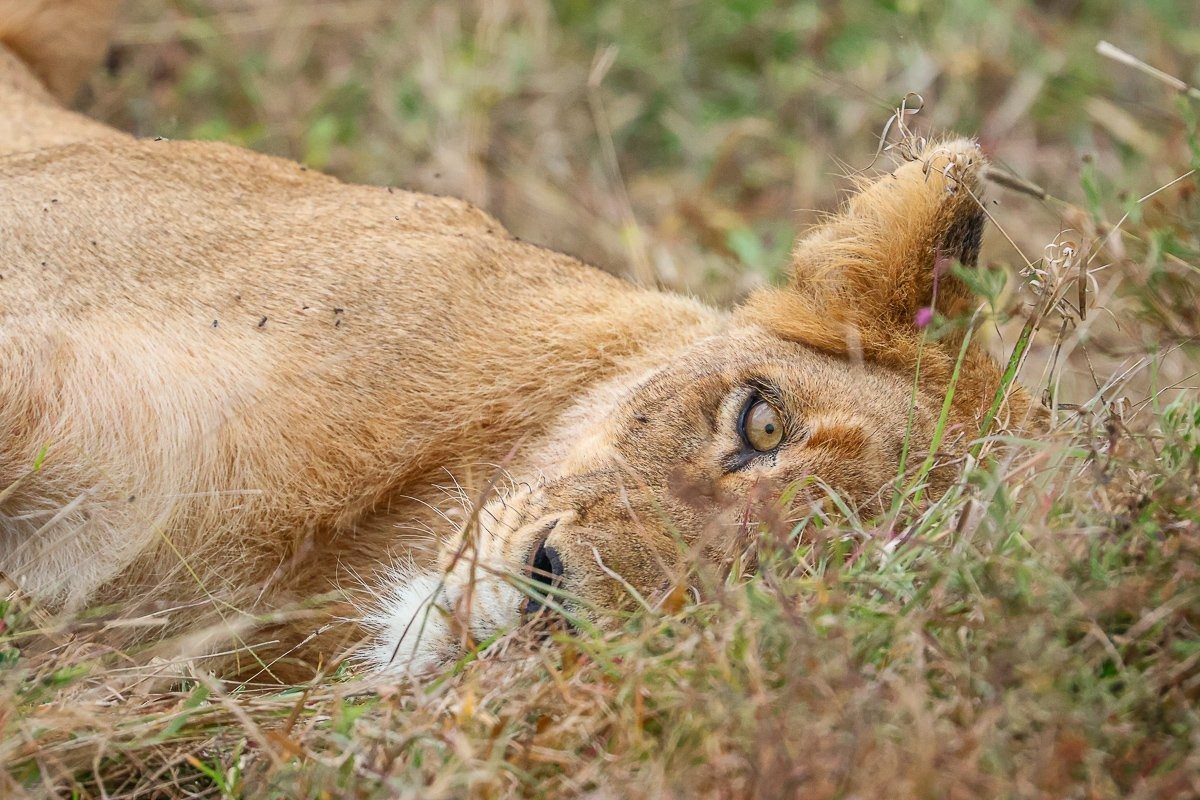
As the morning warmed up, a N’waswishaka male lion woke up and moved into the sun to warm up after the cold night. Basking in the sun will help the male speed up his digestion by raising his body temperature, and conserve as much energy as possible since they do not need to regulate their own body’s temperature.
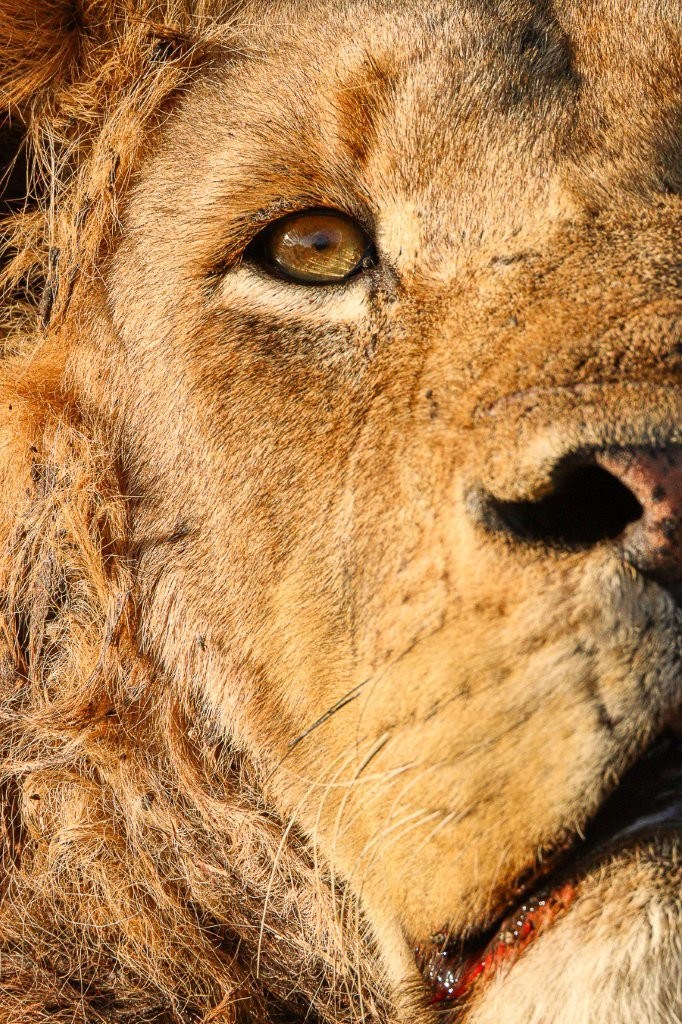
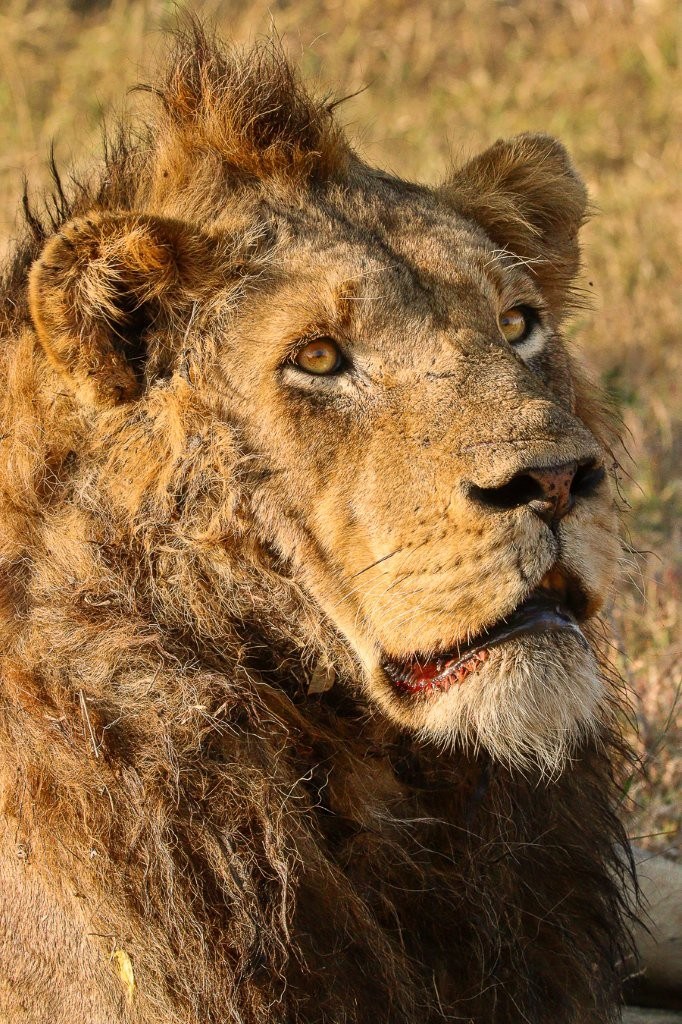
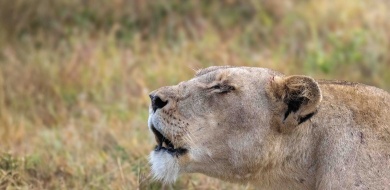
With a set of 30 specialised teeth adapted for hunting and feeding, lions are built to tear meat rather than chew it. These teeth can be divided into three main types, each playing an important role during a feed.
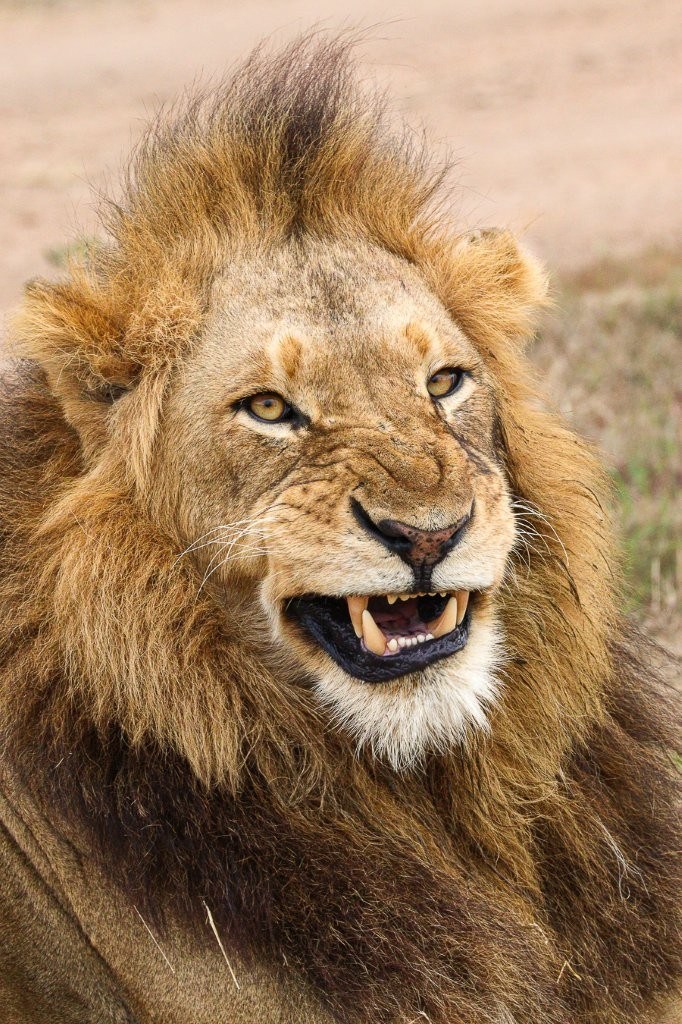
The large canine teeth, which can reach up to 8cm in length, are used to grip and suffocate prey, puncture the skin, and tear chunks of meat from a carcass. Between the canines are the incisors, small front teeth that help scrape and pull meat from bones. Further back in the mouth are the carnassial teeth, formed by specialised premolars and molars. These act like a pair of scissors, slicing large pieces of meat into smaller, more manageable chunks that can be swallowed easily.
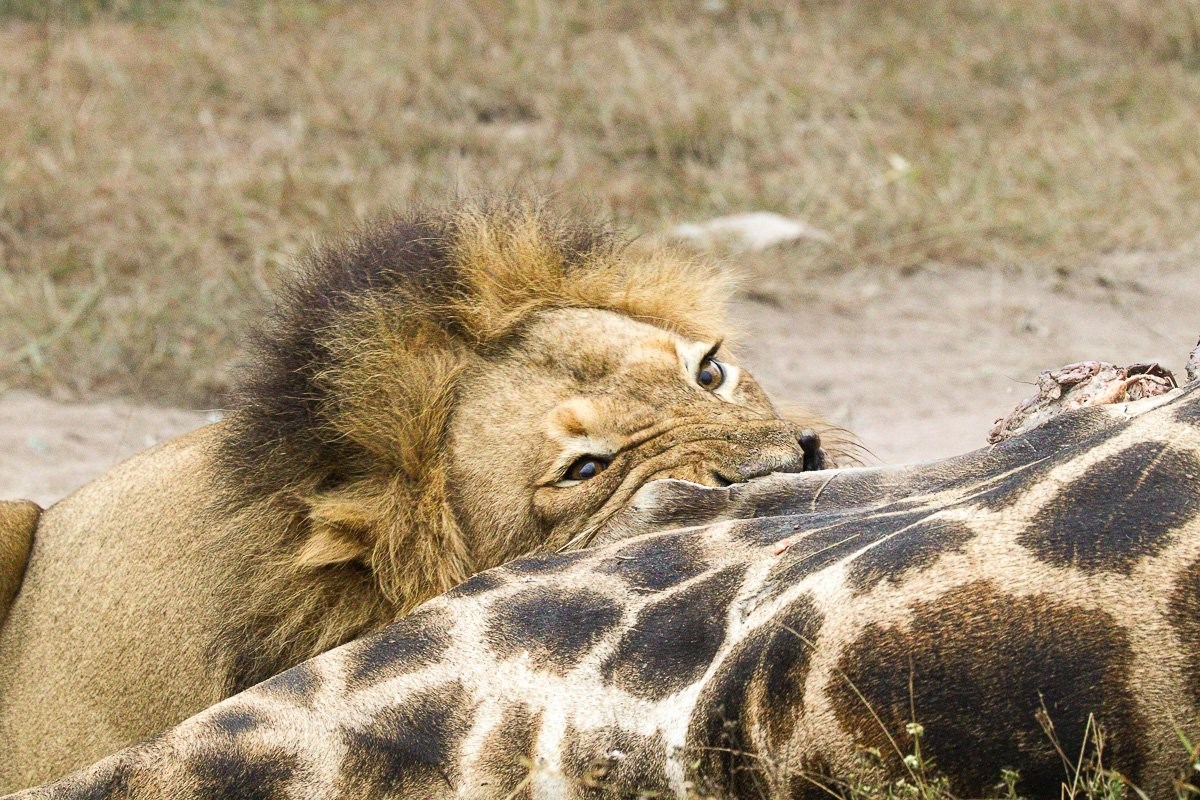
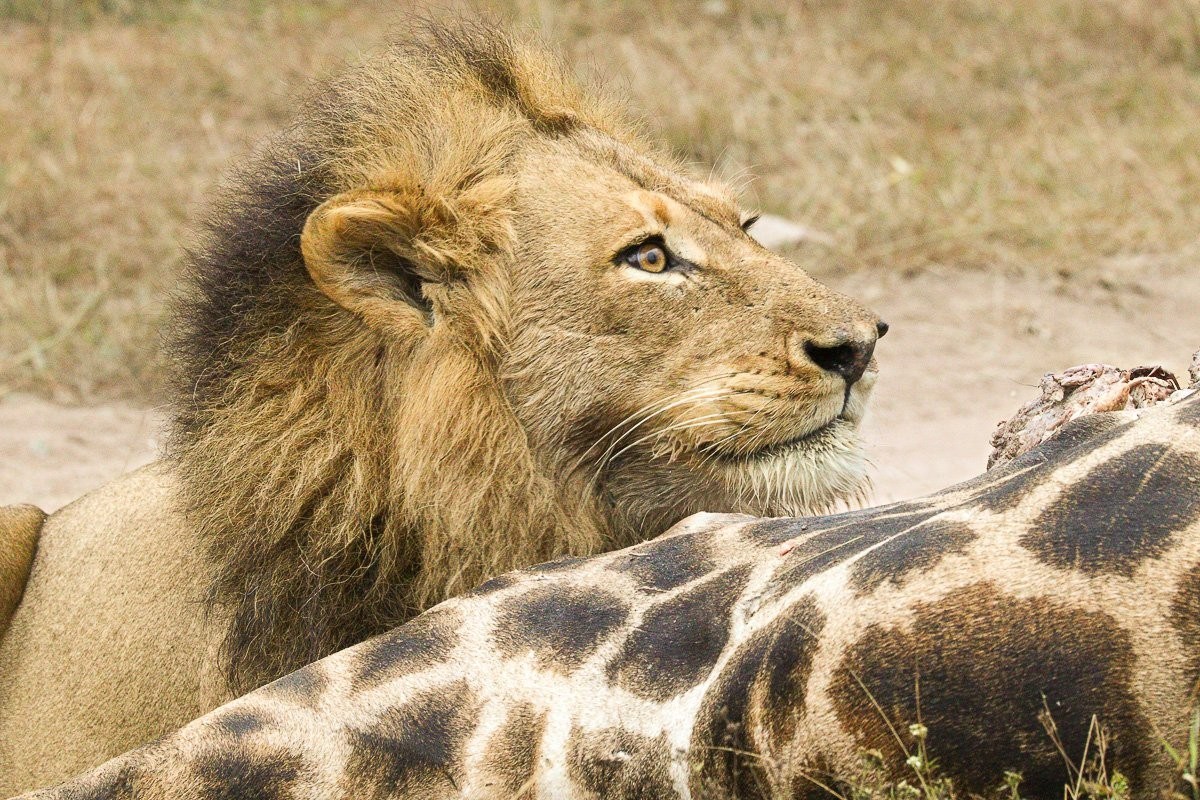
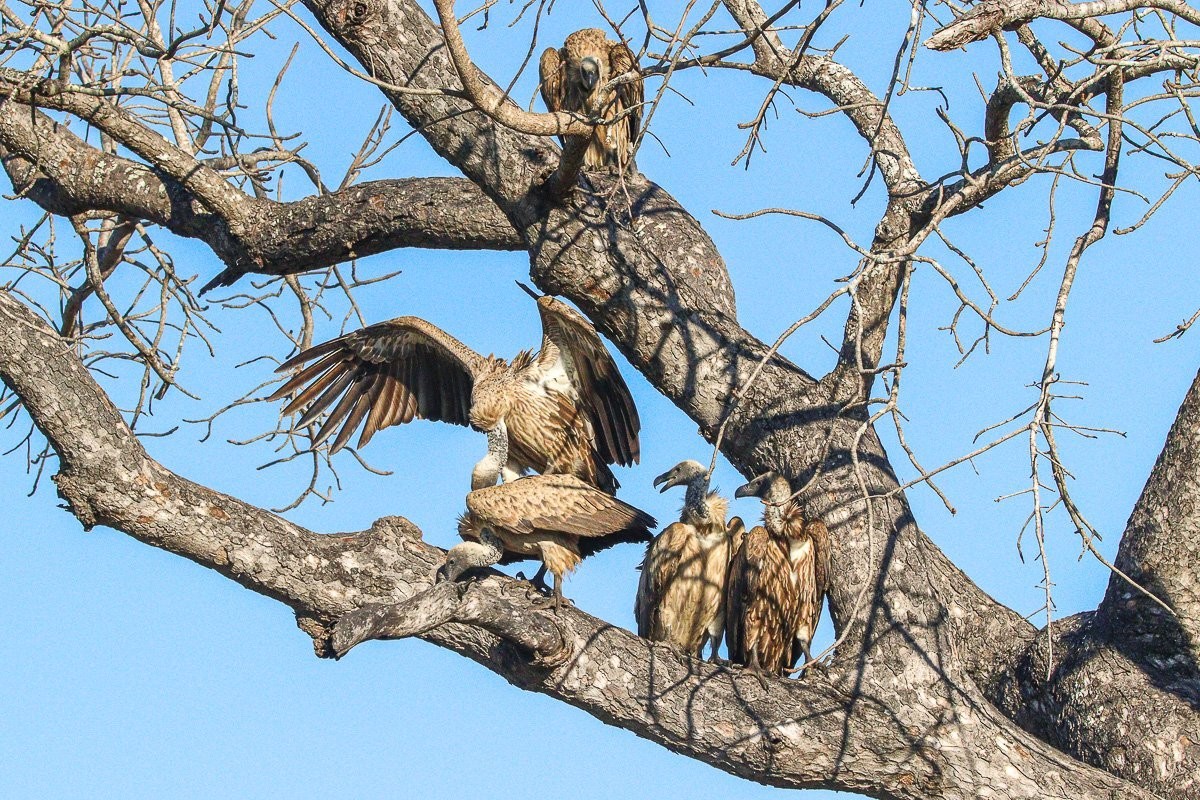
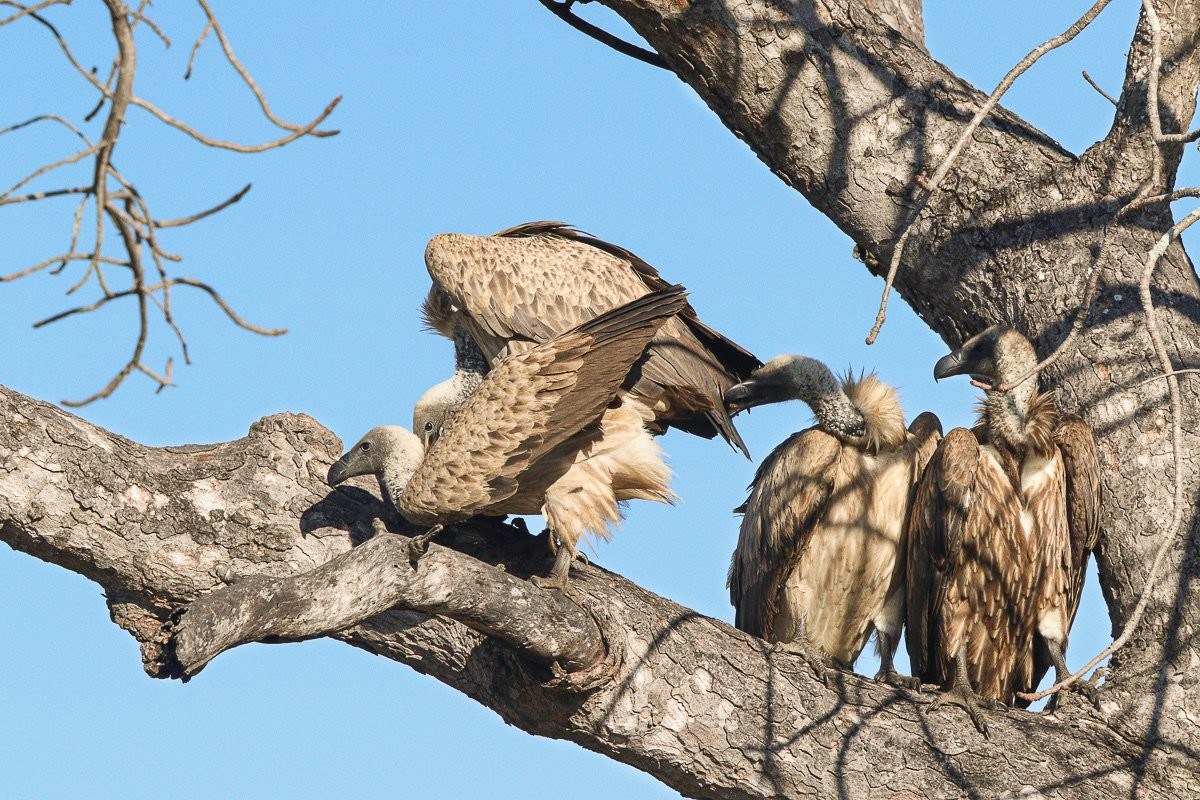
While watching the N’waswishaka male lions feeding on their kill, we heard a series of loud squawks from the trees above. Looking up, we noticed several White-backed Vultures engaging in courtship and mating behaviour.
When vultures locate a carcass, the excitement and social activity that surround a feeding opportunity can stimulate courtship behaviour. As they wait for dominant predators, such as lions, to finish feeding, pairs will often begin mating and establishing roosting or nesting territories nearby.
White-backed Vultures are predominantly monogamous and typically mate for life. They raise a single chick each year and nest in loose colonies of up to 20 pairs, usually in large thorn trees that provide protection for their young from potential predators.
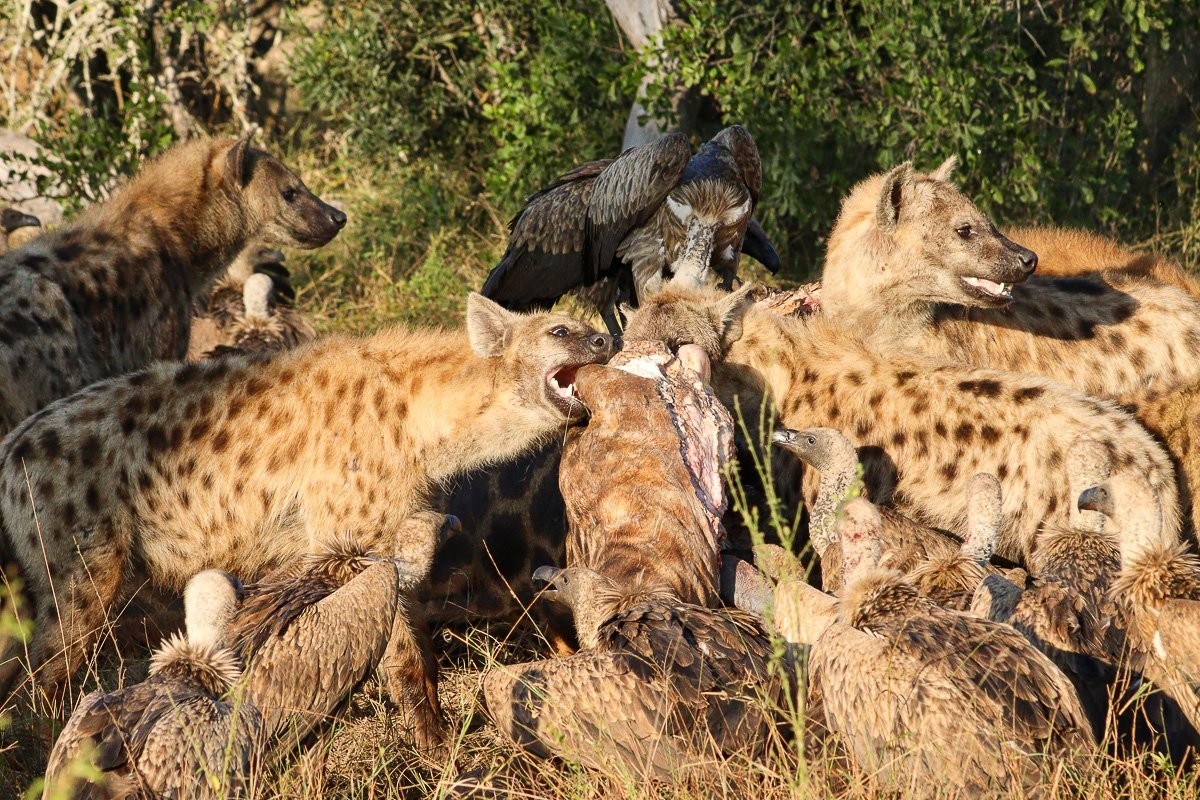
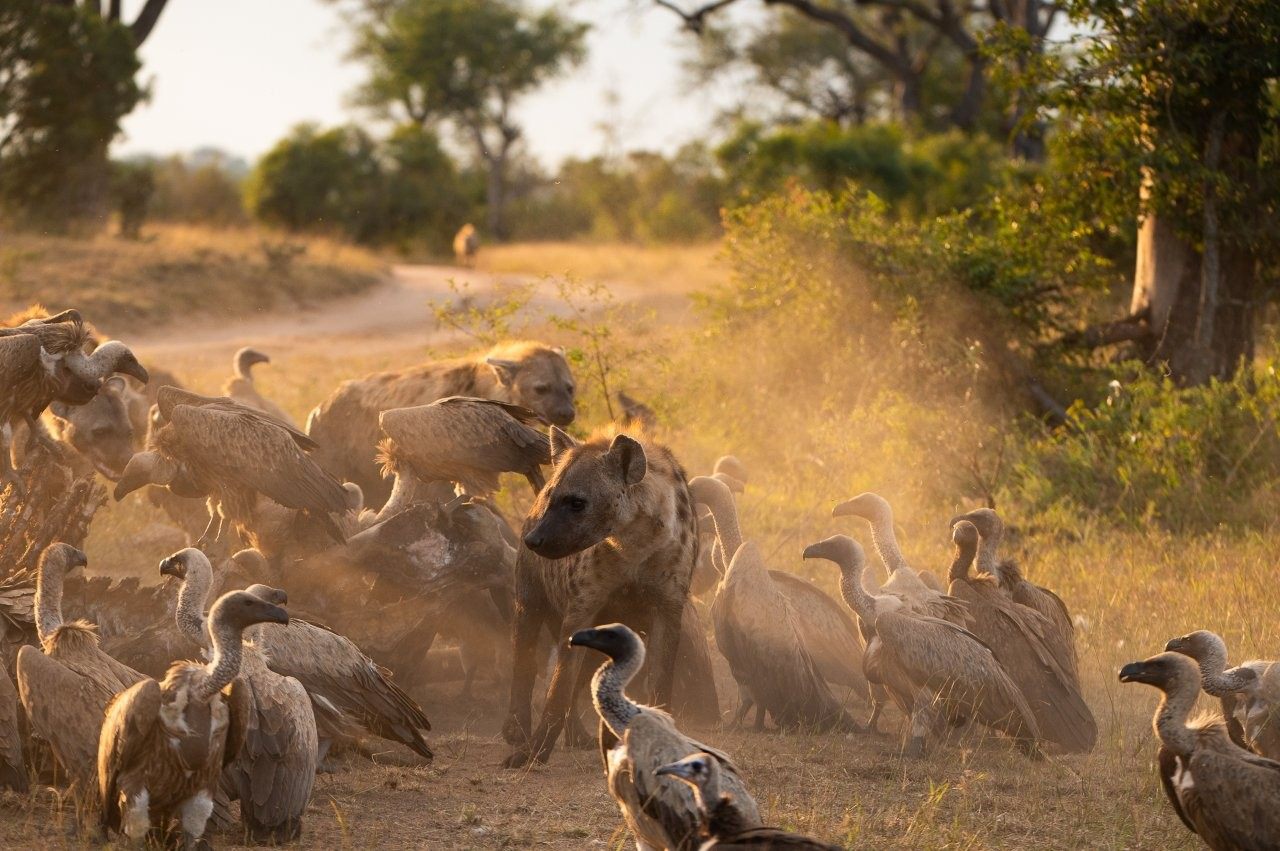
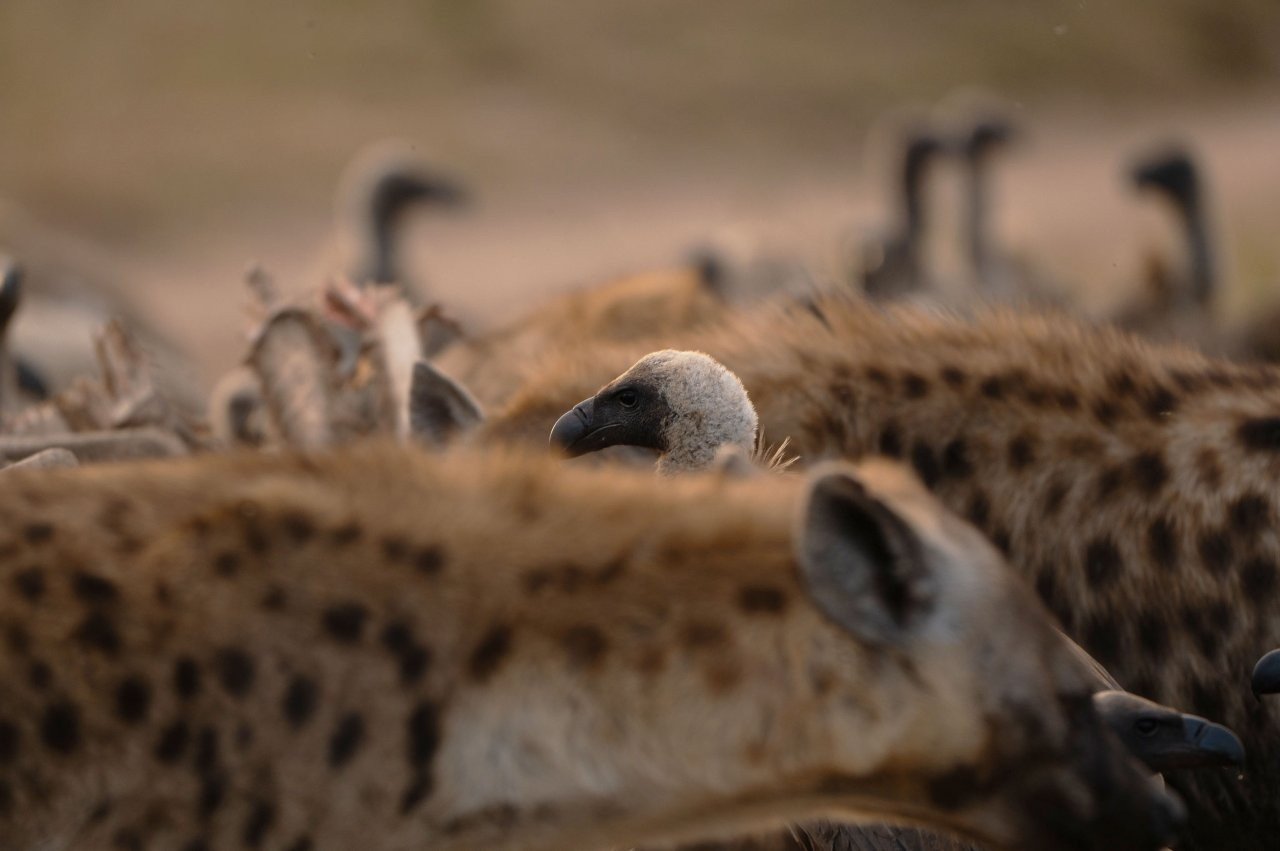
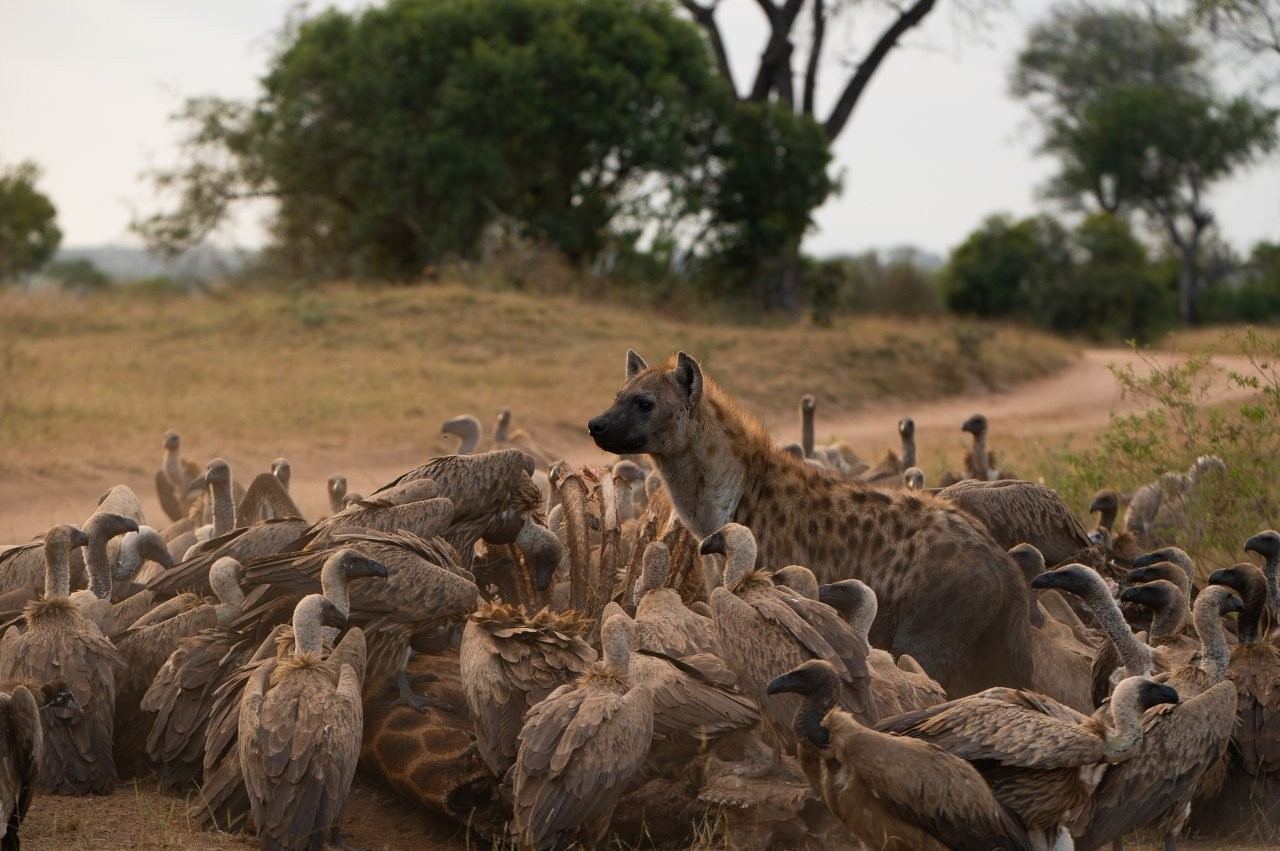
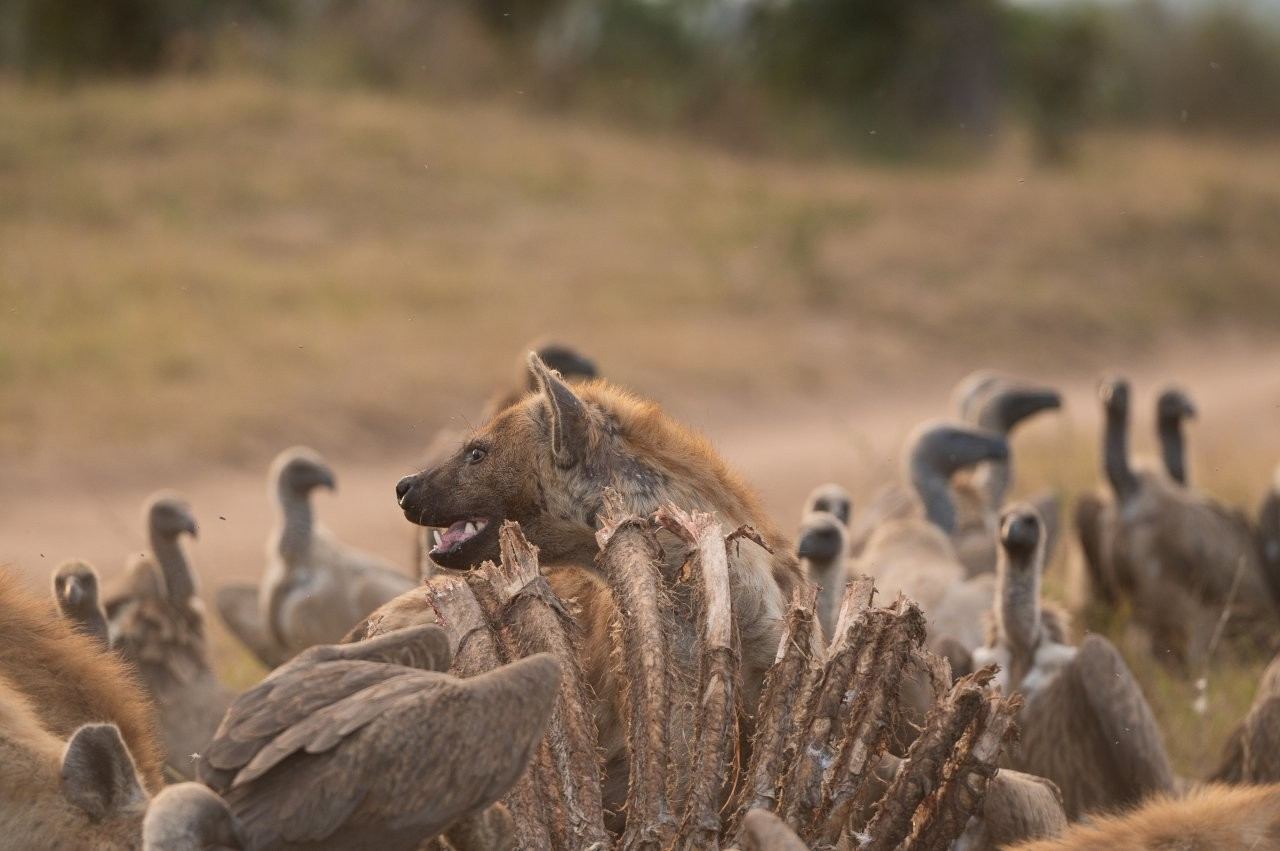
After a week of patiently waiting, the scavengers finally had their opportunity to feed on the large giraffe carcass abandoned by the N’waswishaka male lions in the early hours of the morning. The sounds of feeding and squabbling soon attracted even more scavengers from the surrounding bush as the day progressed. Large carcasses such as this provide a fascinating glimpse into the diversity of scavengers within the ecosystem. Spotted hyenas, Side-striped jackals, Hooded, Cape, White-backed and Lappet-faced vultures, as well as Marabou storks, all arrived to take advantage of the abundant food source.
By consuming carcasses, these scavengers play a vital role in the ecosystem. They help recycle nutrients back into the environment, limit the spread of disease, and prevent the accumulation of decaying biomass throughout the reserve.
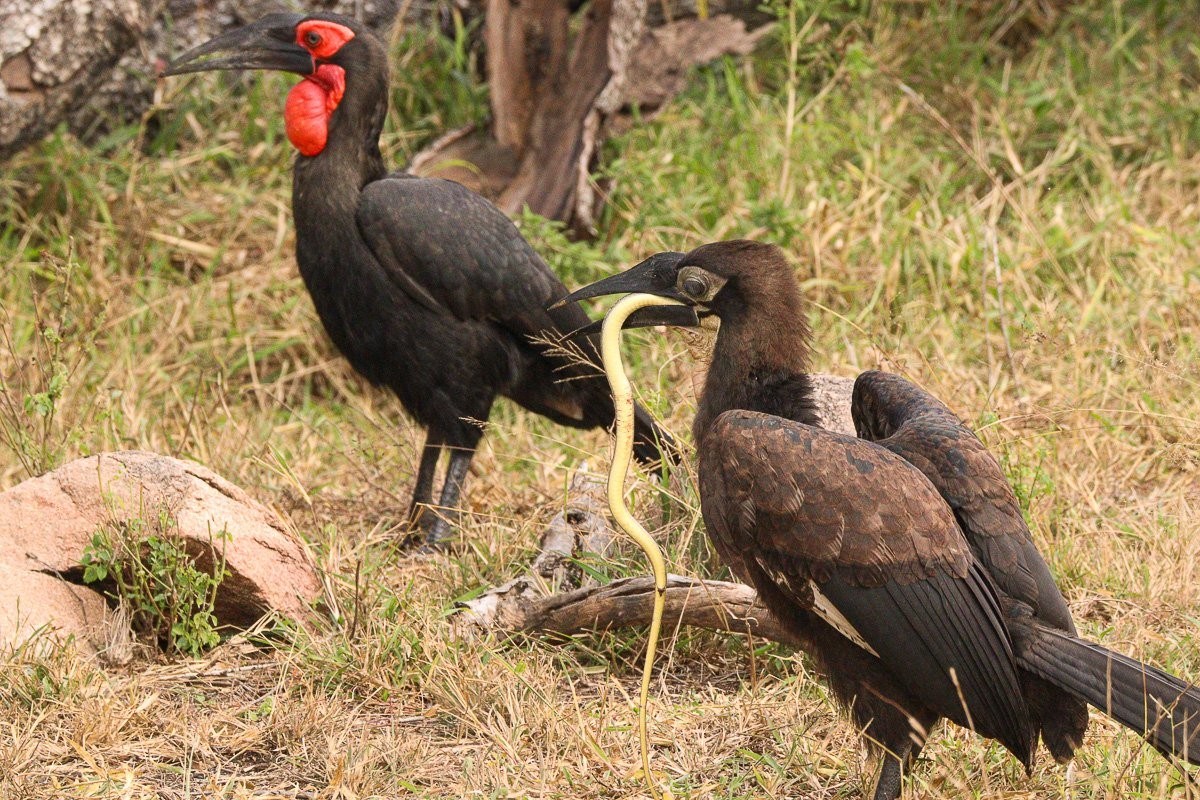
Southern Ground Hornbills live in territorial family groups of 2–12 individuals, usually consisting of an alpha breeding pair and several helpers. These helpers are typically sub-adult males that remain with the family for up to nine years, assisting with raising chicks, defending the territory, and protecting the nest before eventually leaving to find mates of their own.
We watched as a small family group flew down into a clearing nearby, and we slowly approached to see what had caught their attention. As we got closer, we noticed a juvenile pulling at something in the female’s beak. It was a large snake. The female repeatedly stabbed and flattened the snake with her powerful, dagger-like bill in an attempt to kill it before passing it to the juvenile, which then began swallowing it.
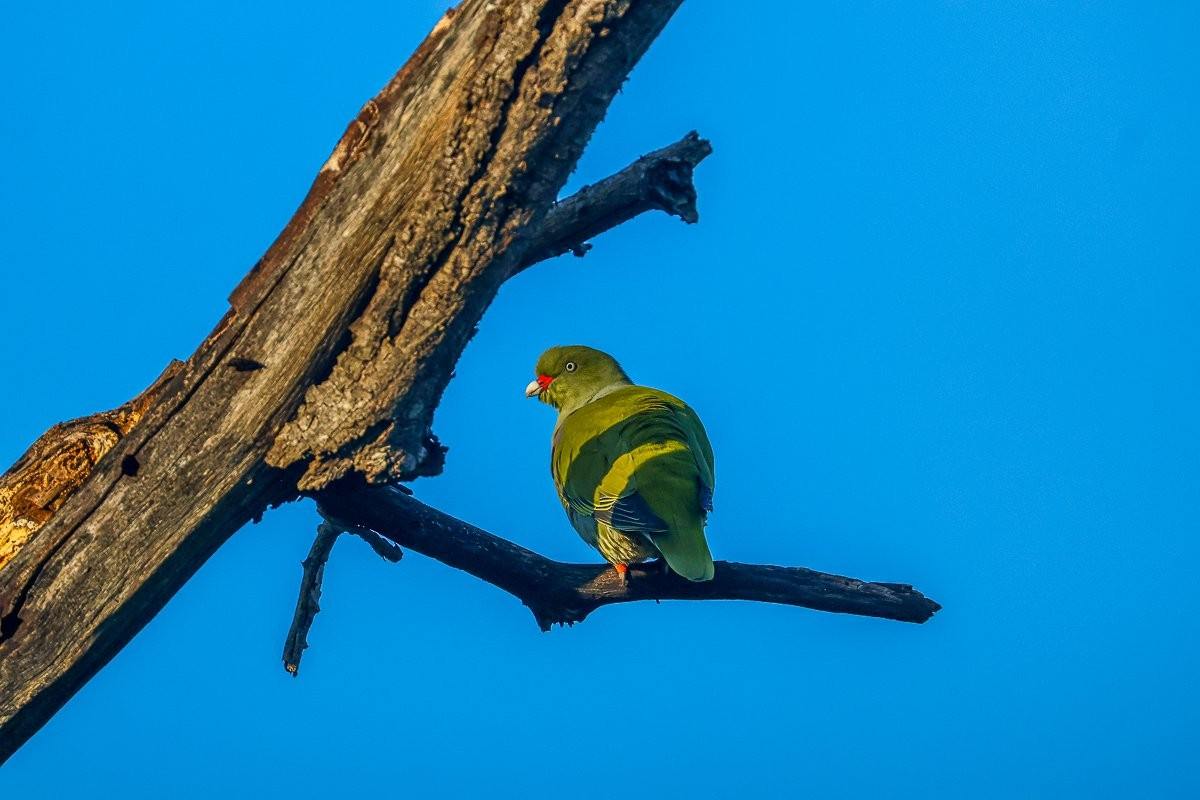
We watched this African green pigeon perched quietly in a dead tree late in the afternoon, soaking up the last of the sunlight before the cool evening set in. As a frugivore (fruit-eater), it plays an important role in seed dispersal, helping to shape and maintain the bushveld as one of nature’s key gardeners.
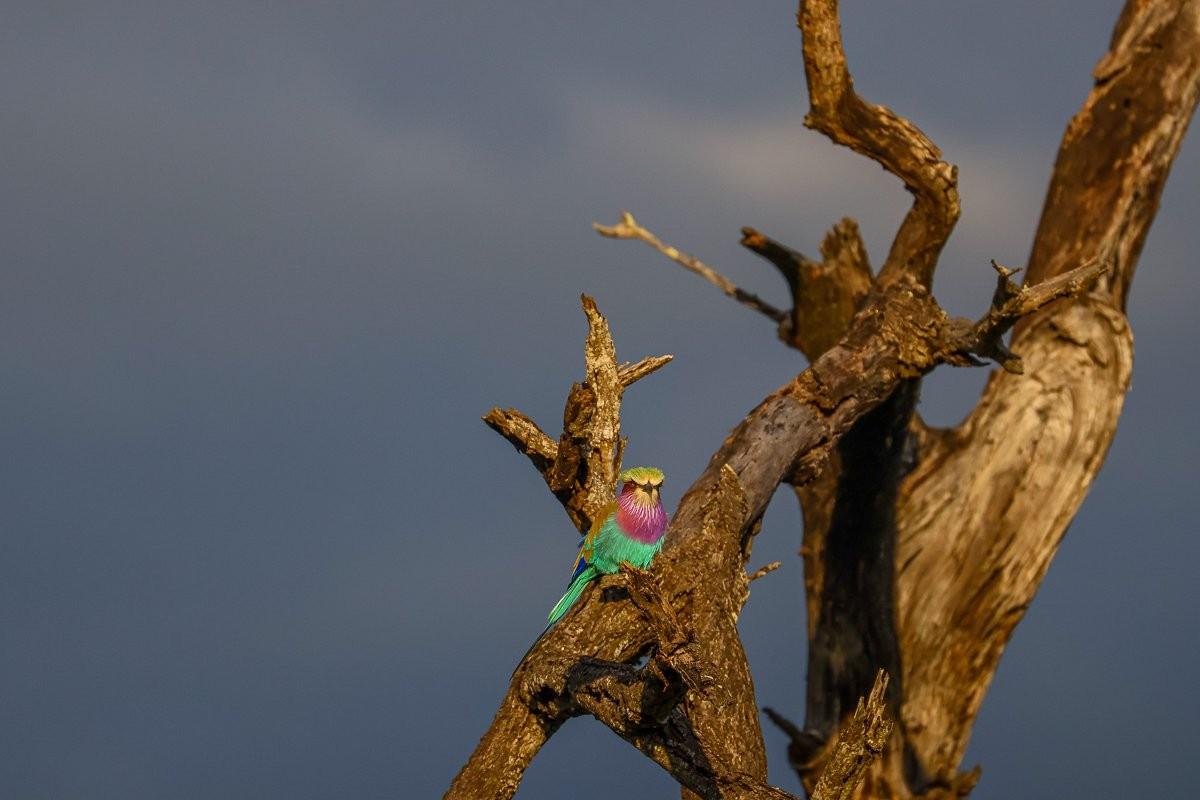
A Lilac-breasted roller perches high on a dead branch in the late afternoon light, its jewel-toned plumage glowing against the sky. From this lookout it watches the ground intently, scanning for insects. When it spots prey, the roller launches in a swift, acrobatic dive and snatches the insect with a precise bill, a hunting style called perch-and-pounce.
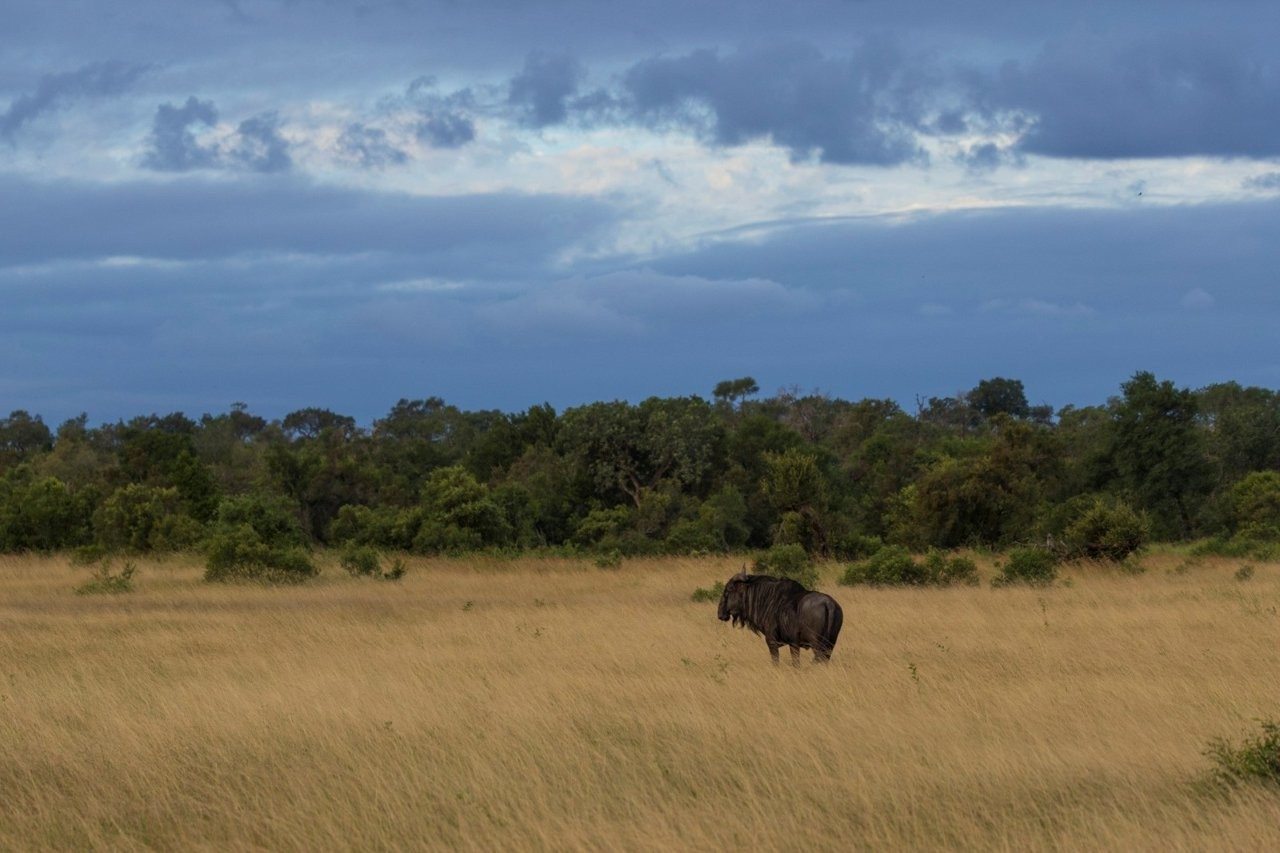
Beneath brooding summer storm clouds, a lone Blue Wildebeest Bull stands defiantly. In the vast expanse of the open lowveld plains, he is unmoving amongst the dancing grass, fluttering leaves and strong winds. His territorial claim unwavering regardless of what the elements may bring.
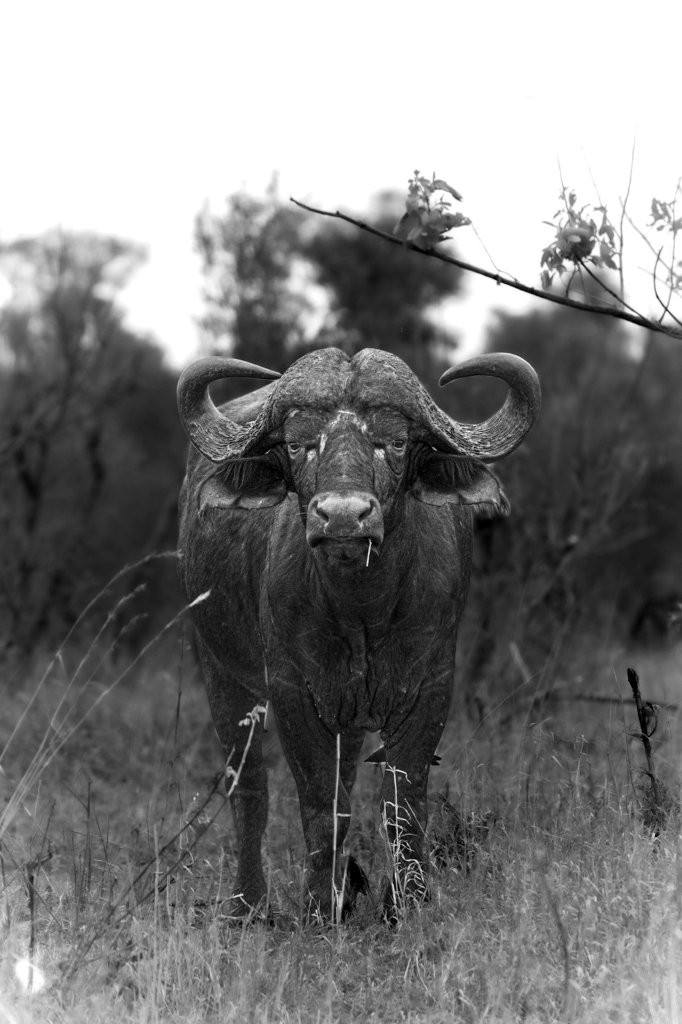
A buffalo bull stands firm in the open, a deathly stare with the steady confidence only an old dagga boy can carry. His heavy frame and scarred horns speak of years spent surviving predators, droughts, and dominance battles. In the bush, few animals command respect quite like a bull that has earned every mark he wears.
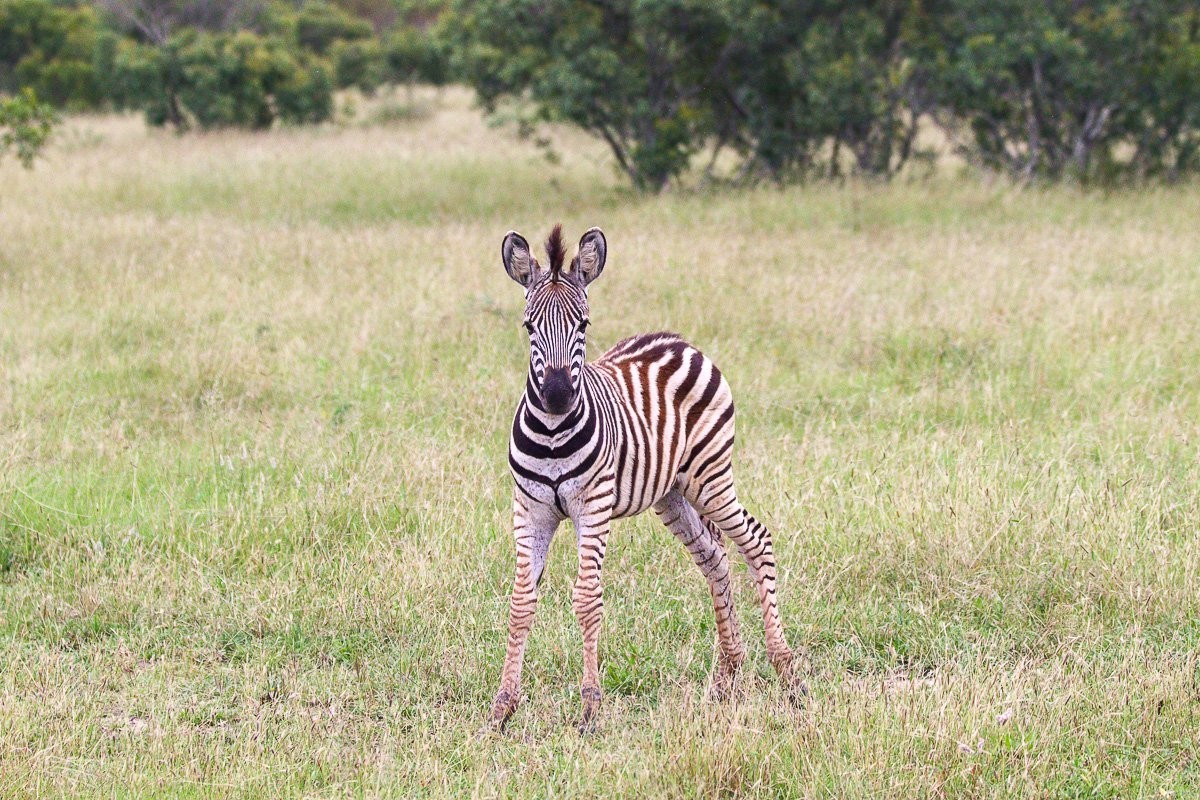
Born with more brown and white stripes, the zebra’s stripes will slowly darken as it grows. With their long legs they are able to keep up with the herd within its first hour of life, and allow them to run around with other young zebras within the herd, building their stamina, agility, social and survival skills.
Until next time…
Blog by Wendy Claase
Images by Benjamin Loon, Devon Jansen, Jamiel Malherbe, Jana du Plessis, Josh Duffus, Ruan Mey and Viviane Ladner
Videos by Jana du Plessis, Josh Duffus and Viviane Ladner