
Riding Giants
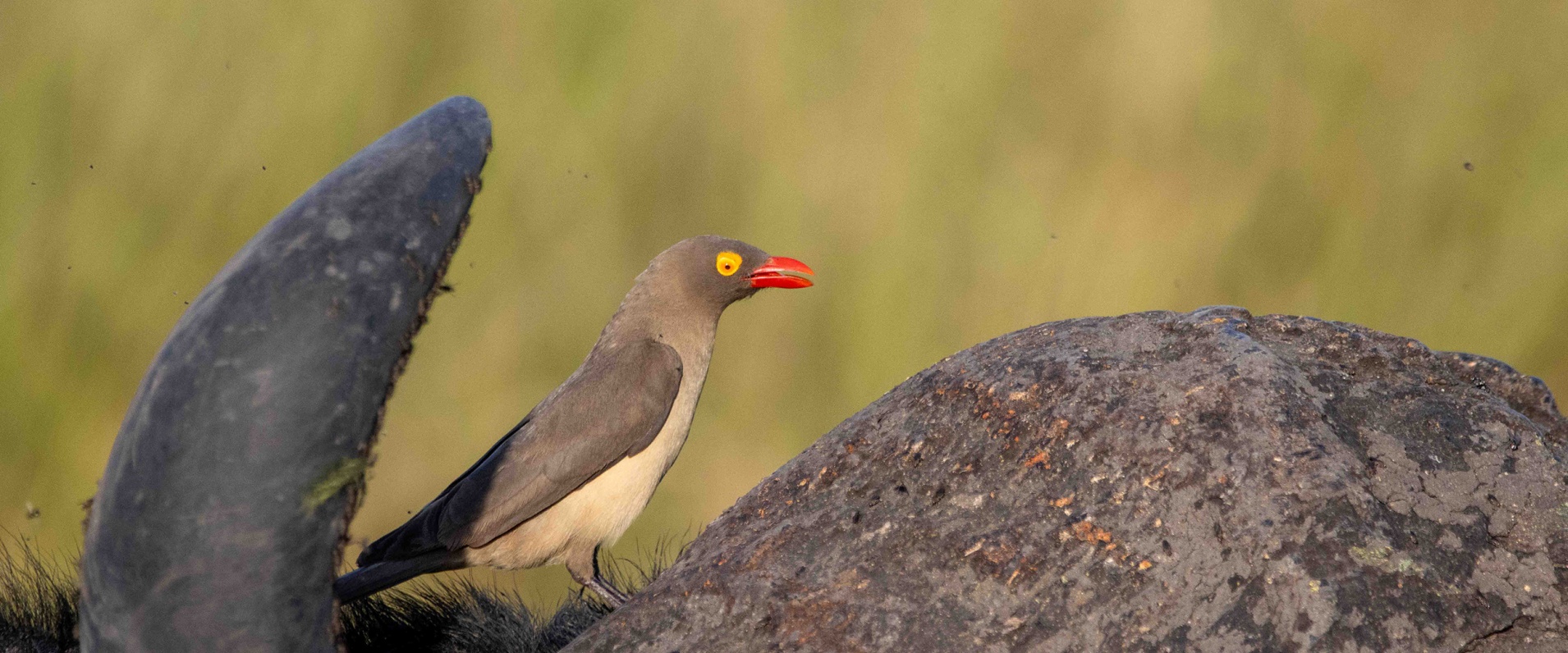
on Mar 10, 2026Across the sweeping plains of sub-Saharan Africa, one of the most recognisable wildlife scenes is that of small brown birds perched confidently on the backs of massive mammals. These birds are the Red-billed oxpecker and the Yellow-billed oxpecker, and their relationship with large animals is one of the most fascinating examples of ecological connection in the wild.
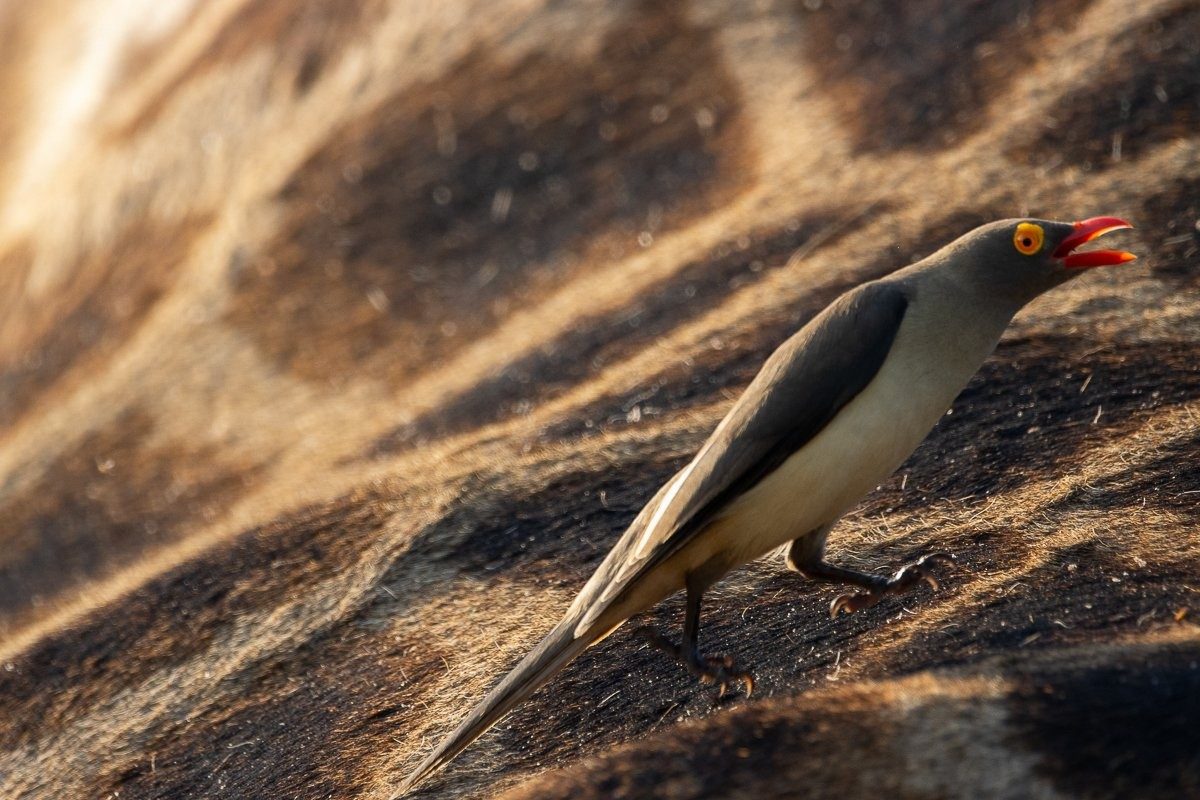
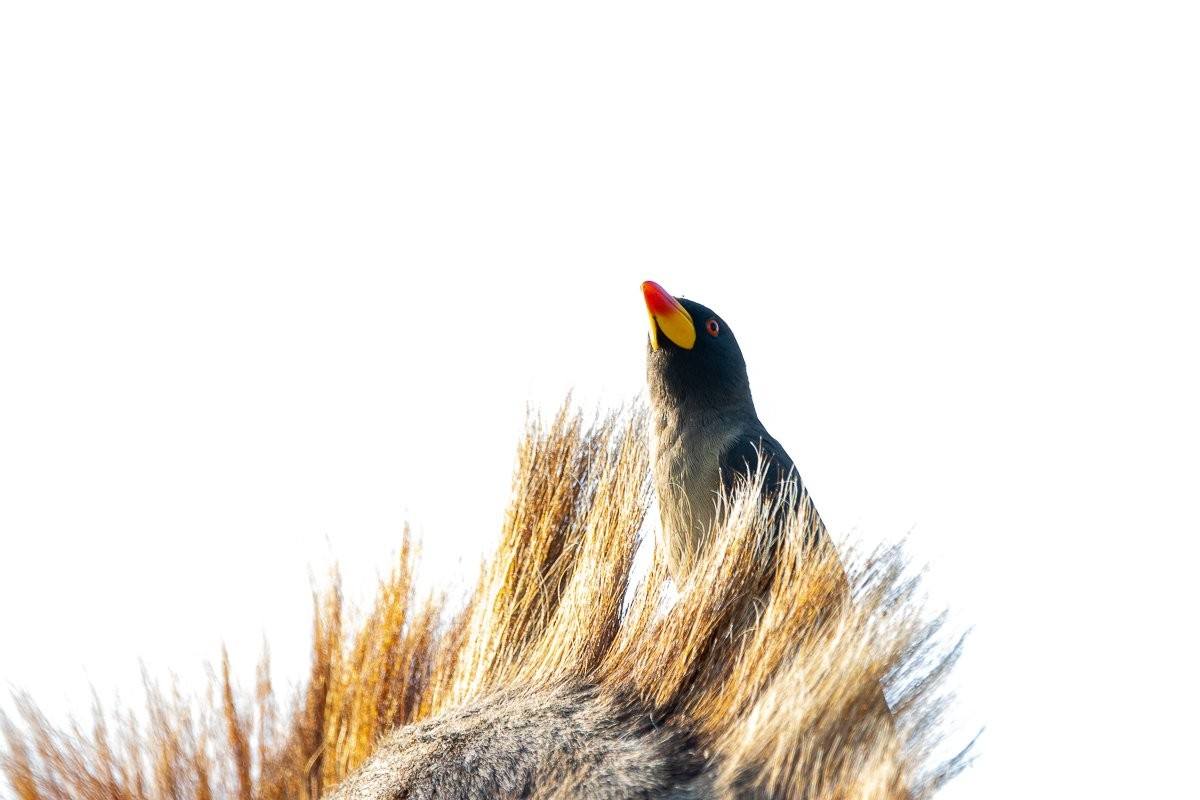
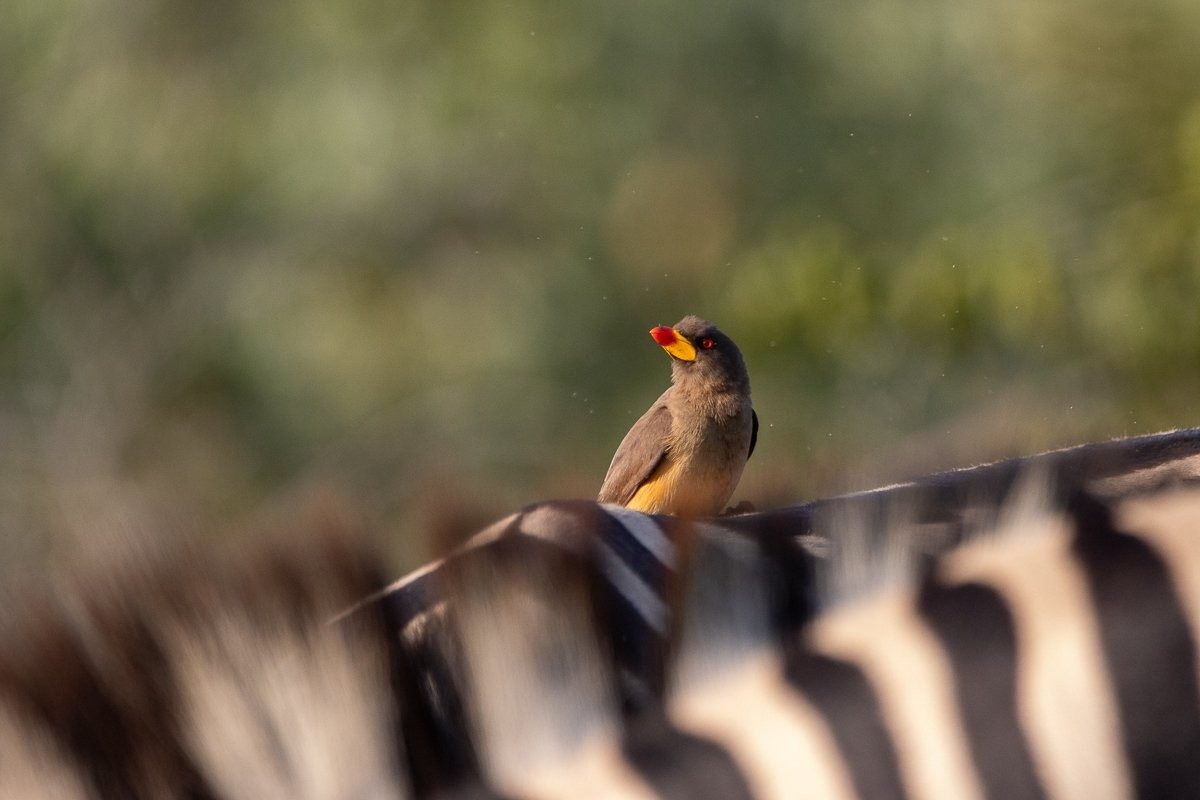
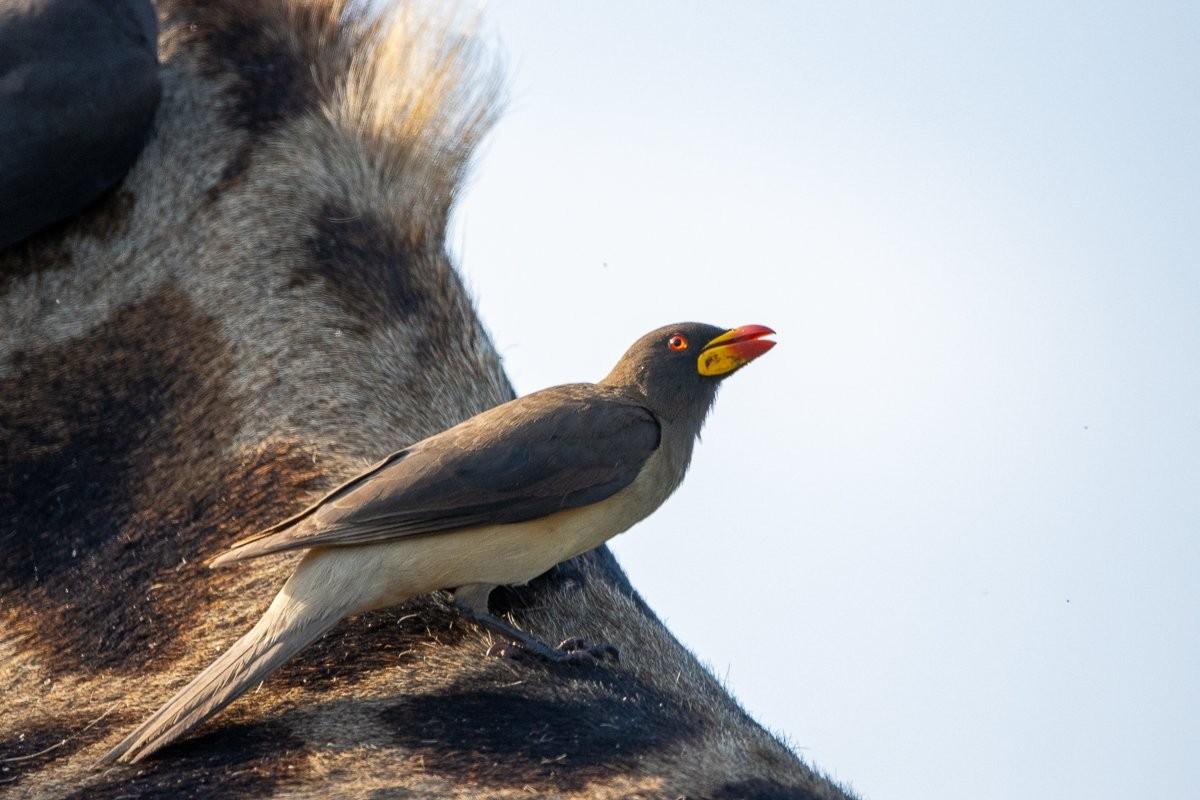
Oxpeckers spend much of their lives in close contact with large herbivores such as the African buffalo, White rhinoceros, giraffe, and zebra, to impala and other small herbivores.
With strong claws and specially adapted beaks, they cling to fur and skin as their hosts move through grasslands and woodlands. From a distance, the partnership appears simple: the birds eat parasites, and the mammals benefit from the removal of irritating ticks. For many years, this interaction was described as a classic example of mutualism, where both species gain something essential.
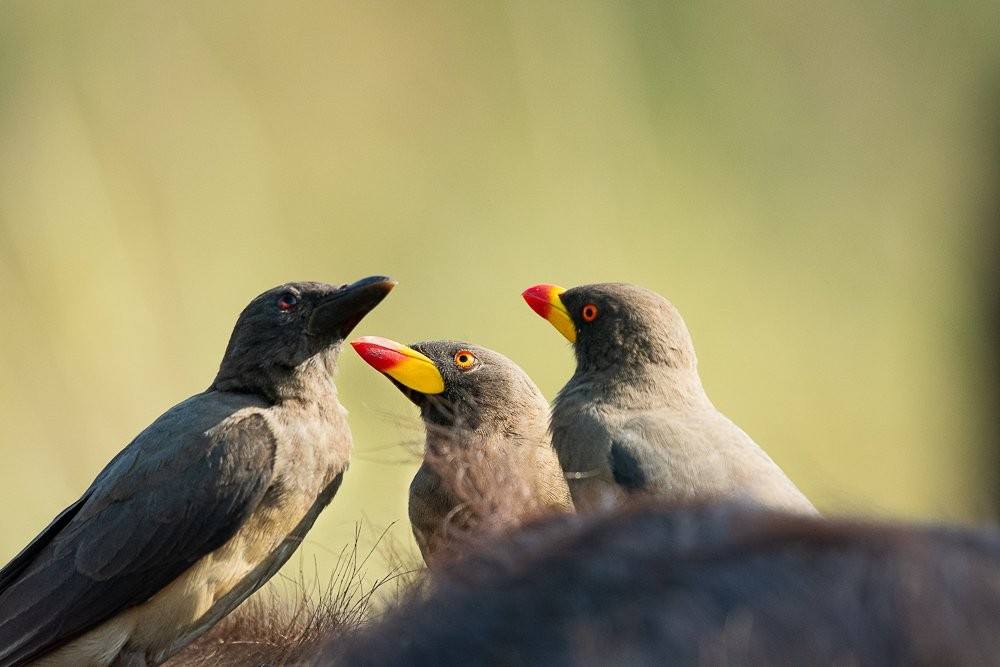
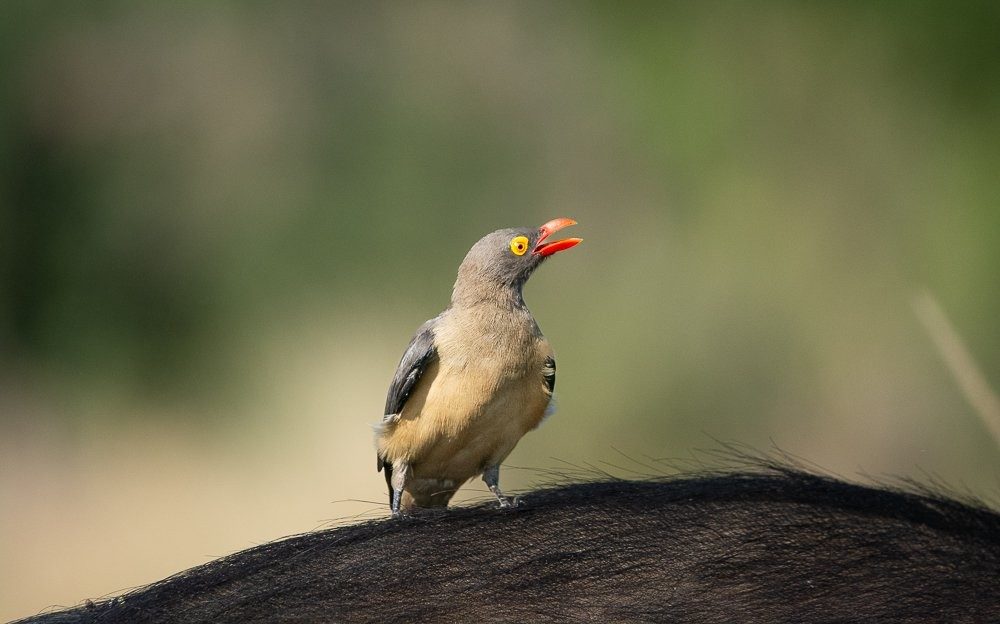
Ticks are a serious burden for large mammals. They feed on blood, spread disease, and can weaken animals over time. Oxpeckers consume these parasites, sometimes eating hundreds in a single day. In doing so, they gain a steady and reliable food source. The mammals, in turn, may experience some relief from heavy parasite loads. In ecosystems where parasites are abundant, this feeding behaviour can influence animal health and potentially affect broader wildlife populations.
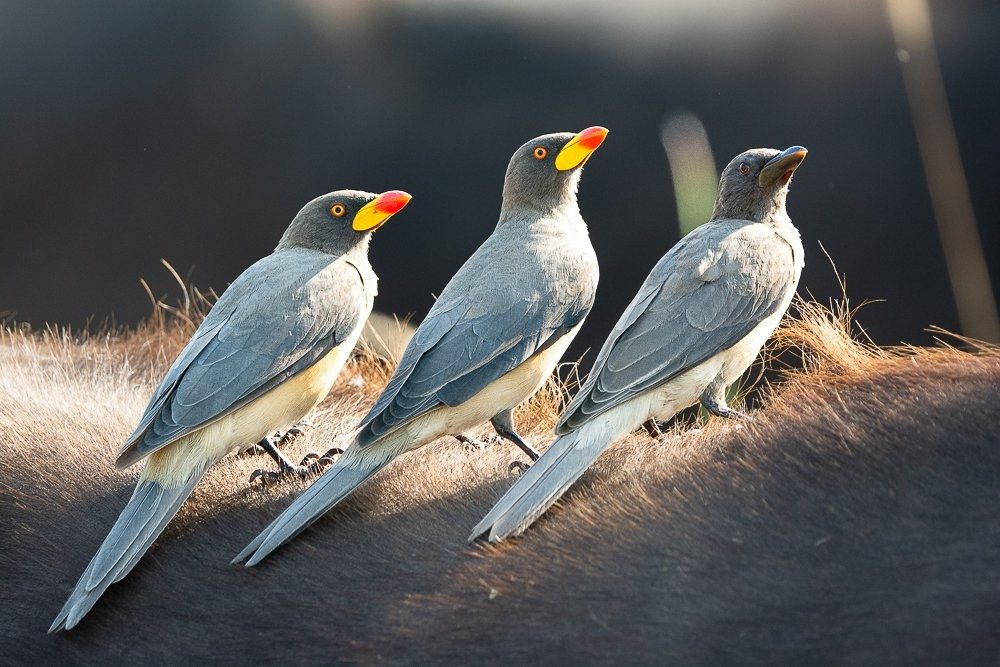
Yet the relationship is more complex than it first appears. Oxpeckers do not feed exclusively on ticks. They are also known to drink blood from open wounds and sometimes peck at scabs to keep wounds accessible. In certain cases, this behaviour may slow healing rather than help it. This has led to theories suggesting reconsidering the partnership, suggesting that it may sit somewhere between mutualism and mild parasitism, depending on circumstances. Nature rarely fits into neat categories, and the oxpecker’s behaviour reflects that ecological grey area.
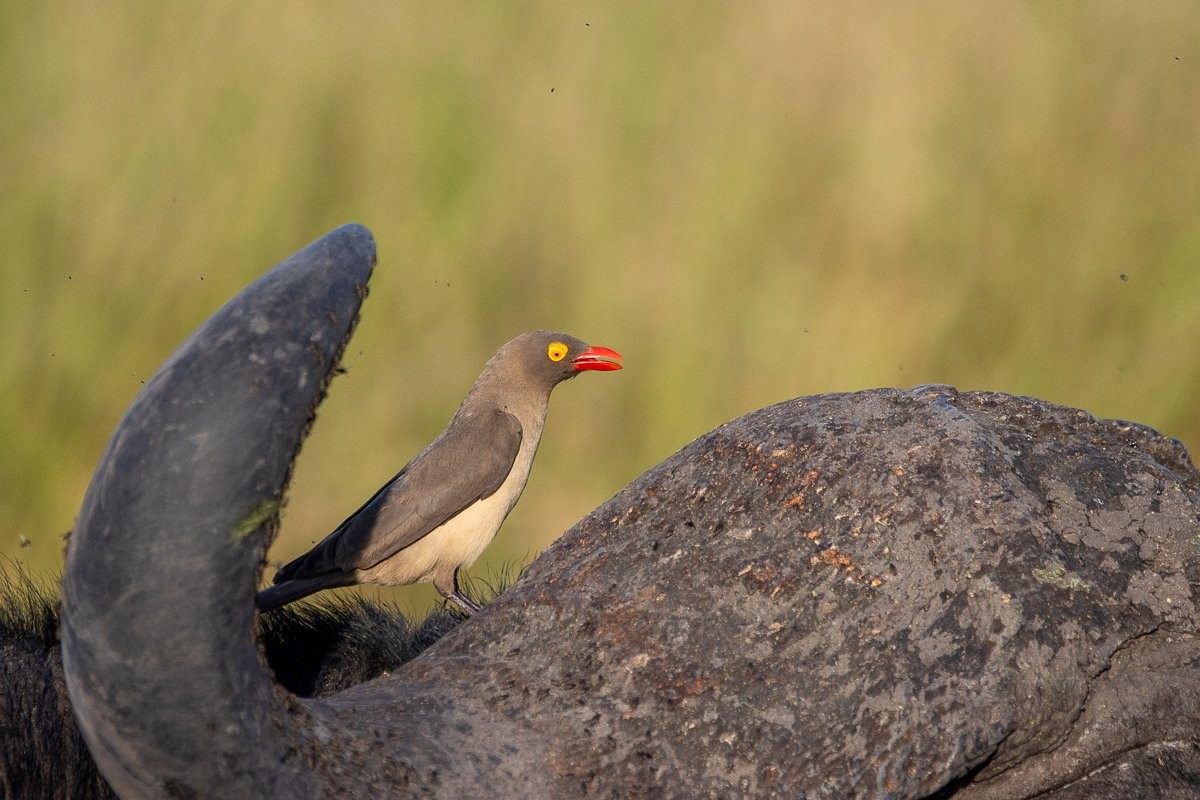
Beyond parasite feeding, oxpeckers serve another important function. They are alert and quick to react to movement. When a predator approaches, the birds often give sharp alarm calls or suddenly take flight. Large mammals such as the White rhinoceros, which have relatively poor eyesight, may benefit from this early warning system. Even a few extra seconds of awareness can make a difference in the wild.
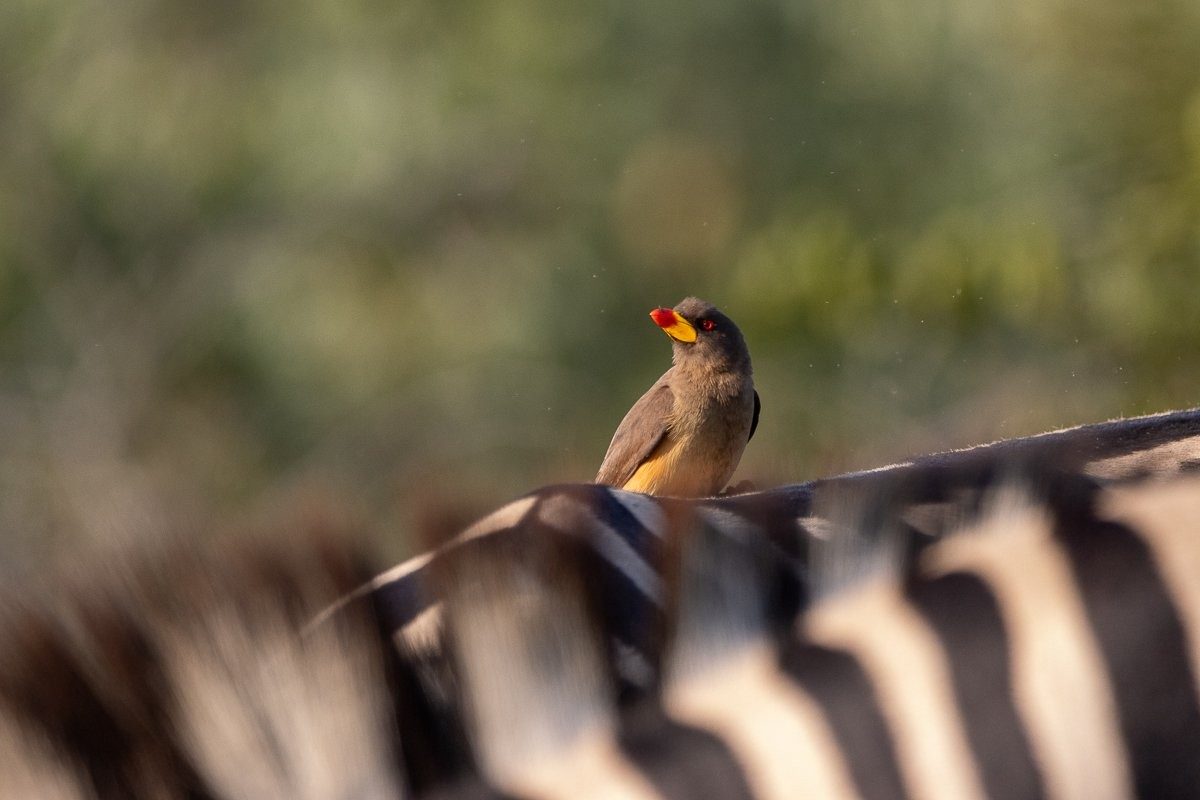
The survival of oxpeckers is tightly linked to the presence of large mammals. When wildlife populations decline due to habitat loss, poaching, or disease, oxpeckers also suffer. In the past, heavy pesticide used on livestock reduced tick numbers so drastically in some areas that oxpecker populations dropped as well. Their dependence on big animals highlights the delicate interconnections that hold ecosystems together. Protecting large herbivores does not only save iconic species; it also supports the smaller creatures that rely on them.
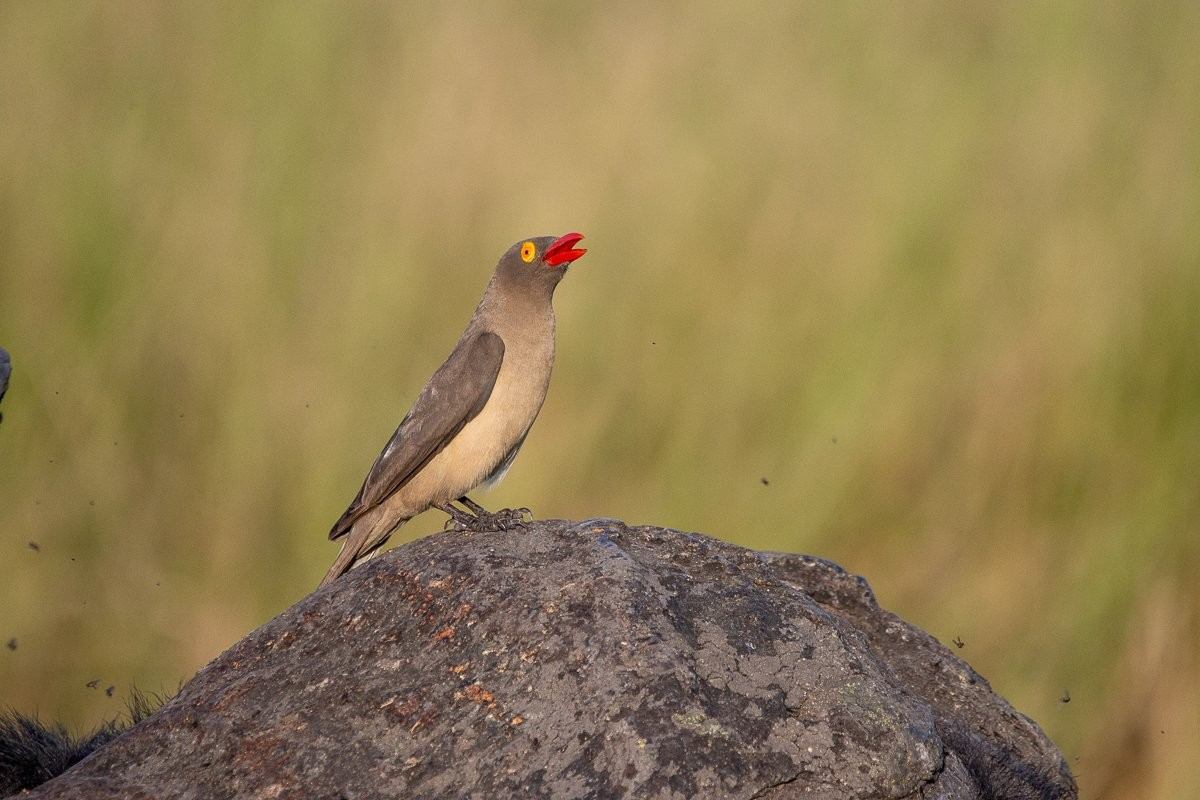
The relationship between oxpeckers and mammals reminds us that nature is built on interaction. It is not a simple story of one animal helping another, but rather a dynamic balance shaped by evolution. The birds gain food, mobility, and safety. The mammals may gain parasite control and improved awareness of danger. At times there are costs, yet overall, the connection has endured for thousands of years across Africa’s landscapes.
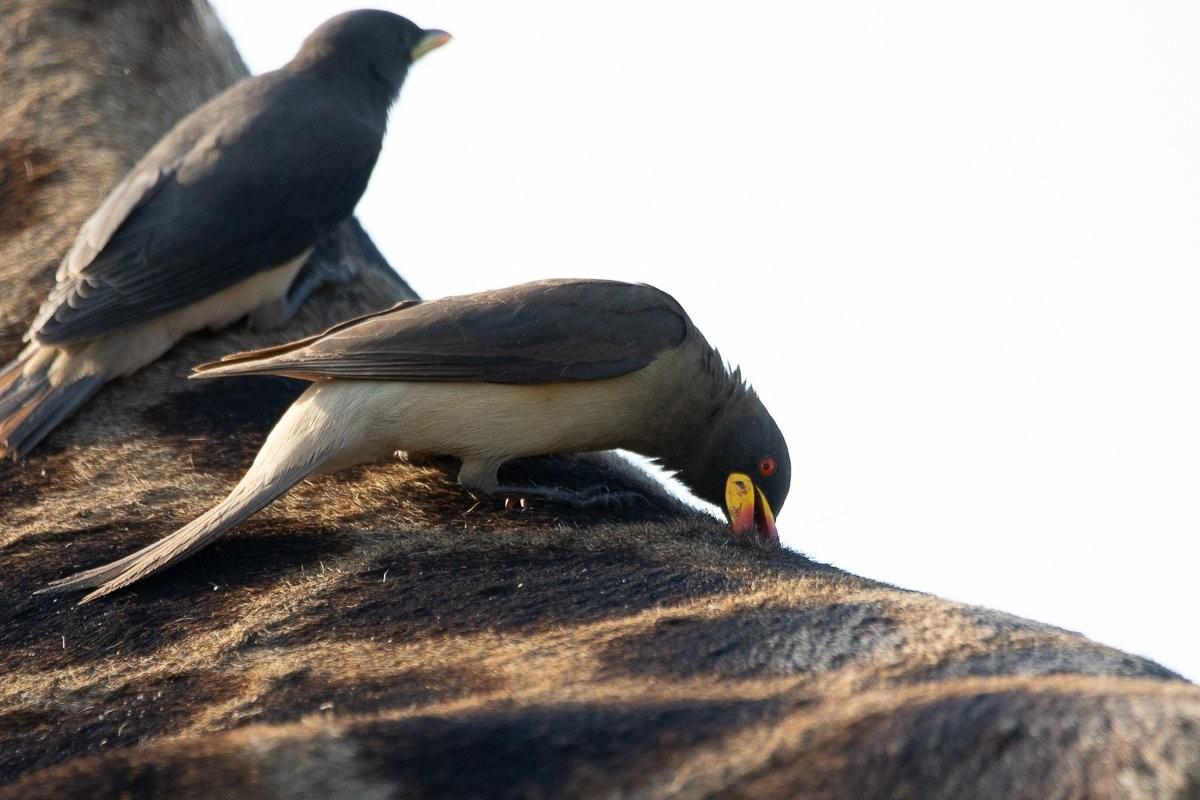
Watching an oxpecker ride calmly on the back of a buffalo or cling to the side of a giraffe offers a quiet lesson in interdependence. In the vastness of the savanna, survival often depends not just on strength or size, but on relationships - small partnerships that ripple outward through the environment and help sustain the intricate web of life.
Blog by Ronald Mutero (Selati Camp Ranger)