The Saddle-billed Stork: A Giant of the Wetlands
on Nov 10, 2026Few birds are as striking as the Saddle-billed Stork (Ephippiorhynchus senegalensis).
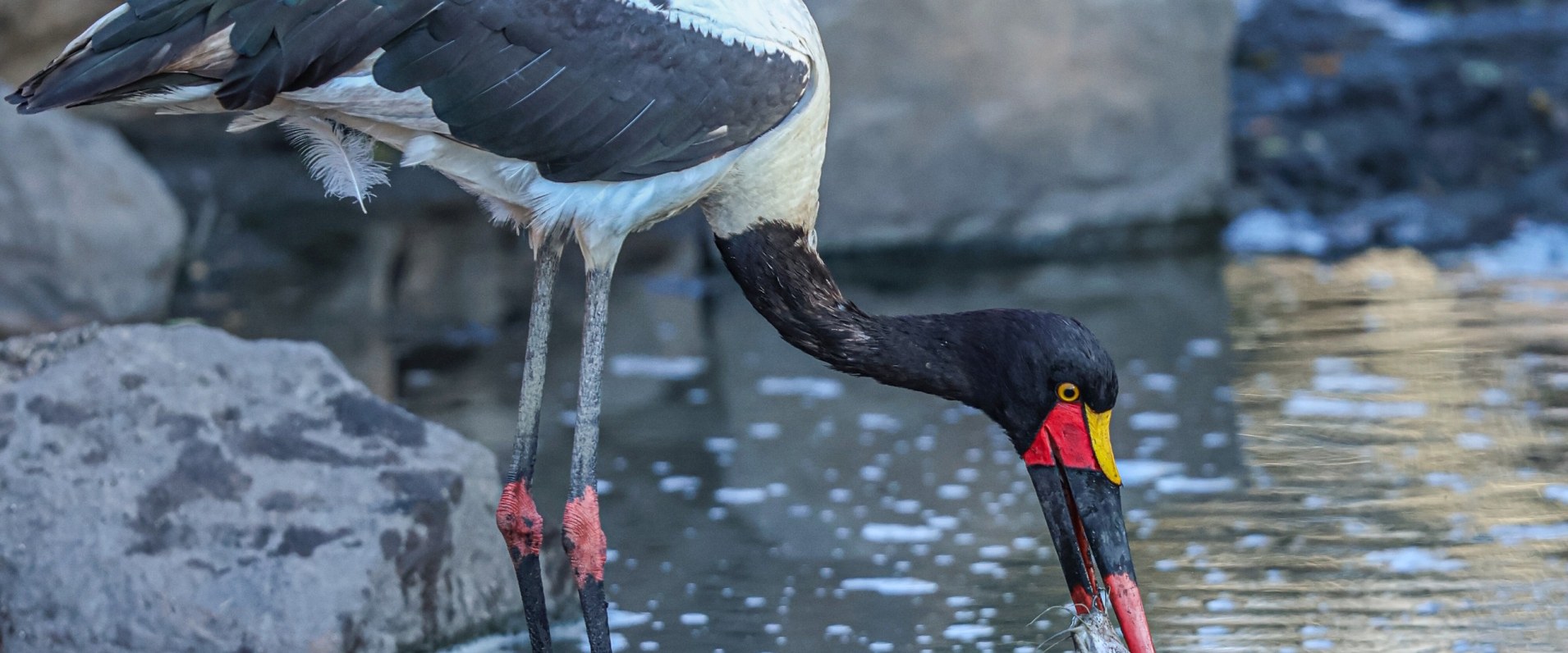
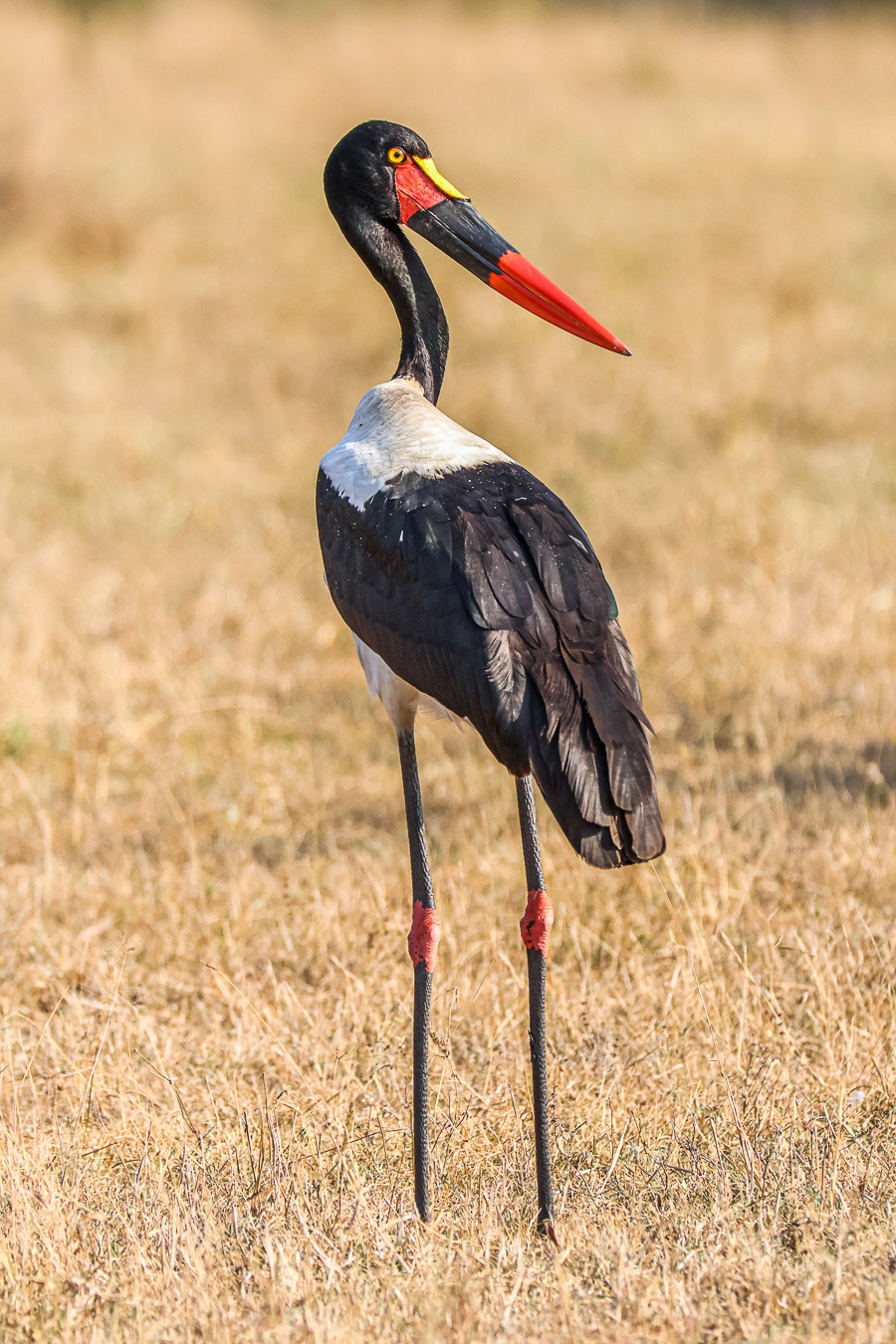
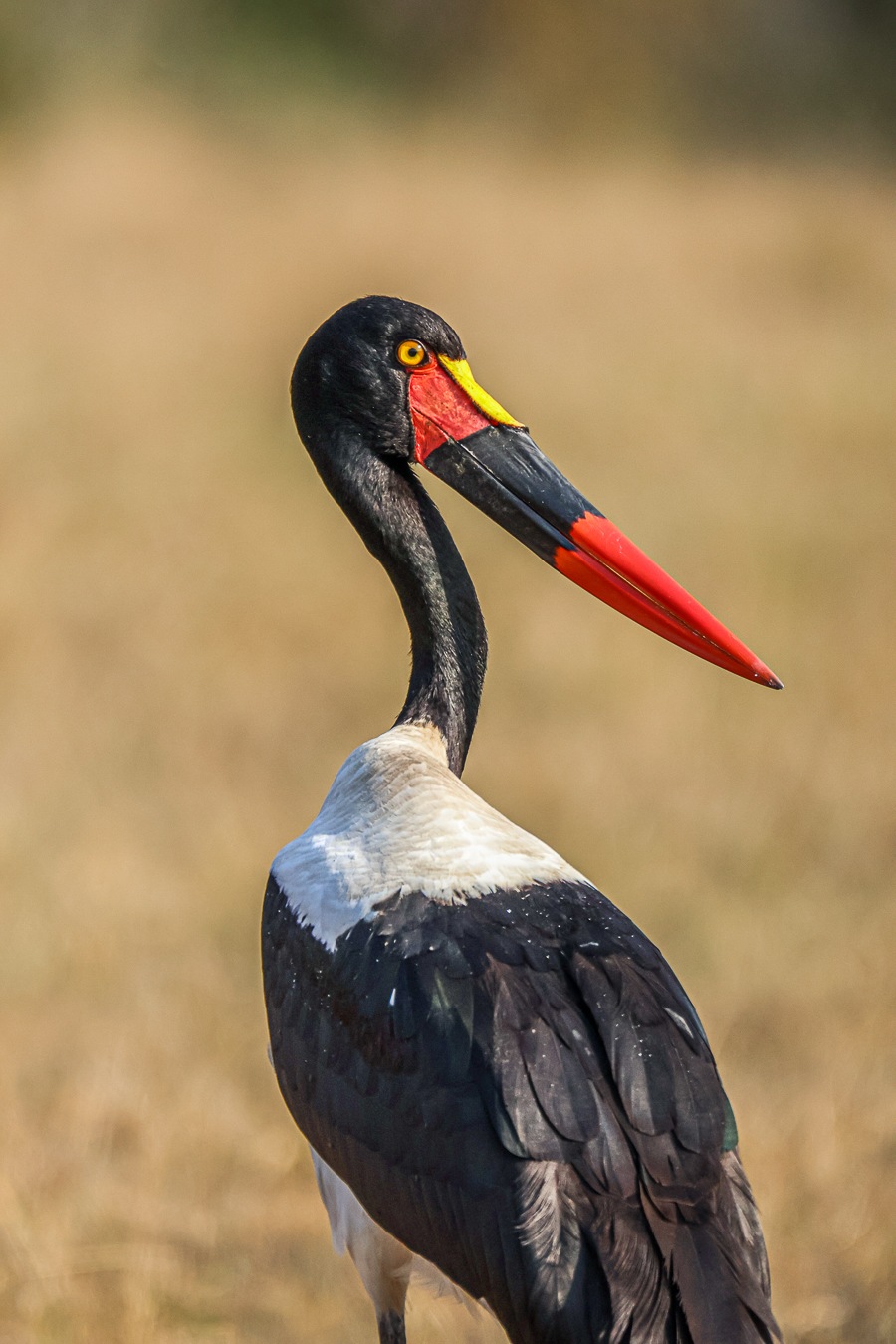
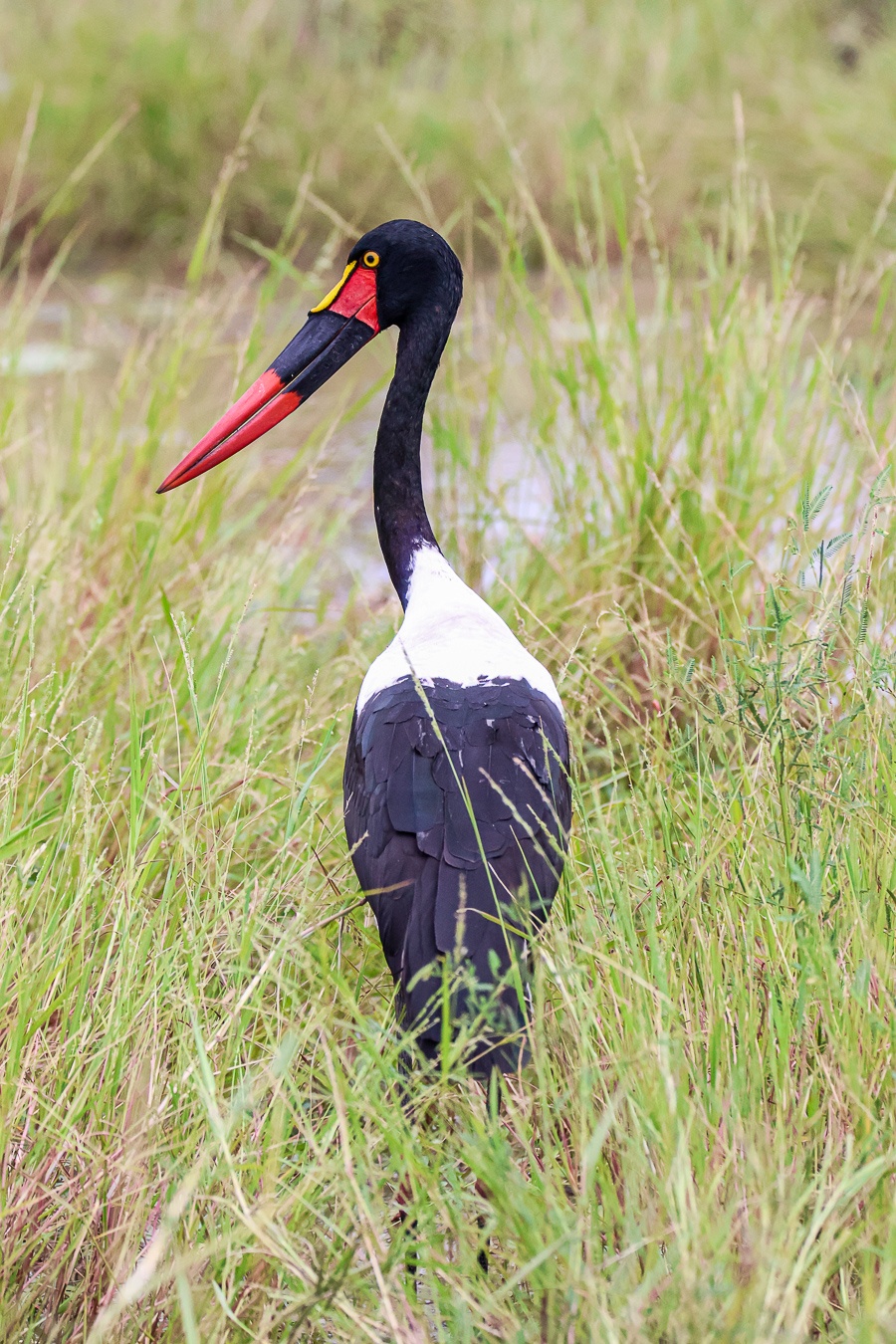
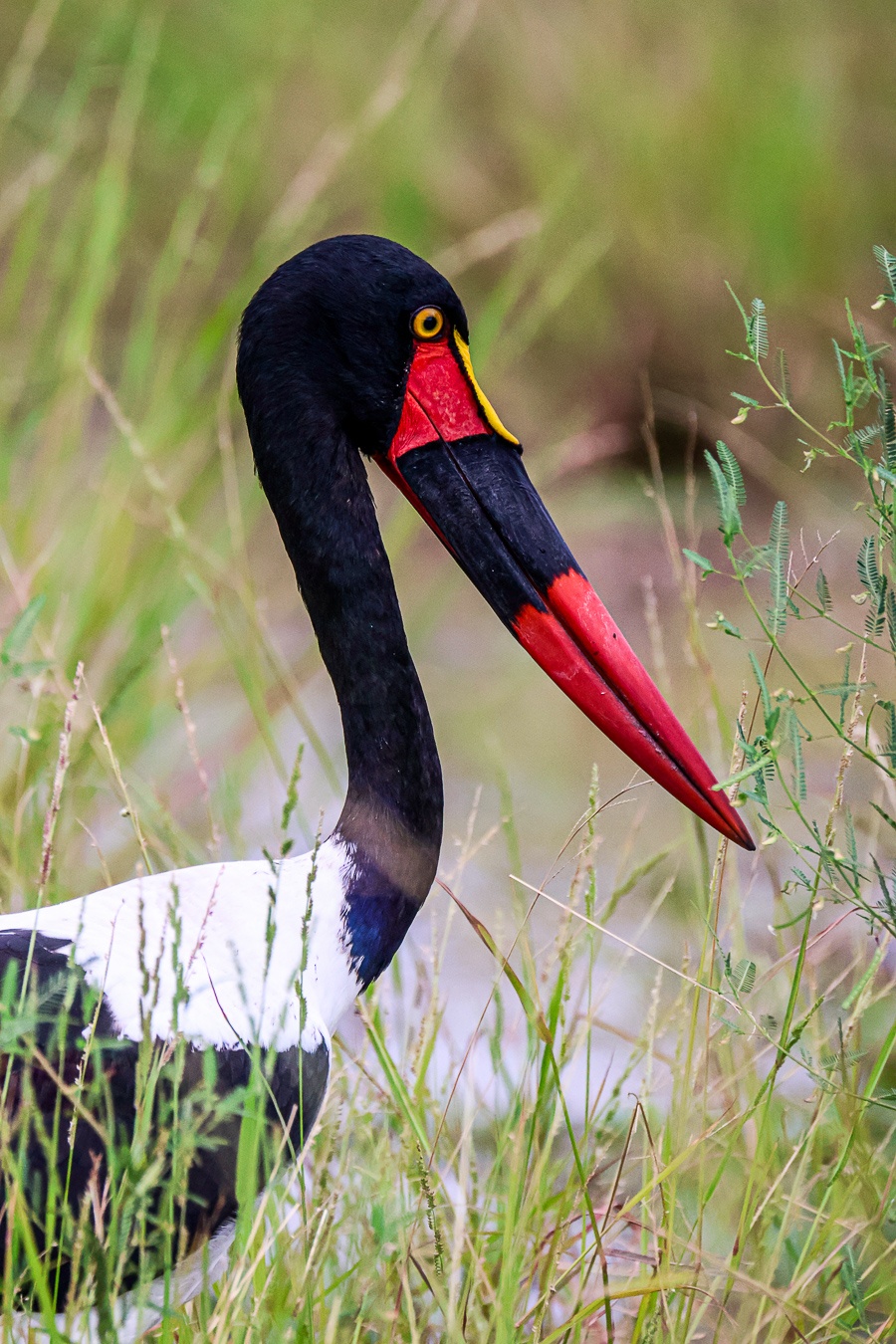
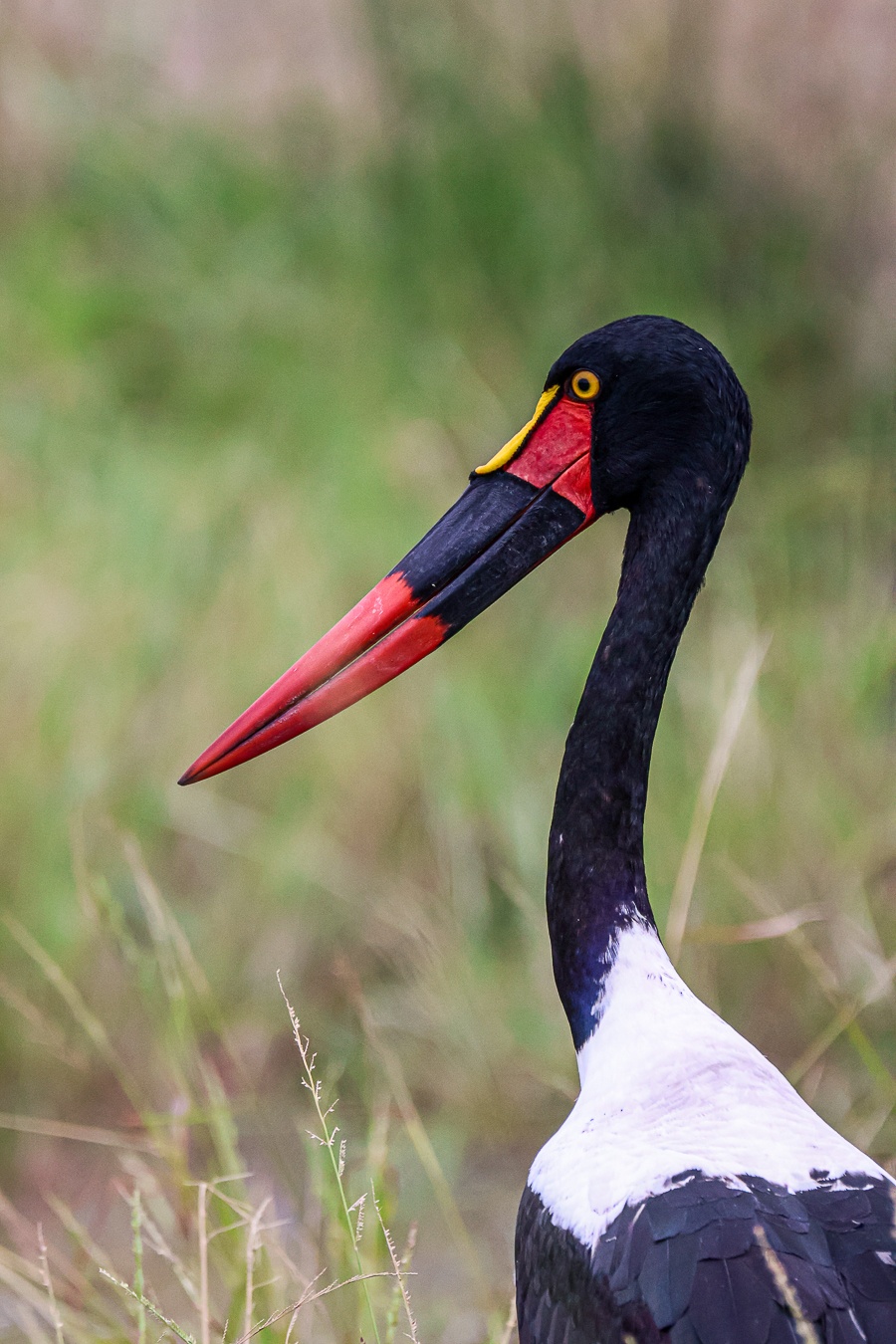
Standing around 1.5 metres tall, with a spectacular black-and-white body, long legs and an enormous red, black and yellow bill, this magnificent bird is impossible to overlook when encountered on safari.
Here at Sabi Sabi Private Game Reserve, the Saddle-billed Stork is one of our most special bird sightings. It is also one of the species included in Sabi Sabi's celebrated "Big 6" birds.
But behind its impressive appearance is a much more important story: the Saddle-billed Stork is endangered in South Africa, and its future depends heavily on the health of our rivers, wetlands and water systems.
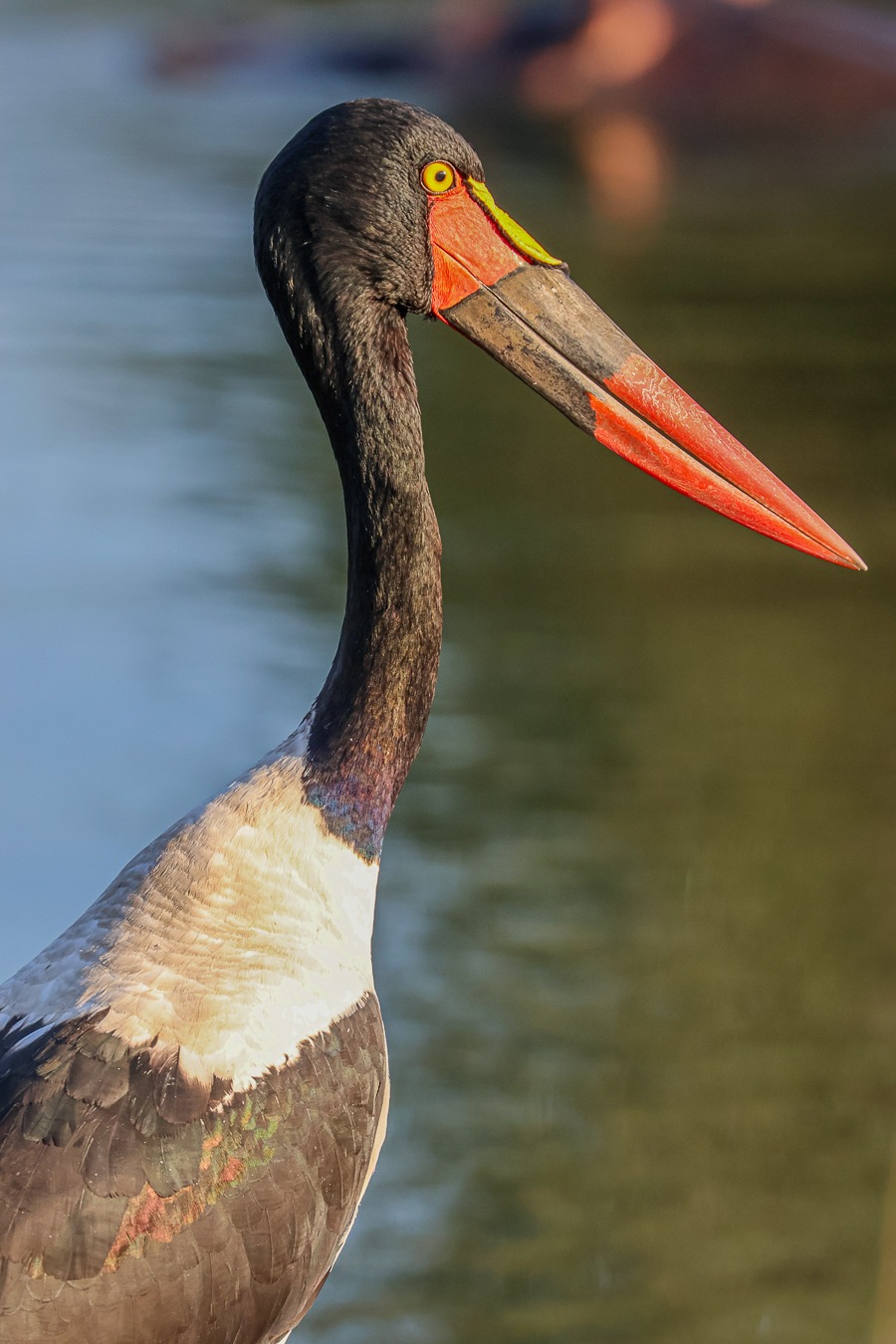
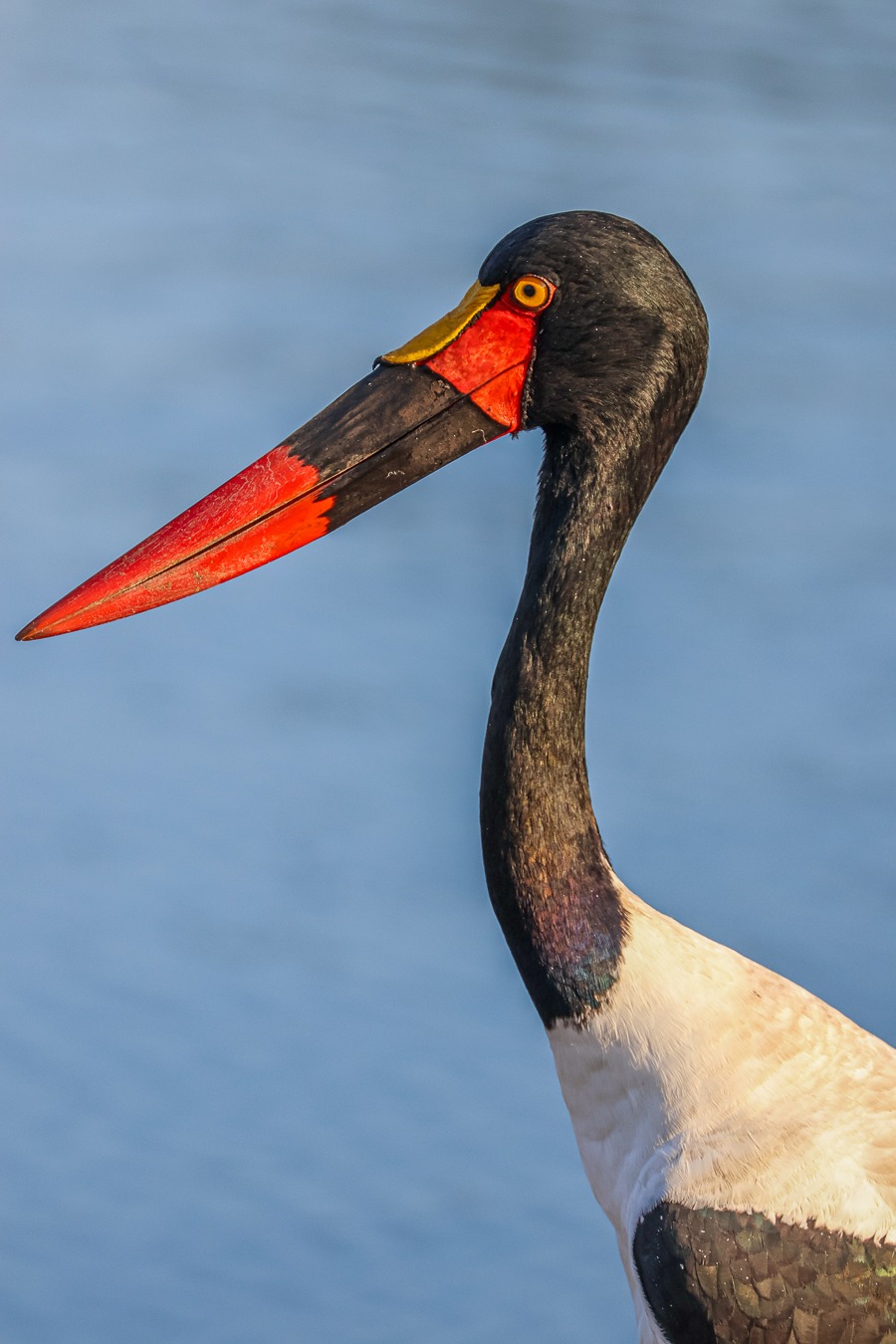
A true wetland specialist
Saddle-billed Storks are closely associated with water. They inhabit rivers, floodplains, wetlands, pans and other freshwater environments where they can hunt for food.
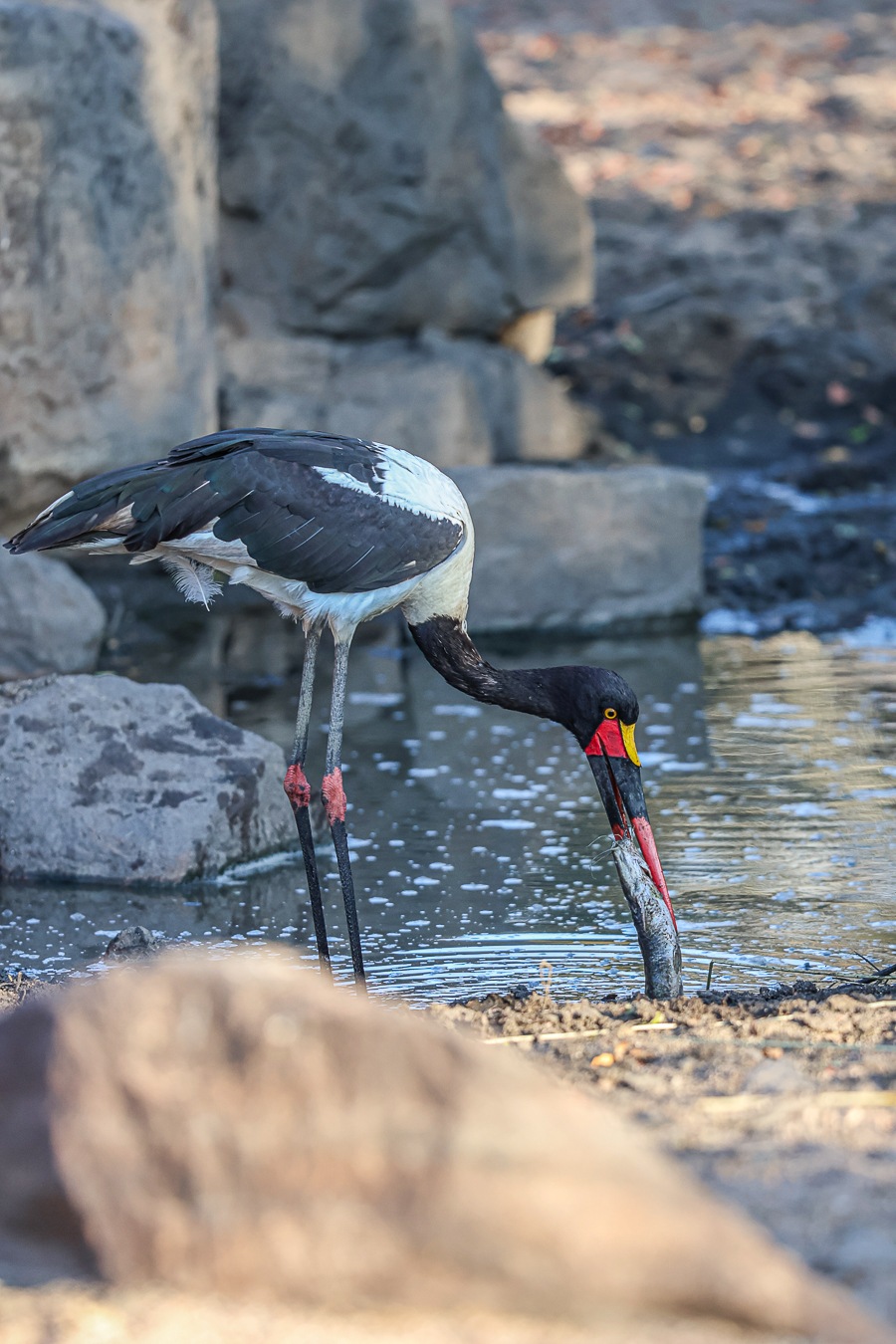
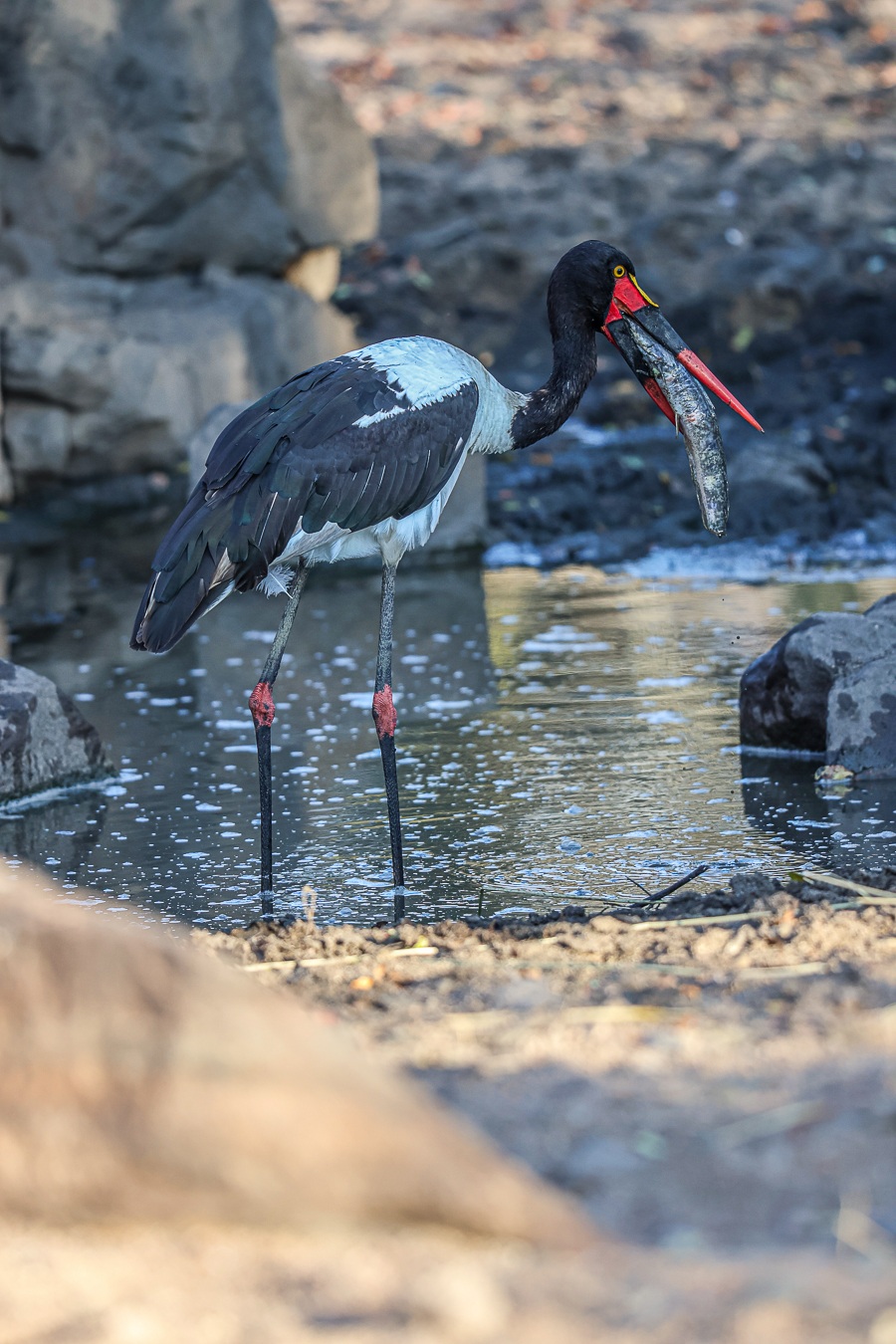
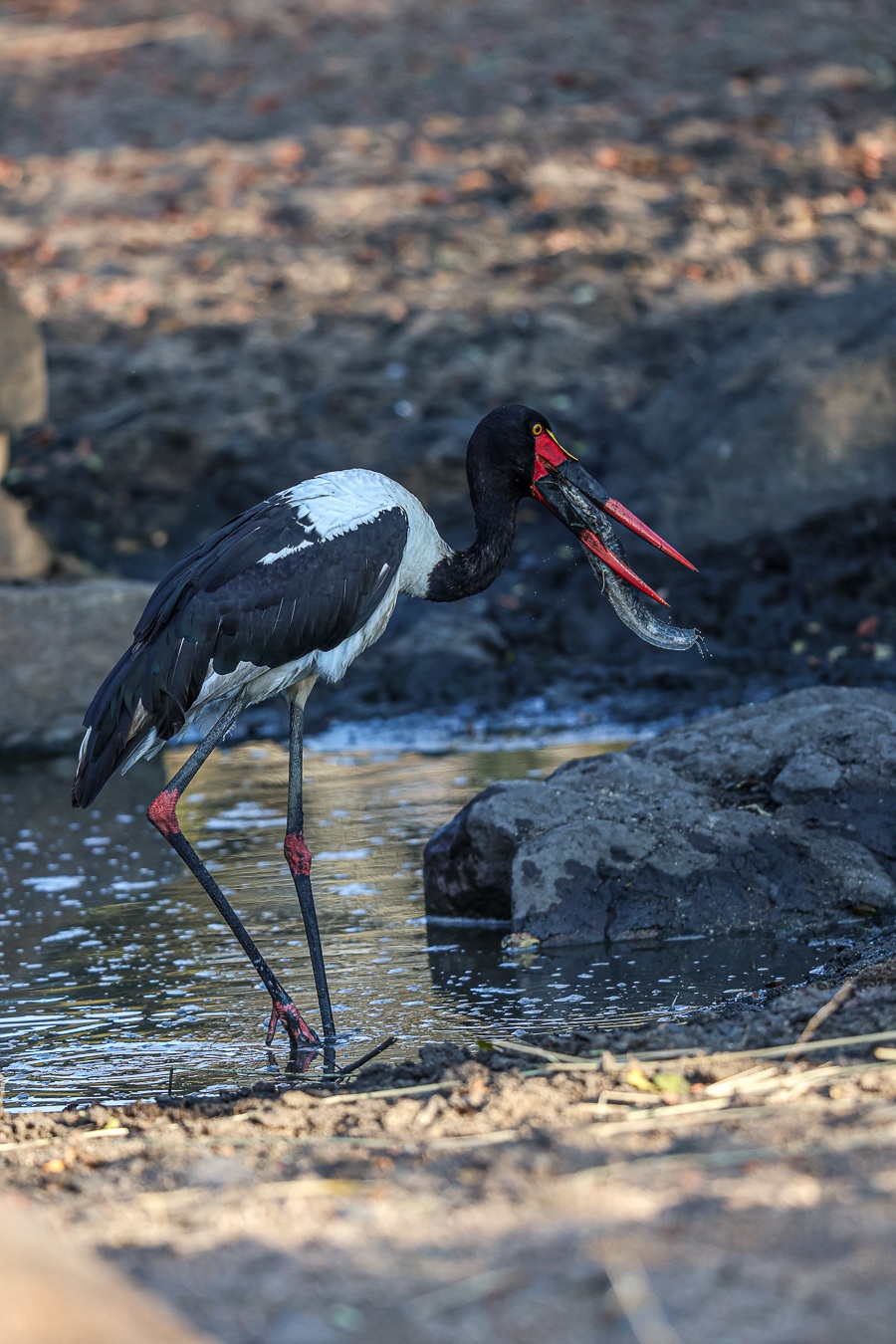
Their diet is varied but is largely made up of aquatic prey, particularly fish. They also feed on frogs, aquatic invertebrates, crustaceans, small reptiles and occasionally small mammals and birds. Their enormous bill is perfectly adapted to their hunting technique: they can stand patiently in shallow water before delivering a rapid stabbing movement to catch their prey.
This close relationship with water makes the Saddle-billed Stork an important species for us to observe on safari. When we see one patiently wading through a waterhole or along a river, we see an animal whose survival is closely connected to the condition of the surrounding aquatic ecosystem.
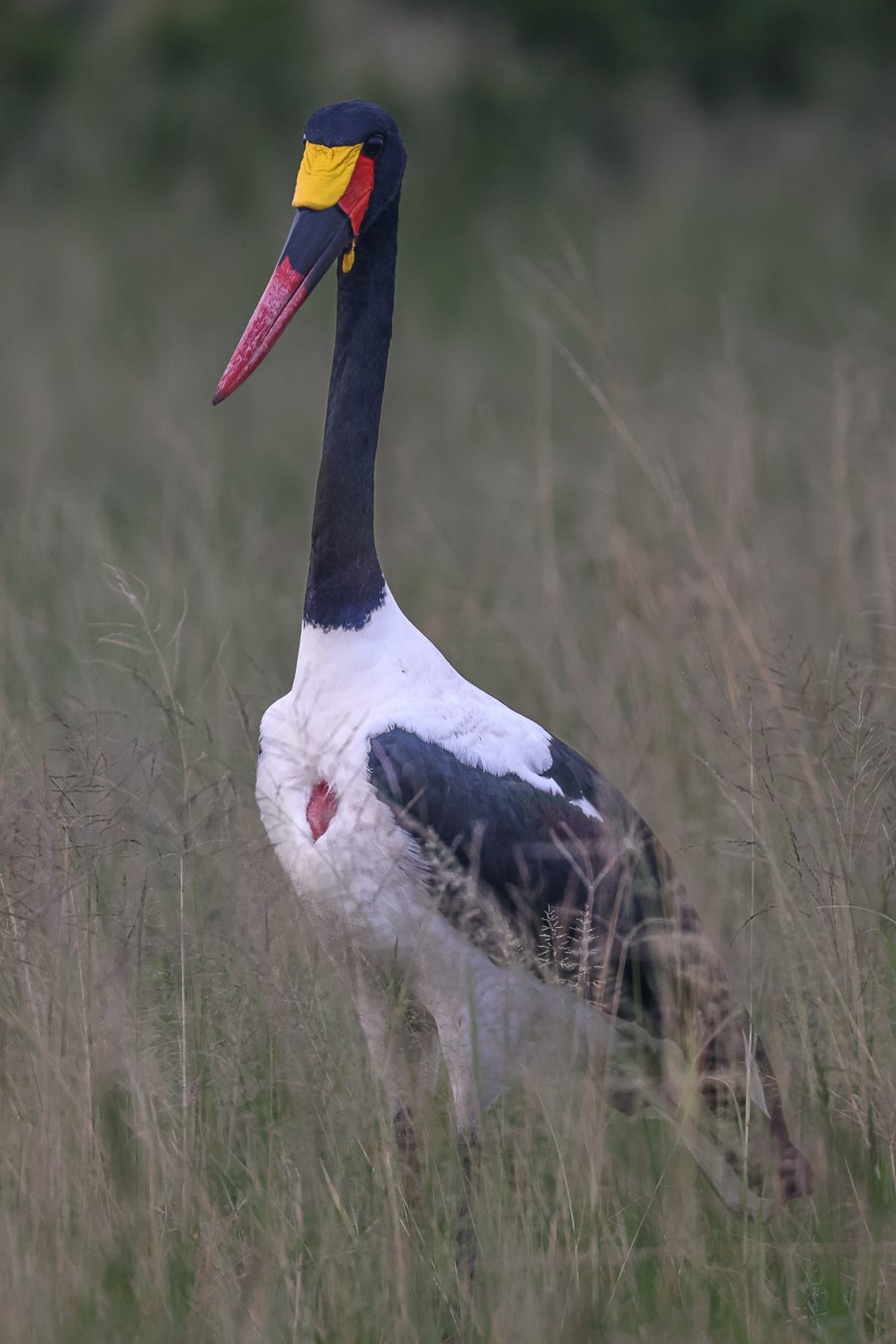
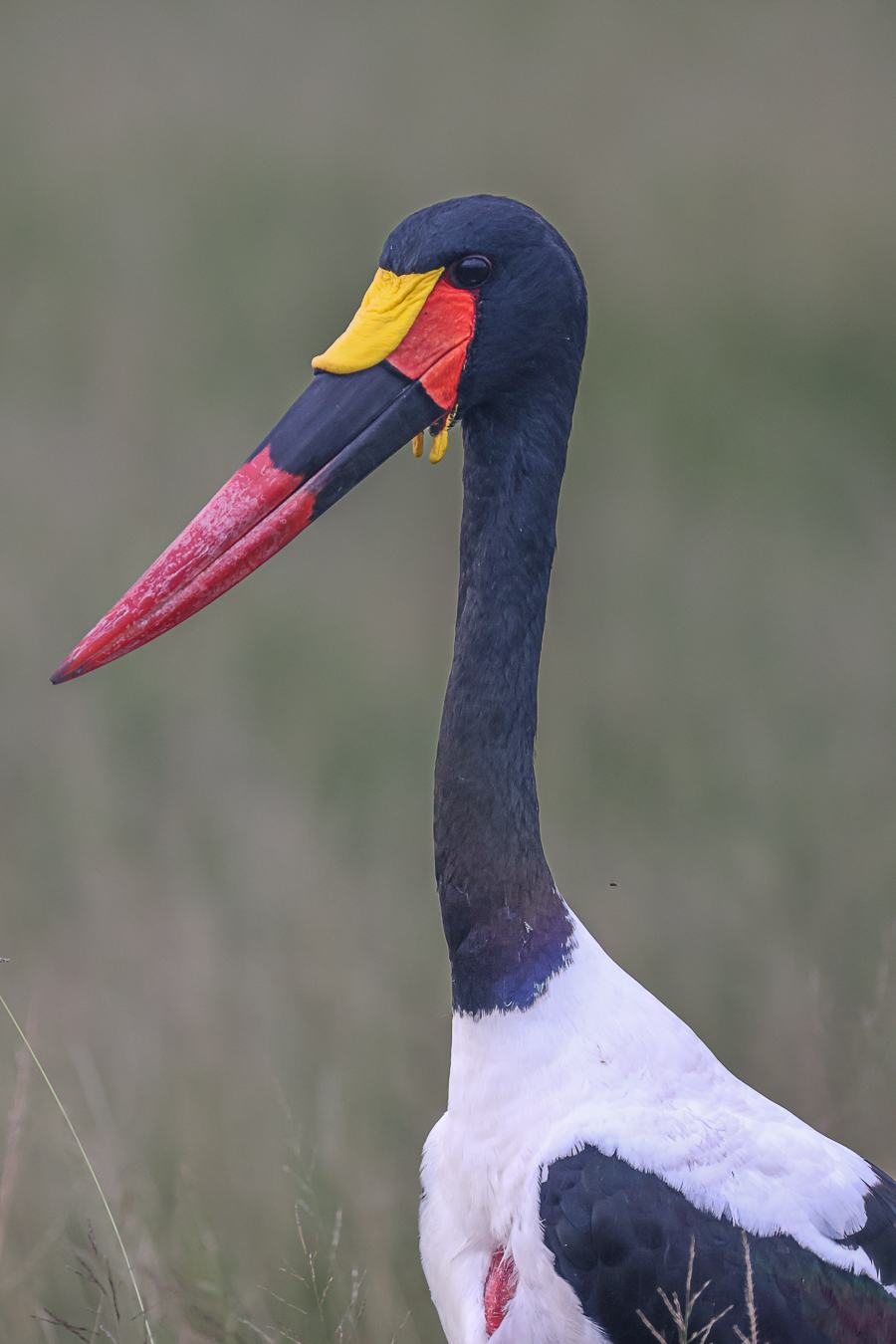
A special bird of Sabi Sabi
Sabi Sabi lies within the greater Lowveld ecosystem and provides a variety of habitats, including open grasslands, woodland and riverine areas. This diversity supports almost 350 bird species, including several rare and threatened species.
Saddle-billed Storks are regularly recorded at Sabi Sabi, making the reserve a wonderful place to appreciate this remarkable bird. Their presence is particularly special because South Africa represents the southernmost part of their wider African range. In South Africa, they are strongly associated with subtropical regions containing large perennial rivers and other water bodies.
For a ranger and a guest, seeing a Saddle-billed Stork is therefore more than simply adding another bird to a sightings list. It is an opportunity to talk about the connection between wildlife, water and the wider landscape.
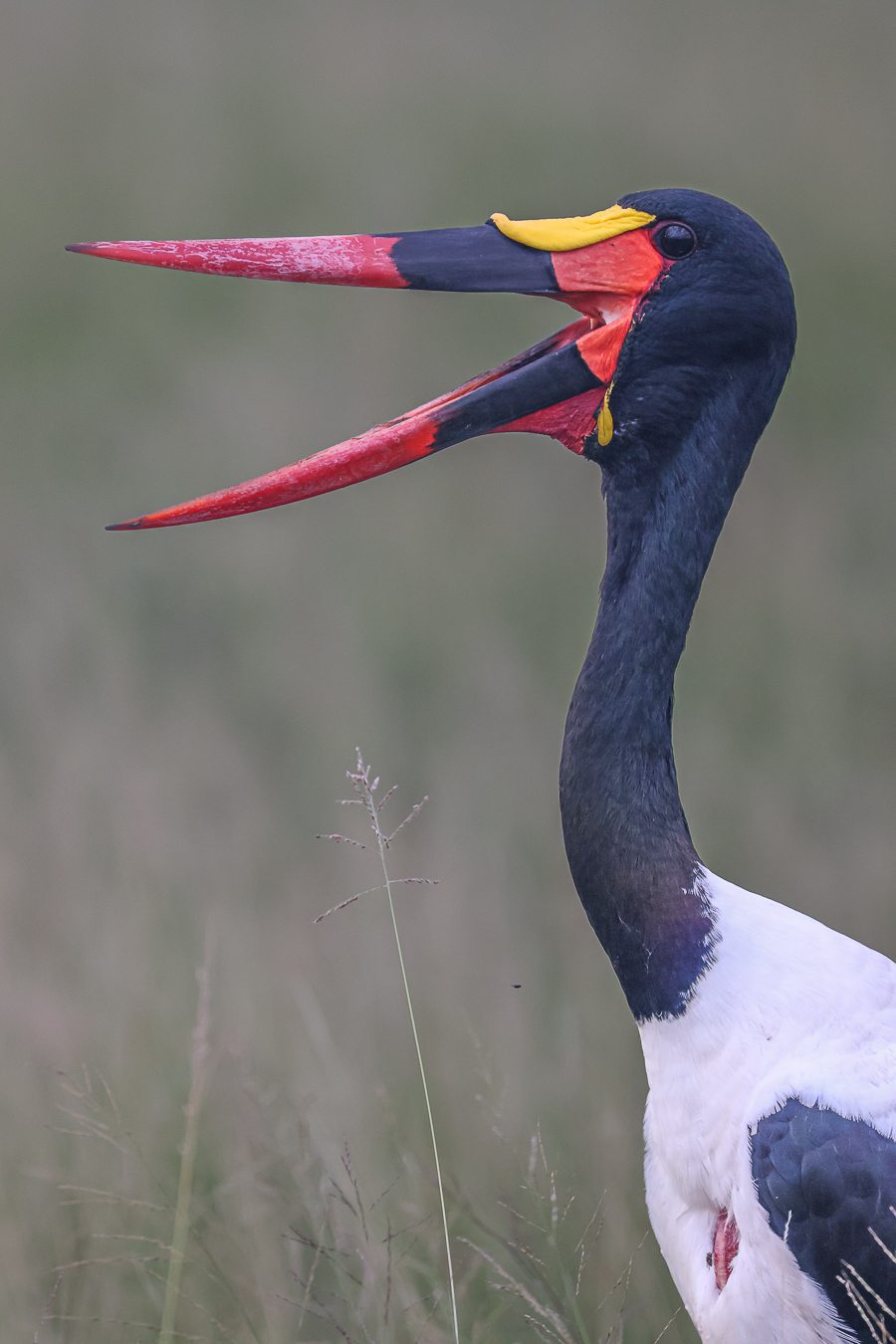
Why are they Endangered in South Africa?
The South African population is small.
BirdLife South Africa's 2025 regional assessment estimates approximately 160 mature individuals in the region and classifies the Saddle-billed Stork as Endangered. The assessment notes that this population estimate has a medium level of confidence and that more research is needed to determine the current population size and trend accurately.
Most of South Africa's population occurs in the north-eastern parts of the country, with the Kruger National Park and surrounding areas forming an important part of its range. Other important areas include parts of northern KwaZulu-Natal and the Limpopo River system.
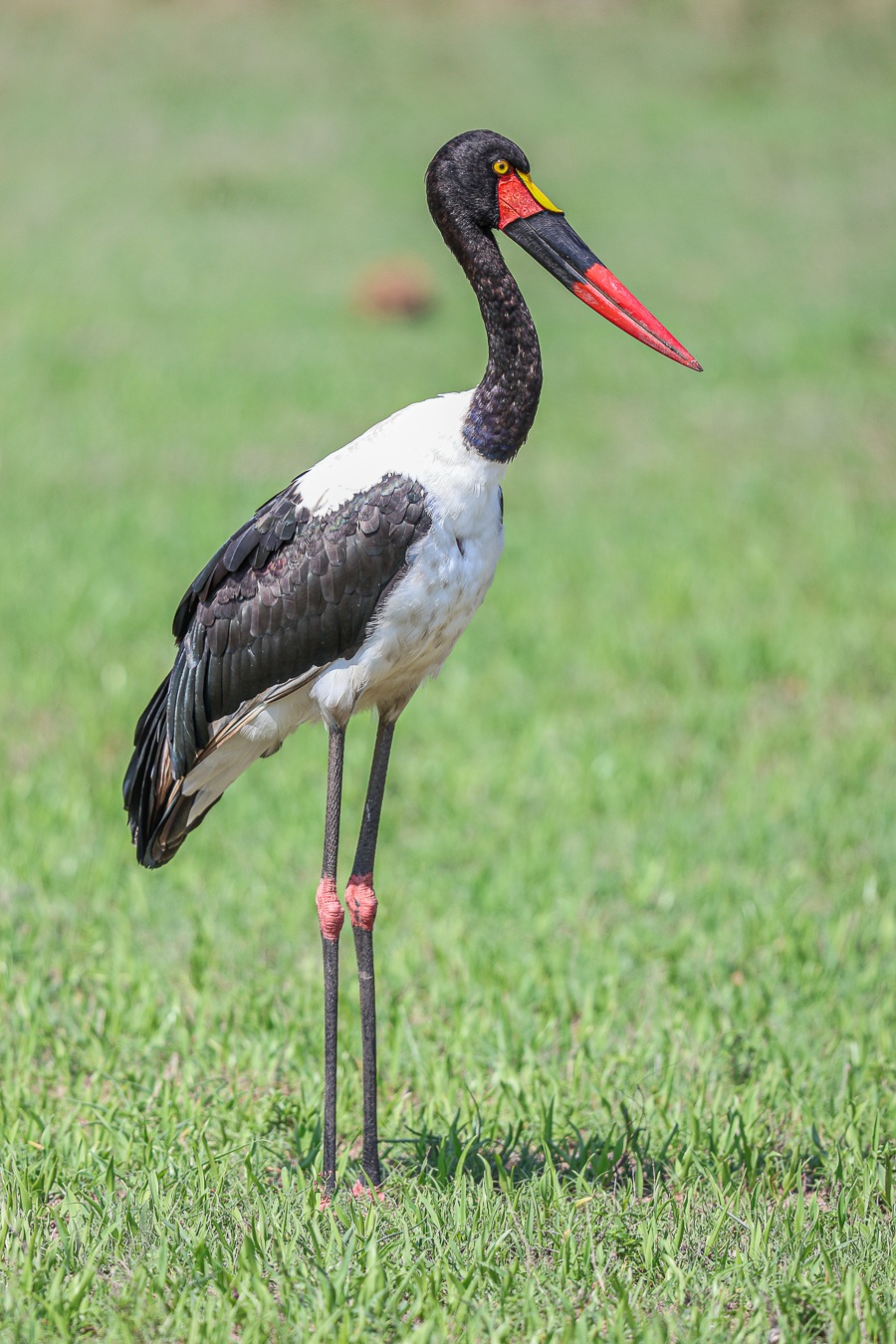
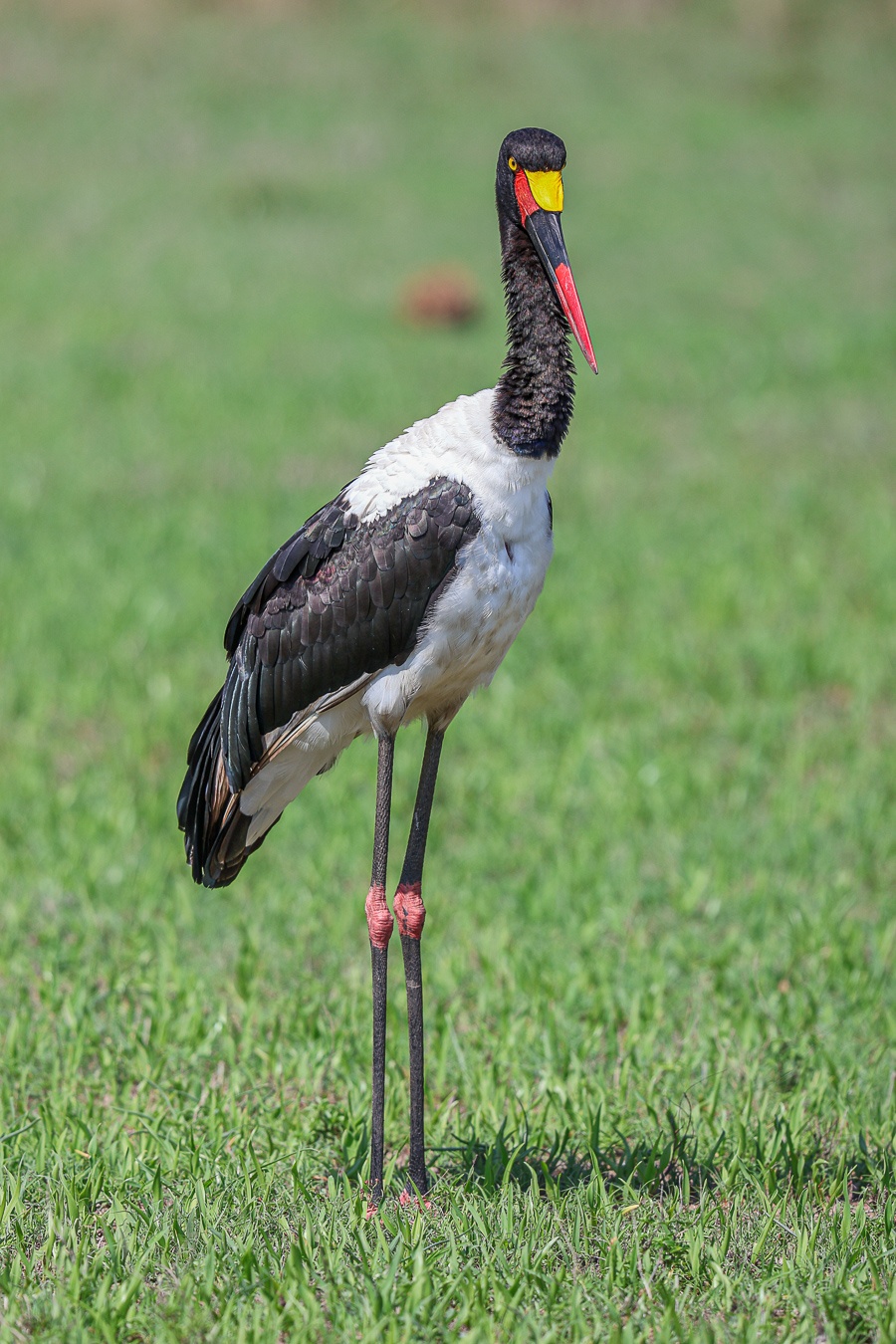
The challenges facing these birds are largely connected to the health and availability of freshwater habitats.
-
Loss and degradation of wetlands
Wetlands are incredibly productive ecosystems, but they are vulnerable to human disturbance and changes in water availability. The loss or degradation of suitable wetlands can reduce the places where Saddle-billed Storks can feed, breed and raise their young.
-
Changes to rivers and water flow
Water extraction, dams and other changes to catchments can alter the natural flow of rivers and reduce the availability of suitable habitat. Because Saddle-billed Storks depend so strongly on aquatic environments, changes in the quantity and quality of water can have significant consequences for the species.
-
Pollution and declining water quality
Pollution from agricultural, industrial, mining and urban activities can affect freshwater ecosystems. A decline in water quality can ultimately affect the entire food web on which wetland birds depend.
-
Drought and climate pressures
Severe drought can dramatically reduce rivers, pans and wetlands, leaving less habitat and less food available. BirdLife South Africa has identified understanding the effects of climate factors on breeding and population trends as an important area for future research.
Breeding: a slow-growing population
Saddle-billed Storks are generally seen alone or in pairs. They are largely resident birds in this region rather than long-distance migrants, although young birds can disperse more widely. Pairs build large nests high in trees, often close to suitable wetland habitat. Both parents participate in incubation and raising the chicks. Sabi Sabi records the incubation period as approximately 32–35 days, with young birds taking considerably longer to become independent and capable of flight.
This relatively slow reproductive strategy is important when considering conservation. A species with a small population and relatively slow population growth cannot necessarily recover quickly when numbers decline.
How can a stork tell us about an ecosystem?
One of the most fascinating things about wildlife is that individual species are connected to much larger ecological systems. The Saddle-billed Stork is dependent on functioning aquatic habitats. Protecting the bird therefore also means protecting the rivers, wetlands, floodplains, trees and aquatic life that support it. In this sense, the Saddle-billed Stork can become an ambassador for freshwater conservation. A healthy wetland does not belong to one species. It supports fish, frogs, insects, reptiles, mammals and countless other birds. Protecting the water protects an entire community of life.
What can we do on safari?
One of the simplest ways to contribute to conservation is to learn about the animals we encounter. When guests become familiar with species such as the Saddle-billed Stork, they begin to understand why seemingly small changes in a landscape can matter.
As rangers, we also have an important role to play. Every sighting is an opportunity to explain the relationship between wildlife and habitat and to encourage a deeper appreciation of the ecosystems that make places such as Sabi Sabi so special.
For photographers and birders, responsible observation is equally important. Giving birds space, avoiding disturbance around nests and respecting sensitive areas allows us to enjoy these animals without compromising their behaviour or breeding success.
A reminder that conservation is about more than the Big Five
On safari, it is easy to focus on lions, leopards, elephants, rhinos and buffalo. But conservation extends far beyond the animals that dominate our safari conversations.
A Saddle-billed Stork standing silently beside a waterhole may not receive the same attention as a leopard in a tree, yet its presence tells us something important about the landscape.
It reminds us that water is life.
It reminds us that healthy rivers and wetlands are essential.
And it reminds us that some of South Africa's most magnificent wildlife can also be among its most vulnerable.
So, the next time we encounter a Saddle-billed Stork at Sabi Sabi, take a moment to appreciate more than its incredible size and colours. Look at the water around it, the trees above it and the life beneath the surface.
Because protecting the Saddle-billed Stork means protecting the ecosystem that supports it, and ultimately, protecting the future of the wild places we are fortunate enough to share with these extraordinary birds.
Blog by Ruan Mey (Earth Lodge Ranger)