
Sabi Sabi Wild Facts: Dung Beetles Part 1
on Dec 14, 2014These little beetles are some of the most fascinating insects out here in the bush. For the whole of winter they have been in a state of torpor waiting for the heat of summer and the first rains to arrive, and after the nearly 100mm of rain we have had in the last month, the bush has started buzzing with the wing beats of these flying decomposers.
Dung beetles can be broken down into four distinct groups, telecoprid, endocoprid, paracoprid and kleptocoprid. The endocoprids lay their eggs in a pile of dung, paracoprids dig down below a pile of dung, telecoprids roll the famous balls of dung and kleptocoprids steal the balls from the telecoprids.
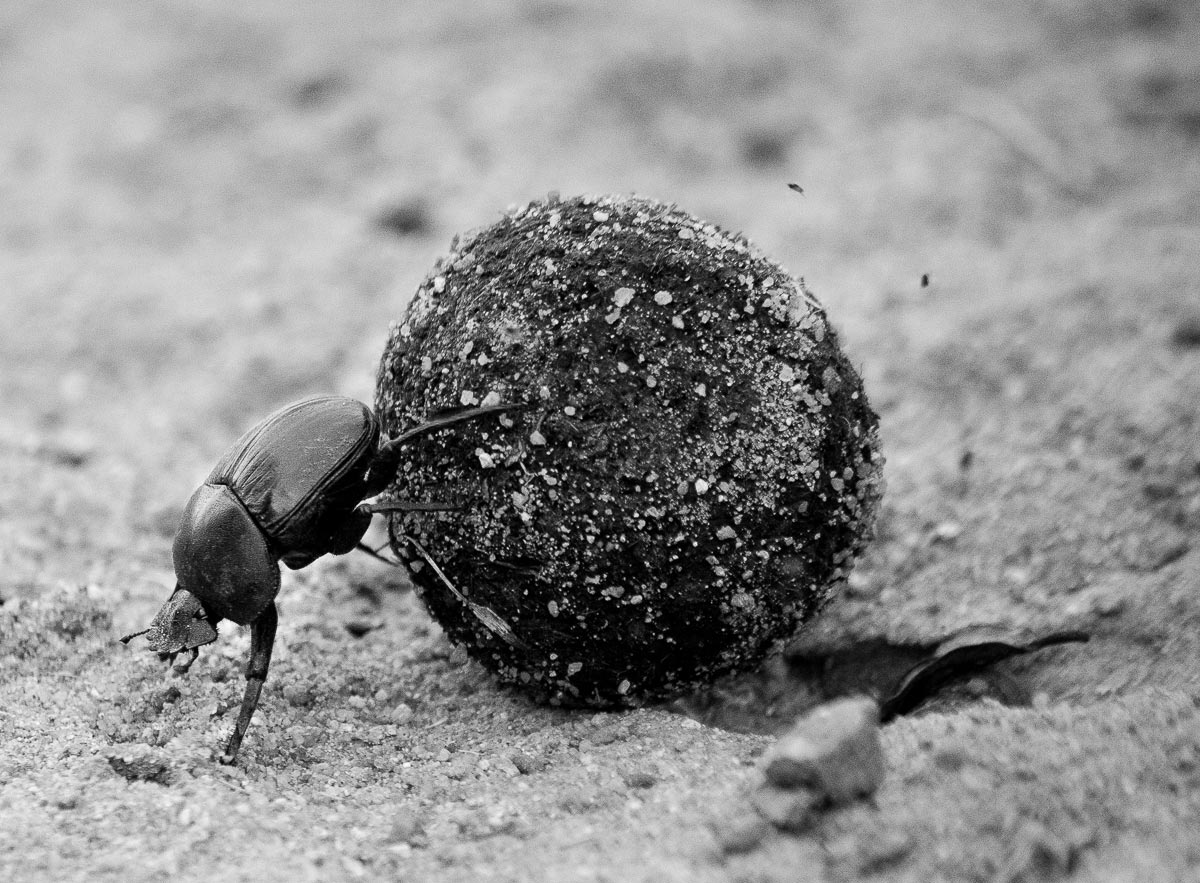
Dung beetles completely rely on dung for food for both themselves and their larvae and will lay their eggs in the balls. The telecoprids will roll the ball away until they find a suitable place to dig a hole and submerge it. They will then go back to the original pile to roll another and then roll it back to the same hole placing it on top of the first ball. They may place three balls on top of each other like a sleeve of tennis balls before closing the top of the hole and then leaving the larvae to hatch, feed and change into their adult form.
What is so interesting about this, is that although the first ball in the hole has the first laid egg, yet it is the last ball in that has the first emergence, then the second ball and lastly the first ball. This prevents any unwanted traffic on the way up to the surface.
Dung beetles are vitally important to the environment as they clean up the majority of dung during the summer season. When they disappear for their winter sleep termites take over the job of cleaning.
Sabi Sabi Wild Facts: Dung Beetles Part 2
The Scarabaeidae are a super-family of tens of thousands of beetles, including the sub-grouping Scarabaeinae, the dung beetle, which on its own has more than 5,000 species. Dung Beetles are found on practically every continent, and will thrive in all climates except where there is extreme cold. No species are found in Antarctica.
Dung beetles (coprophages, which means feces eaters - although some do feed on mushrooms and rotting vegetation), are the clean-up crews of the bushveld, able to carry off and scatter a pile of dung in an amazingly short time. The dung is buried in the ground where it decomposes, aerating and fertilizing the soil. The removal of dung also minimizes the number of flies, so these beetles are extremely useful in maintaining a healthy environment.
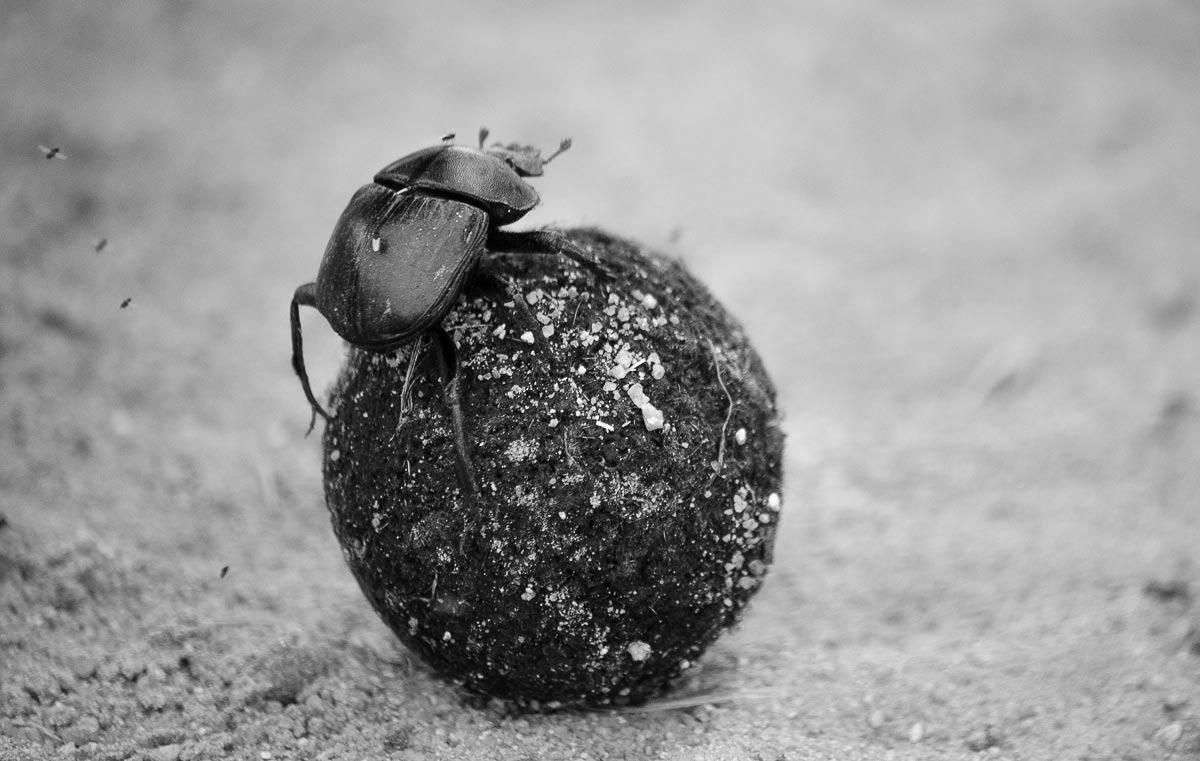
Dung beetles range in size from a tiny 5mm, to a very substantial 50mm and are divided into groups according to how they dispose of the dung. They are either "rollers", rolling the dung into balls and then burying the balls in soft soil; or "burrowers", taking the dung into tunnels directly under the main heap; or "dwellers" which actually live in the dung. There are often many varied species of dung beetles in a single pile of manure.
They are very diverse in appearance, with carapaces varying in colour from black to blue to copper. The ancient Egyptian scarabs are actually images of dung beetles. The beetles have a lifespan of approximately 3 years. Their eggs, which are laid in the dung, hatch into larvae which eat the solid matter surrounding them. The adults generally only drink the liquid nutrient which is present in the dung.
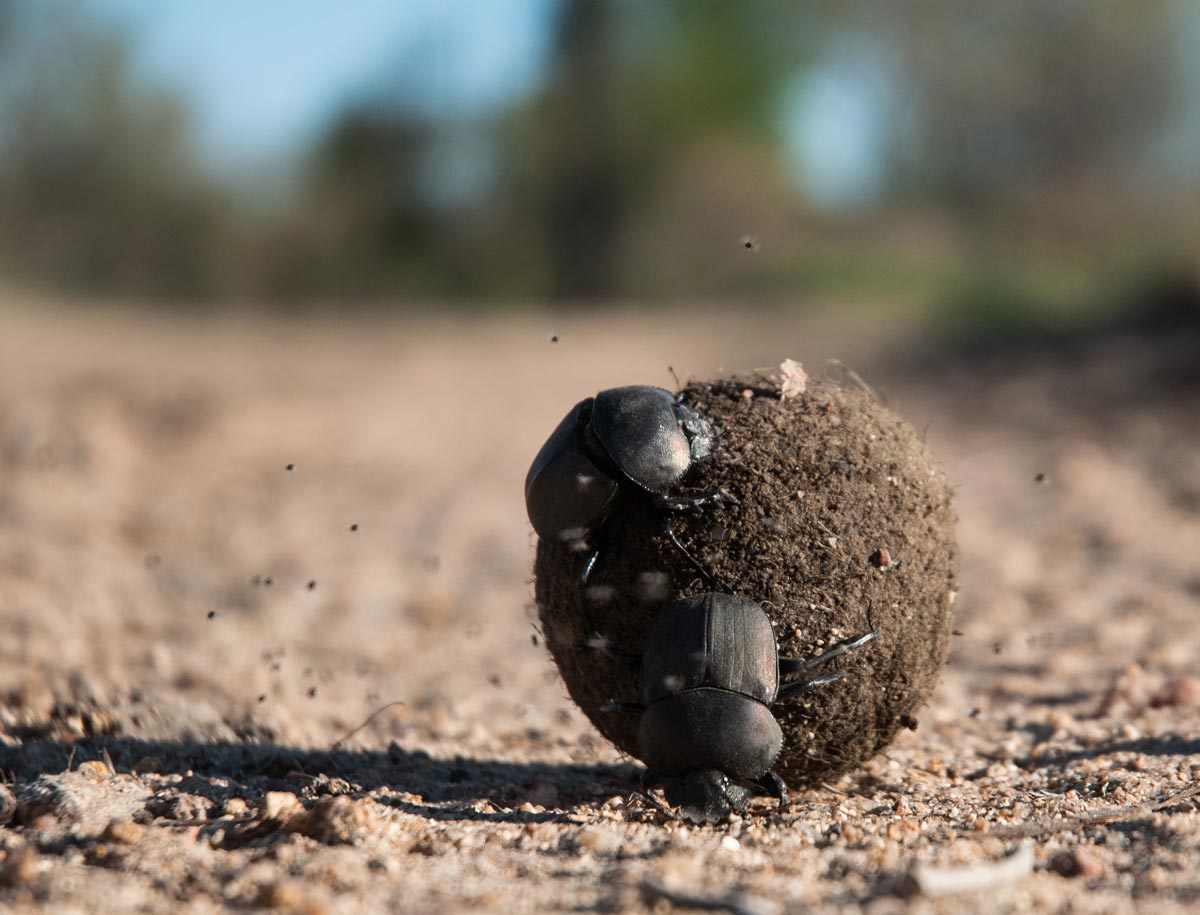
It is well known that many species of birds and insects use sunlight to navigate, but in 2003 a group of researchers discovered a species using polarization of moonlight to navigate. That very clever creature is a dung beetle, the African Scarabaeus zambesianus.
At Sabi Sabi, guests are generally fascinated and highly entertained by the antics of the rolling dung beetles. Two beetles, a male and a female create the ball, with the male pushing it away from the dung pile with its back legs, as quickly as possible. The female hangs on for dear life. Everybody is always amazed by the strength and tenacity of these little beetles, as they roll their ball of dung in a straight line over all sorts and sizes of obstacles, sometimes pushing more than 50 times their body weight up a steep embankment.
Sabi Sabi Wild Facts: Dung Beetles Part 3
In and around Southern Africa the Dung Beetles (sub-family scarabaeidae) all utilise faeces for sustenance and egg development. Dung Beetles can be split into four major groupings depending on their habits;
Endocoprids are dung beetles that burrow and nest 'in situ' when fresh dung is discovered.
Paracoprids tunnel beneath the dung pile and deposit dung at the end of the tunnel for consumption and egg incubation.
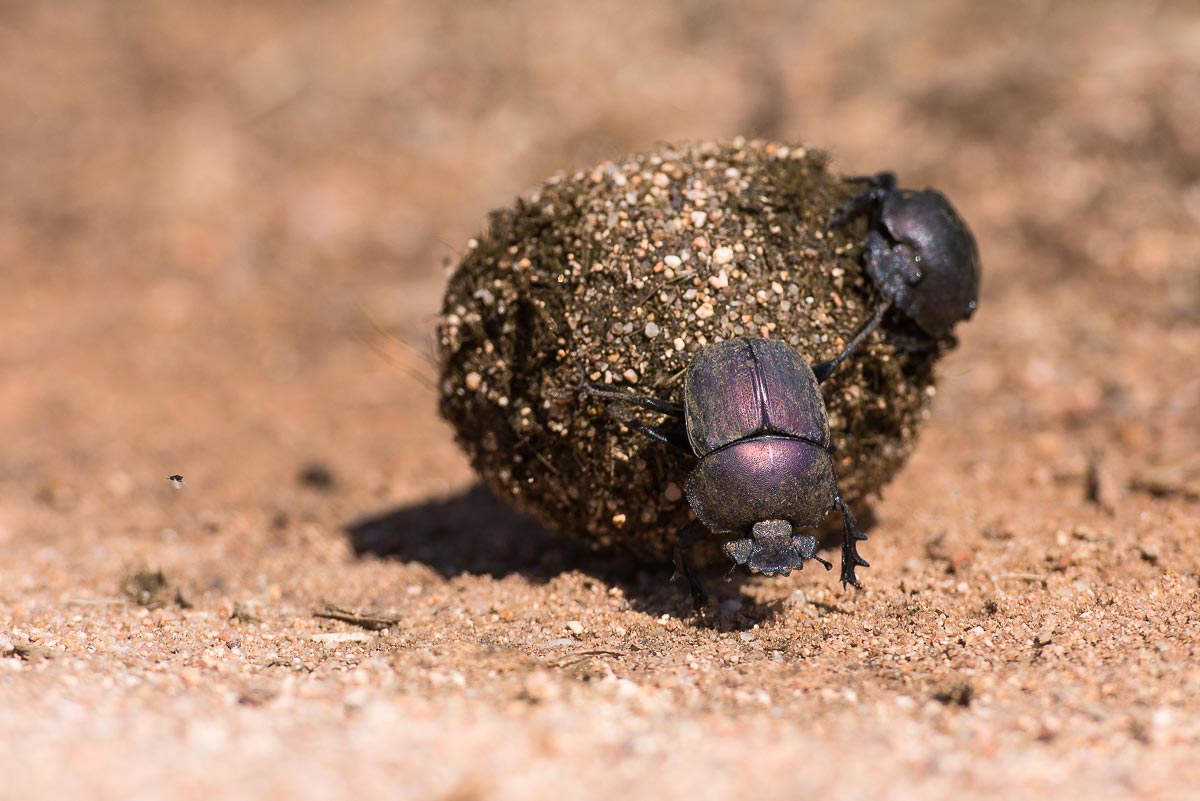
Telocoprids are the most well known group; gathering and rolling dung balls away from the dung pile and later burying the 'brood ball' below ground. The telocoprid (often called the African Dung Beetle) is often used as a control for ageing animal dung in the summer, as no more than 20 minutes tend to pass from when the dung is deposited until the beetles find and start working on it.
The male will collect and roll the dung, forming a movable ball that will be pushed with the back feet as the front legs are armed with serrations to grip the ground for stability. When the ball is of a suitable size, the male releases a pheromone, attracting a female. She will cling to the ball as the male continues to roll in search of soft soil. When appropriate soil is located, the pair use their shovel shaped heads to dig away beneath the ball, slowly burying it.
The female lays her eggs in the dung ball (referred to at this stage as the 'brood ball') and the larvae are left to develop using the dung as sustenance during the metamorphic process.
Kleptocoprids locate brood balls of other dung beetle groups and parasitize them by laying their own eggs on the host's ball. Kleptocoprid larvae have been seen to kill the host beetle larvae during development therefore playing no part in faeces cycling. Other dung beetles play a major role in the ecosystem in secondary seed dispersal, nutrient cycling and parasite suppression.